Your stomach grumbles after lunch, you feel bloated by mid-afternoon, and by evening you are too tired to think straight.
It is incredibly easy to overlook these daily frustrations as simple stress or tiredness from a hectic London lifestyle.
But these are signals your body has been sending you all along.
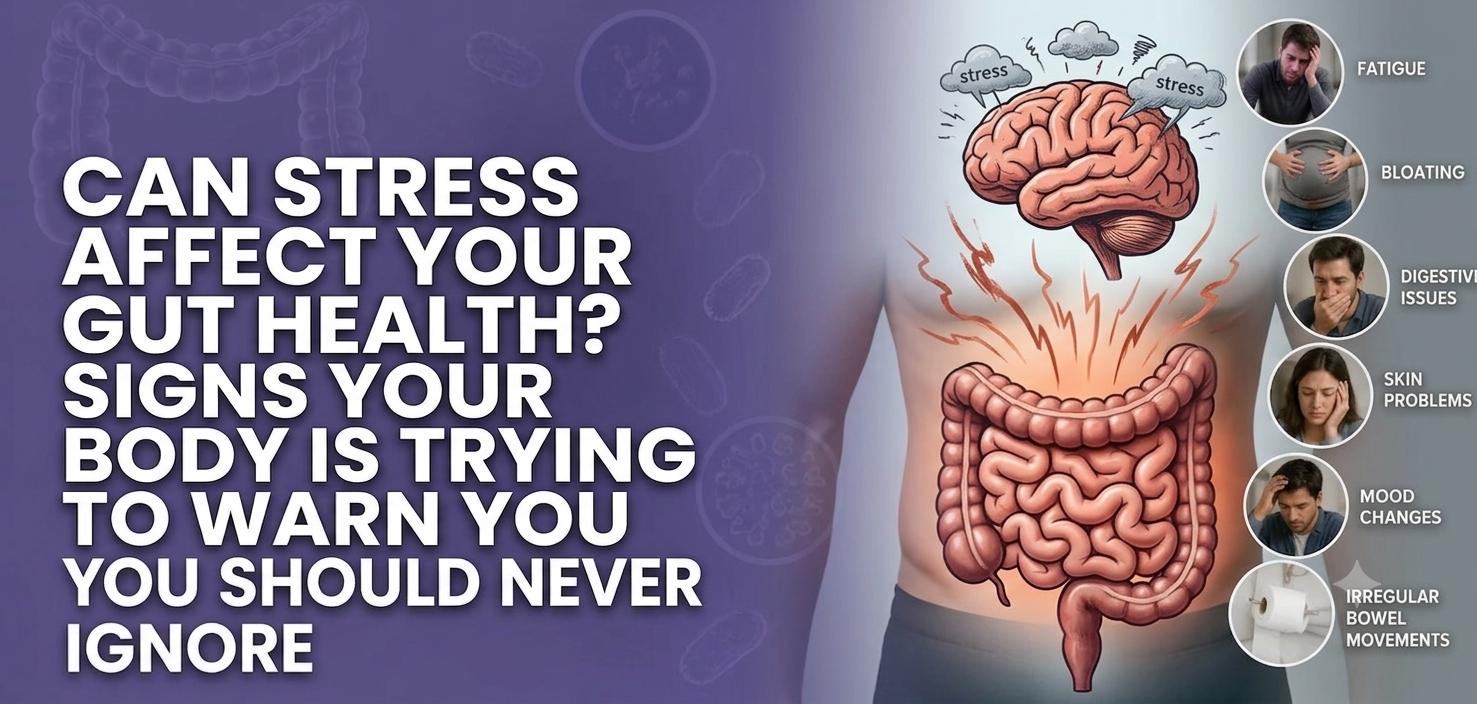
Your gut does much more than digest food. It affects how you feel, sleep, think, and even how your skin behaves.
That is why poor gut health rarely shows up as just a stomach issue.
This guide walks you through the signs of poor gut health in adults, women, and children, so you can stop guessing and start taking action.
Why Your Gut Health Matters More Than You Think
Your gut is home to trillions of microorganisms, including bacteria, fungi, and viruses, that together make up what is known as the gut microbiome.
When the balance of these microorganisms is healthy:
✔️ Your digestive system runs smoothly.
✔️ Your immune system stays robust.
✔️ Your brain gets chemicals it needs to function well.
When that balance tips out of order, it leads to a state called dysbiosis (overgrowth of unfavourable bacteria).
It directly irritates your delicate intestinal lining, leading to highly noticeable, unhealthy gut symptoms that extend beyond your stomach and affect your daily life.
Your gut health matters, as it serves as a central baseline for your immune function, mental clarity, balance, and general well-being.
Understanding the symptoms of poor gut health can help you spot early warning signs before they begin affecting your daily life more seriously.
Common Signs of an Unhealthy Gut in Adults
Most of you may be experiencing the occasional upset stomach or a night of broken sleep.
That is completely normal.
It is when these experiences become persistent patterns that your gut may be trying to flag something more significant.
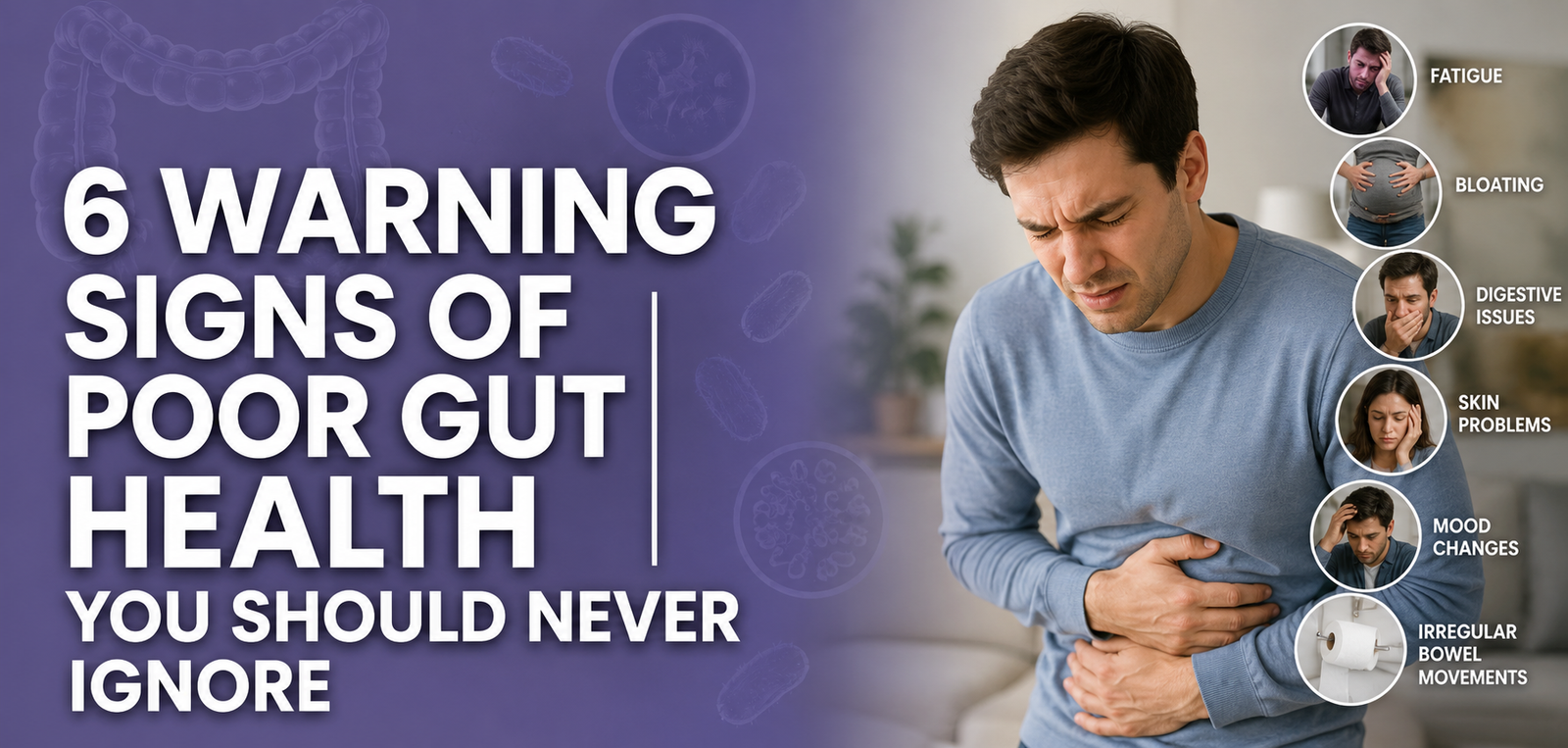
Here are the most common signs of an unhealthy gut and why they happen:
1. You Feel Bloated More Often Than Usual.
Occasional bloating after a heavy meal is normal.
But if your stomach feels swollen or uncomfortable several times a week, your gut may be struggling.
Bloating can happen when food is not digested or fermented properly due to imbalanced gut bacteria or a lack of beneficial microbes.
Signs:
➡️ Tightness in the stomach
➡️ Excess gas
➡️ Frequent burping
➡️ Sharp abdominal cramps
➡️ Heavy feeling after meals
➡️ Discomfort after eating certain foods
Pro Tip
If bloating happens repeatedly after specific foods, keep a simple food diary for two weeks to identify possible trigger patterns.
2. Your Bowel Habits Keep Changing.
Your gut often communicates through changes in bowel movements.
If you start noticing an irregularity in your bowel movements, your digestive system may be under stress.
Many people ignore the symptoms until they become disruptive.
Signs:
➡️ Constipation lasting several days
➡️ Loose stools
➡️ Urgency after meals
➡️ Feeling unable to empty bowels properly
➡️ Frequent stomach cramps
Also Read>>>
Types of Allergies | Symptoms, Triggers & Testing Guide
3. You Constantly Feel Tired or Low on Energy.
Poor gut health can affect absorption of key nutrients such as iron, magnesium, and B vitamins.
Your energy levels may drop even when you are eating regularly, and you may feel exhausted despite sleeping well.
Signs:
➡️ Brain fog
➡️ Low concentration
➡️ Feeling tired after meals
➡️ Difficulty staying energetic throughout the day
➡️ Poor sleep quality
Pro Tip
Do not assume constant tiredness is only stress-related.
Digestive issues combined with fatigue may point towards an underlying gut imbalance.
A gut health test can reveal what is actually getting through.
4. Your Skin Keeps Reacting Abnormally.
Your skin and gut are more connected than you realise.
Inflammation inside the digestive system can sometimes appear externally through skin flare-ups.
Signs:
➡️ Acne breakouts
➡️ Dry patches
➡️ Redness
➡️ Eczema flare-ups
➡️ Itchy skin
➡️ Increased skin sensitivity
Pro Tip
If your skin has not responded well to topical treatments or skincare changes, it may be worth looking inward rather than outward for answers.
5. You Develop Food Sensitivities More Frequently.
Are foods that never bothered you before suddenly causing discomfort?
This can be a sign that your gut lining has become more permeable or that your microbiome has shifted.
Food sensitivities or intolerances are not always severe allergies.
Sometimes, the gut simply struggles to process certain ingredients efficiently.
You may notice symptoms after dairy, processed foods, gluten-containing products, or heavily sugary meals.
Signs:
➡️ Stomach cramps
➡️ Excessive gas and bloating
➡️ Nausea
➡️ Chronic heartburn
Pro Tip
Keep a simple food and symptom diary for two weeks. Patterns become much easier to spot on paper than they are in your head.
6. Your Mental and Emotional State Keeps Fluctuating.
If you have been feeling mentally or emotionally low without an obvious reason, your gut may be playing a larger role than you realise.
This is because the gut produces most of the body’s serotonin and communicates directly with the brain.
Research published in Frontiers in Psychiatry highlights the gut microbiome’s role in influencing neurotransmitter production and the brain’s response to stress.
Signs:
➡️ Brain fog
➡️ Anxiety
➡️ Mood swings
➡️ Difficulty concentrating
➡️ Feeling of mental slowness
Related Article>>>
Your Complete Guide to Allergy Types, Symptoms, and Testing
Signs of Poor Gut Health in Women
If you are a woman experiencing symptoms that seem hormonal but have not been fully explained, your gut could be contributing more than you think.
You may experience unhealthy gut symptoms differently due to hormonal fluctuations and varying metabolic rates.
A group of gut bacteria known as the oestrobolome plays a direct role in how your body processes and clears oestrogen.
When these bacteria are out of balance, oestrogen levels can become disrupted, which in turn affects your cycle, mood, and general wellbeing.
This is the reason digestive changes become more noticeable during menstrual cycles, pregnancy, or menopause.
The table below outlines how an imbalanced digestive tract impacts a woman’s health.
| Affected System | Biological Link to the Gut | Resulting Symptoms |
| Hormonal Balance | Gut inflammation and poor oestrogen metabolism | Heavy or irregular periodsIntensified PMSSudden mood shiftsBloatingCramping |
| Metabolic Rate | Slow metabolism due to poor nutrient absorption | Stubborn weight gain around the abdomenLow energy levelsPersistent sugar cravings |
| Immune Protection | Localised bacterial overgrowth due to an imbalanced microbiome | Recurrent urinary tract infections (UTIs)Frequent thrush or vaginal infections |
Stress, poor sleep, and a sedentary lifestyle can also worsen your digestive symptoms over time.
Pro Tip
Support Your Hormones: Crucial microbes thrive on cruciferous vegetables like broccoli and Brussels sprouts. Adding these to your weekly meals helps your gut safely process oestrogen.
Signs of Poor Gut Health in Kids
Children can also experience gut health problems, although the symptoms may appear differently than in adults.
The signs are easier to miss because children often struggle to describe internal discomfort, such as bloating or nausea.
As a parent, knowing what to watch for can help you catch problems early.
According to the Northern Lincolnshire and Goole NHS Foundation Trust, these are the key signs of poor gut health in kids to look out for:
➡️ Frequent stomach pain or tummy complaints
➡️ Irregular or difficult bowel movements
➡️ Excessive gas, strong-smelling stools, and bloating
➡️ Behavioural changes (especially after meals)
➡️ Frequent infections or slow recovery
➡️ Sudden changes in skin texture
➡️ Fussy eating or sudden food aversions
➡️ Fatigue, poor concentration, or low energy
➡️ Altered sleep patterns, anxiety, and restlessness
Lifestyle Habits That May Be Affecting Your Gut
Your everyday habits can strongly influence gut health over time.
Some factors may quietly disrupt your digestion without obvious warning signs in the initial stages.
Let’s have a look at them.
| Lifestyle Factor | Possible Impact on Gut Health |
| Poor sleep | May disrupt gut bacteria balance |
| High stress | Can affect digestion and bowel habits |
| Processed foods | May reduce gut microbiome diversity |
| Low fibre intake | Can slow digestion |
| Frequent antibiotics | May alter healthy gut bacteria |
| Lack of hydration | Can contribute to constipation |
Simple Ways to Support Better Gut Health
Making small, sustainable daily shifts can noticeably improve your gut health over time.
You can support your gut by:
✅ Eating more fibre-rich foods
✅ Drinking enough water
✅ Sleeping consistently
✅ Managing stress levels
✅ Limiting ultra-processed foods
✅ Including fermented foods where suitable
✅ Staying physically active
It is important to give your body time to respond to these changes gradually.
When Should You Consider Gut Health Testing?
Not every digestive symptom requires testing immediately.
Some unhealthy gut symptoms are temporary and resolve on their own after a change in diet or a period of stress.
But others are your body’s way of asking for proper attention.
You should consider speaking to a healthcare professional or getting a gut health test if:
👉 Symptoms have been present for more than two to four weeks
👉 Your digestion is affecting your sleep, work, or daily routine
👉 You have noticed new food intolerances appearing without explanation
👉 Skin, mood, or energy issues are not improving with lifestyle changes alone
👉 Your child is experiencing recurring stomach pain, slow growth, or behavioural changes alongside digestive symptoms
Different gut health tests can assess digestive markers, gut bacteria balance, and food-related sensitivities.
Your Gut Has Been Talking. It Is Time to Listen.
Gut Health Testing at Dewaxify.
If ongoing stomach issues, unexplained bloating, or food sensitivities are bothering you, a gut health test can help explain your body’s signals.
At Dewaxify, based in Ilford, London, we are committed to making health clarity accessible to everyone.
We offer a growing range of at-home health tests designed to give you real answers, not more guesswork.
Led by HCPC-registered practitioner Sita Parmar, we bring our trusted, 4.9-star patient-first approach to a wider range of health needs.
Our gut health testing service gives you a detailed picture of what is happening inside your microbiome.
We provide access to gut health test kits designed to support a more informed approach to digestive wellbeing.
These tests can help identify patterns linked to gut balance, digestion, and food-related concerns.
Explore the available gut health testing options here:
What are the most common signs of poor gut health?
Common signs include bloating, constipation, diarrhoea, fatigue, food sensitivities, stomach discomfort, and skin flare-ups. Symptoms may vary depending on age, diet, and lifestyle habits.
Can poor gut health affect my skin?
Yes. Gut imbalances may contribute to inflammation, which can sometimes appear as acne, eczema, redness, or increased skin sensitivity in some individuals.
How can I improve my gut health naturally?
Eating fibre-rich foods, staying hydrated, improving sleep, reducing stress, and limiting processed foods can help support better gut health over time.
How is gut health in women different from men?
Women’s gut health is closely tied to hormonal cycles. The gut’s oestrobolome bacteria influence how oestrogen is processed, meaning gut imbalance can worsen PMS, disrupt periods, and affect mood around the menstrual cycle.
Can we test for poor gut health at home?
Yes. At-home gut health tests analyse a stool sample to show your bacteria balance, providing insights before you consult a healthcare professional.