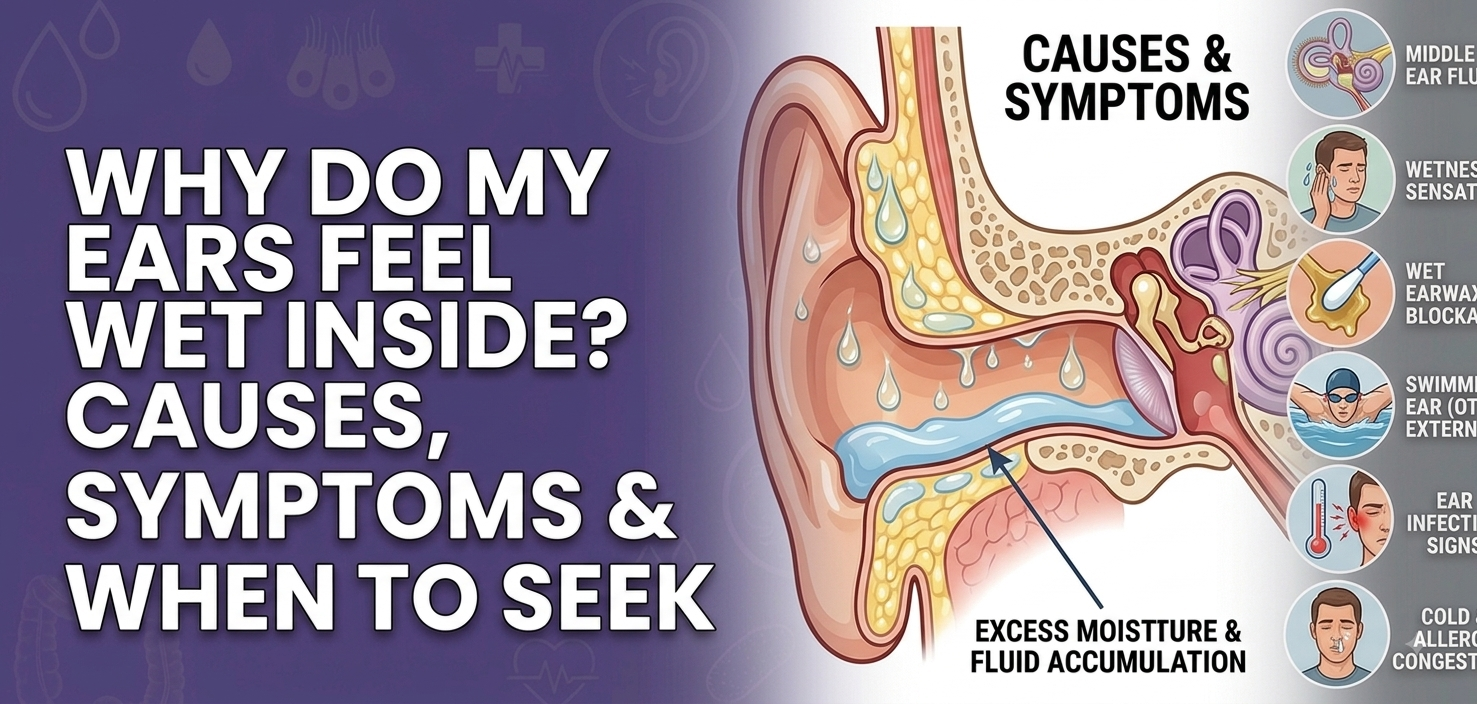
Have you ever had the strange feeling that there is water trapped inside your ear, even though you have not been swimming or showering?
It can feel uncomfortable, distracting, and sometimes worrying, especially if the sensation does not go away.
Ears feeling wet inside is one of the more common, and commonly ignored, ear complaints.
It does not always mean there is actual water in your ear.
The sensation can come from several different sources, some straightforward and some worth taking seriously.
The discomfort can range from a mild tickle to a constant feeling of fullness or movement inside the ear.
While some cases settle on their own, others may need professional assessment to prevent discomfort or hearing problems.
This guide breaks down the most likely causes, what they feel like, and when to get your ears checked.
What Does It Mean When Your Ears Feel Wet Inside?
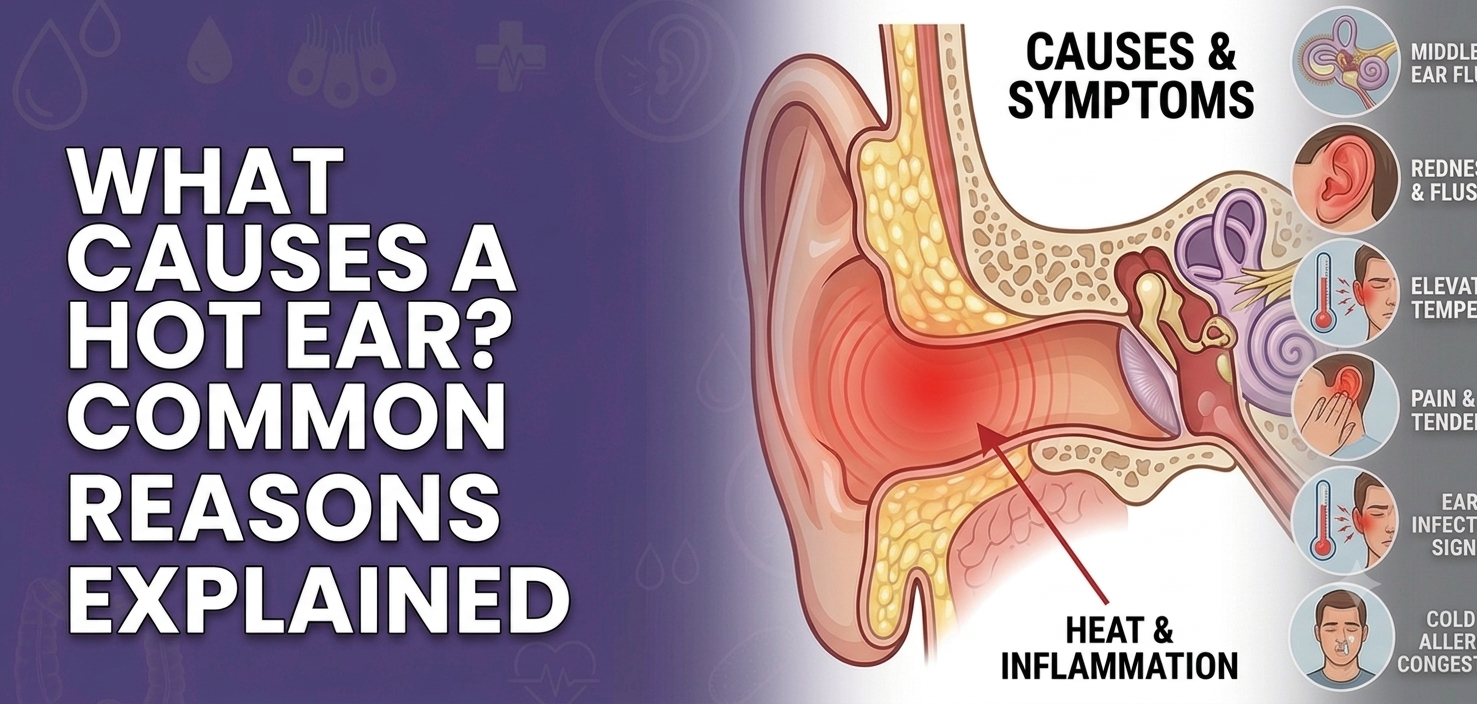
The feeling of wetness inside the ear is a symptom rather than a condition itself. It often happens when something affects the ear canal or the middle ear, making your brain interpret the sensation as trapped water.
In some people, the feeling comes and goes. In others, it may be accompanied by pain, itching, hearing changes, or fluid discharge.
Several conditions can cause this sensation, and identifying the right one is important before trying any treatment.
What Can Make Your Ears Feel Wet Inside?
The causes can vary from something simple, such as excess earwax, to infections that require medical attention. Looking at your other symptoms can often provide clues about what is happening.
1. Earwax Build-up
People naturally produce different types of earwax, ranging from dry and flaky to wet and sticky.
If you produce wetter earwax, you may regularly notice a soft or slightly damp sensation inside your ear canal. This is not a sign of infection. It is simply how your ears work.
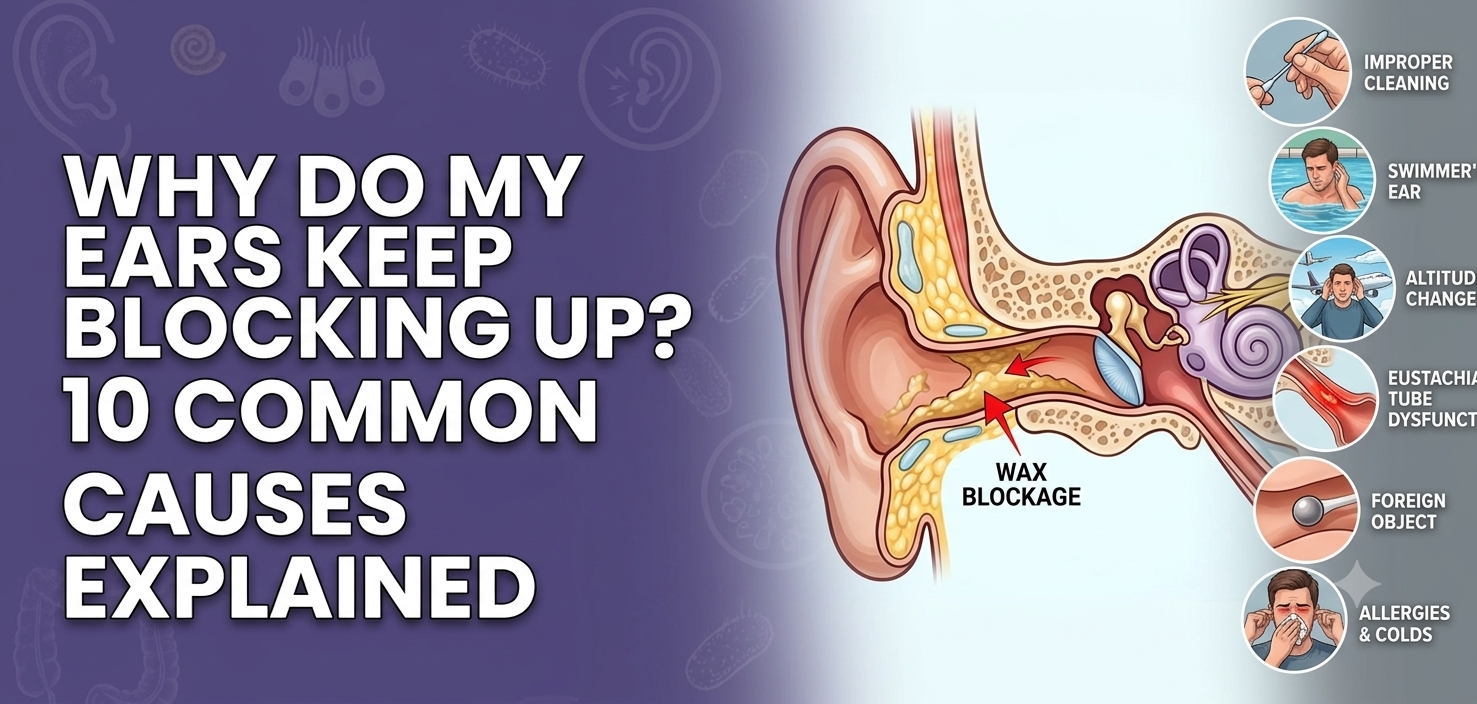
However, earwax becomes more of an issue when it starts building up, causing a feeling of fullness inside the ear.
It can trap moisture against the skin, producing that persistent fluid-in-ear sensation even when no water has entered the ears.
You may also notice:
👉 Reduced hearing
👉 Ear fullness
👉 Mild discomfort
👉 Ringing in the ears
👉 Crackling sounds
👉 Low-level ache or itchiness
2. Swimmer’s Ear (Outer Ear Infection / Otitis Externa)
When examining swimmer’s ear causes, the primary driver is the breakdown of the protective skin barrier inside your ear canal. It develops when moisture remains trapped there for a long time, creating an environment for bacteria or fungi to grow.
This moisture may come from:
➡️ Swimming regularly
➡️ Showering frequently
➡️ Excessive sweating
➡️ Humid weather
➡️ Cleaning ears aggressively
The moisture inside leads to an infection that softens and breaks down the natural protective lining of the ear canal.
Common symptoms include:
👉 Ear pain
👉 Itching inside the ear
👉 Swollen ear canal
👉 Fluid discharge
👉 Tenderness when touching the ear
According to Cleveland Clinic, swimmer’s ear affects approximately 1 in 10 people at some point in their lifetimes. Mild cases can sometimes be managed with over-the-counter antibiotic or antifungal ear drops from a pharmacy. More persistent or painful infections require assessment by a GP or audiologist.
3. Fluid Behind the Eardrum (Glue Ear)
Not all ear infections happen in the outer ear. Sometimes, the sensation of fluid in the ear can also originate from further inside.
Glue ear, medically known as otitis media with effusion, is a condition where fluid accumulates in the middle ear, behind the eardrum, rather than in the ear canal itself. This pressure can make it feel as though water is moving around inside your ear, even when the ear canal is completely dry.
The fluid in ear symptoms linked to glue ear are subtly different from those of an outer ear infection. You may notice the following:
👉 Earache
👉 Fever
👉 Temporary hearing loss
👉 Pressure inside the ear
👉 Popping or crackling sensation (when you swallow or yawn)
👉 Feeling generally unwell
Middle ear infections are more common after colds or sinus infections because swelling can block the Eustachian tube.
Comparing the Main Causes: What Does Your Symptom Pattern Suggest?
Identifying the likely cause of your symptoms is easier when you know what to look for. The table below helps distinguish between the four main causes of that wet feeling in the ear.
| Feature | Earwax Build-Up | Trapped Water | Swimmer’s Ear (Otitis Externa) | Glue Ear (Otitis Media with Effusion) |
| Location of sensation | Ear canal | Ear canal | Ear canal | Deep in the ear, behind eardrum |
| Pain | Mild or none | None | Yes, often worsens on touching outer ear | Usually none |
| Discharge | Possible | None | Common (fluid or pus) | None |
| Hearing | May be muffled | Temporarily muffled | Muffled as canal swells | Often muffled |
| Itching | Possible | None | Common and progressive | Rare |
| Timing | Ongoing or gradual | Immediately after water exposure | Develops over hours to days | Gradual, may follow a cold or infection |
| When to act | If symptoms persist | If water stays trapped for more than 1 to 2 days | Promptly if pain or discharge present | If hearing loss or fullness persists for more than a few weeks |
The National Institute for Health and Care Excellence (NICE) recommends assessing persistent ear problems carefully because similar symptoms can have different underlying causes that require different treatments.
Understanding Why Your Ear Feels Like Water Is in It
“Why does my ear feel like water is in it?” It’s a frustrating question, especially when you haven’t been near water. The answer often lies inside the ear rather than on the surface.
The sloshing sensation often occurs because the Eustachian tube is swollen or blocked. The reasons could be as follows:
Lingering Effects of a Recent Cold
Viral inflammation shuts down natural Eustachian tube drainage channels.
Seasonal Allergies and Hay Fever
Seasonal allergies and sinus congestion cause swelling that blocks middle ear ventilation.
Impacted Wax Trapping Normal Moisture
A solid wax plug prevents natural perspiration from evaporating correctly.
Rapid Changes in Atmospheric Pressure
Flying or driving through hilly terrain creates temporary pressure imbalances.
Instead of actual water moving inside the ear, your brain interprets pressure changes or inflammation as fluid shifting within the ear. This is why the sensation may continue for several days without any visible moisture.
When Should You Seek Professional Help?
In many cases, the sensation of wetness improves once the underlying cause is treated. However, some symptoms should never be ignored because they may indicate an infection or another ear condition that needs professional care.
It is especially important to seek medical advice if the feeling lasts for several days or keeps coming back.
Book an assessment if you experience:
👉 Persistent ear pain
👉 Hearing loss that worsens
👉 Fluid or pus draining from the ear
👉 Bleeding from the ear
👉 Fever with ear symptoms
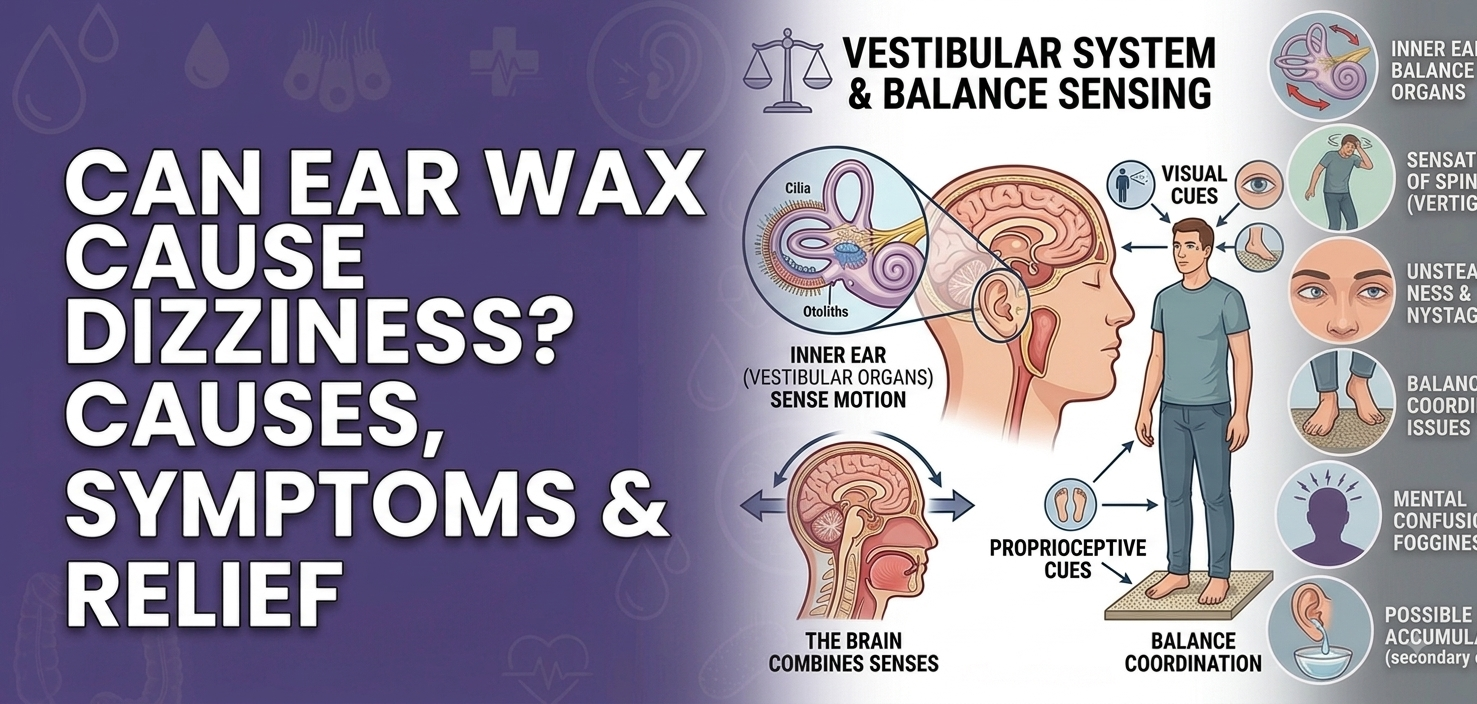
👉 Severe dizziness or balance problems
👉 Symptoms lasting longer than a week
According to the Royal National Institute for Deaf People (RNID), persistent hearing changes should always be assessed to identify the underlying cause and prevent unnecessary complications.
Pro Tip
If the wet sensation lasts for more than a few days or keeps returning, do not rely on home remedies alone. A professional ear examination can identify the exact cause.
Treatment Options for Ears Feel Wet Inside
Treatment depends entirely on what is causing the sensation. Trying the wrong remedy may make the condition worse, particularly if an infection is present.
The table below explains the most common treatment approaches.
| Cause | Common Treatment |
| Earwax build-up | Professional microsuction earwax removal |
| Swimmer’s ear | Antibiotic or antifungal ear drops |
| Middle ear infection | Medical assessment and appropriate treatment |
| Allergies | Allergy management and nasal sprays |
| Eustachian tube dysfunction | Pressure-relieving exercises and medical advice |
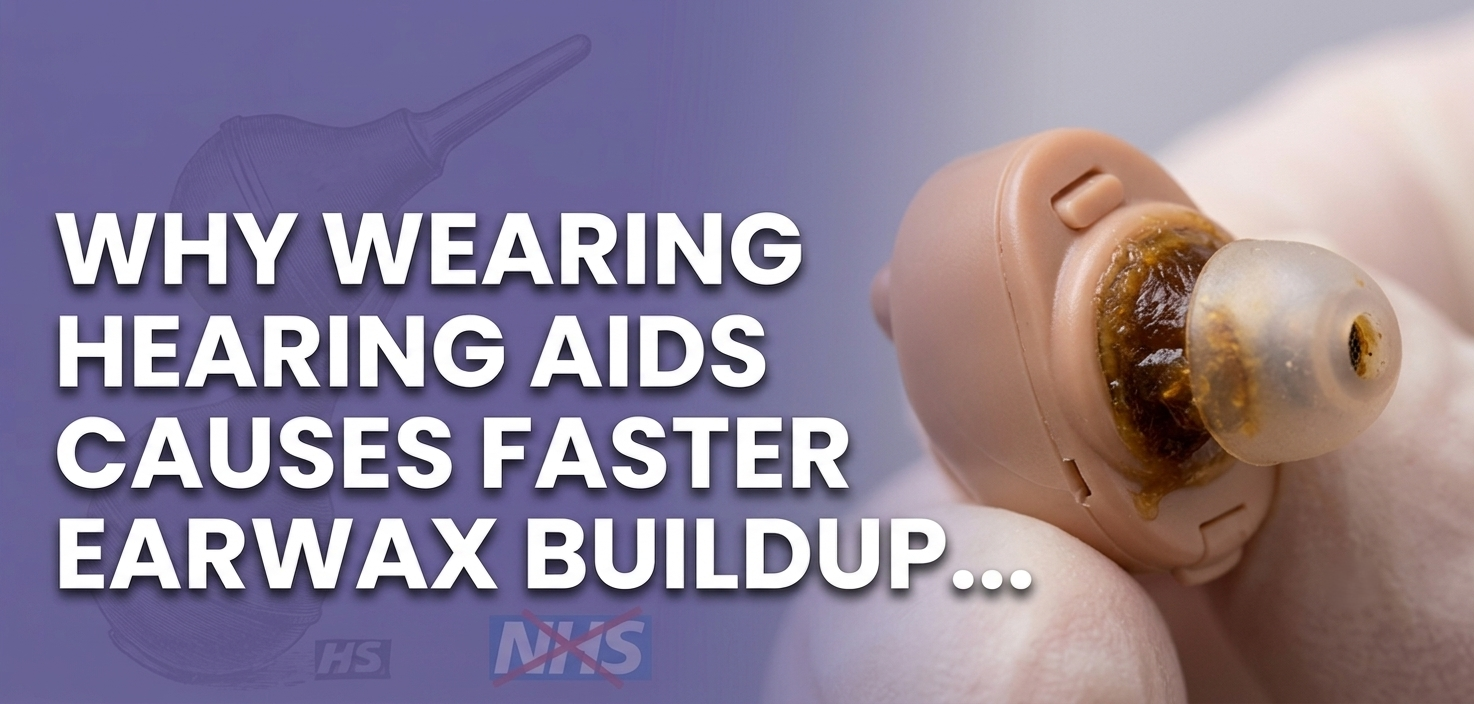
The NHS advises against putting objects into your ears to remove wax, as this may push it deeper or damage the ear canal.
Professional Ear Care and Hearing Solutions at Dewaxify Audiology
If your ears feel wet inside, muffled, or blocked, the best thing you can do is find out what is actually causing it rather than hoping it resolves on its own.
At Dewaxify Audiology, based in Ilford, London, we provide expert ear care led by HCPC-registered audiologist Sita Parmar. With over 15 years of clinical experience and a 4.9-star patient rating, we combine professional precision with a genuinely patient-centred approach.
Whether your symptoms are caused by earwax build-up, pressure changes, or another ear condition, our expert team will recommend the most appropriate next step.
Our services include:
✅ Professional microsuction earwax removal
✅ Comprehensive hearing assessments
✅ Free hearing tests
✅ Ear health examinations
✅ Personalised hearing care advice
If you are experiencing persistent ear discomfort or changes in your hearing, visit the Dewaxify Audiology homepage to learn more about our services. You can also book a free hearing test to have your hearing professionally assessed.
Early assessment can provide reassurance, identify treatable conditions, and help protect your long-term hearing health.

Frequently Asked Questions (FAQs)
Can ears feel wet inside without an infection?
Yes. The sensation may result from earwax build-up, allergies, Eustachian tube dysfunction, or pressure changes. A professional examination can determine whether an infection is present.
Why does my ear feel like water is in it but nothing comes out?
This feeling is commonly caused by pressure behind the eardrum, trapped earwax, or inflammation rather than actual water inside the ear.
What are the most common swimmer’s ear causes?
The condition usually develops when moisture remains inside the ear canal after swimming or bathing. Damage to the skin inside the ear from excessive cleaning can also increase the risk
Can a wet feeling in the ear affect my hearing?
Yes. Whether caused by earwax build-up, trapped water, an outer ear infection, or fluid behind the eardrum, any of these conditions can temporarily muffle or reduce hearing. Hearing usually returns to normal once the underlying cause is treated.
Are fluid in ear symptoms always serious?
Not always. Mild symptoms may settle on their own, but persistent hearing loss, pain, discharge, or dizziness should always be assessed by a healthcare professional.