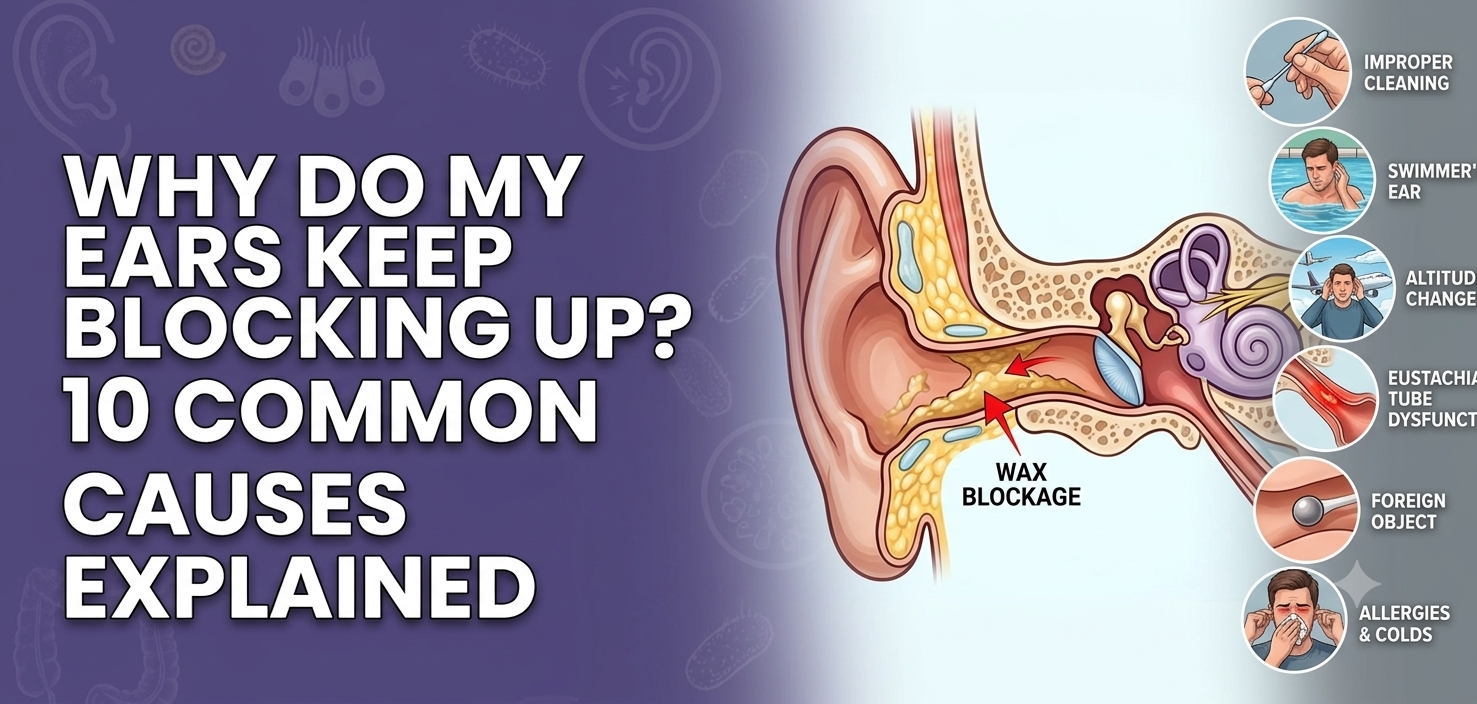
Do you feel an annoying, muffled sensation in one or both ears? This might be a sign of blocked ears and needs your immediate attention.
Your ears rarely block without a reason. Sometimes it happens after a shower. Other times, it appears during a cold, flight, or allergy season. While the feeling often goes away on its own, repeated episodes can become frustrating and may point to an underlying ear condition.
If your ears keep blocking up (feel full, muffled, or under pressure), it is worth understanding what could be causing it. Some reasons are harmless, while others need professional assessment to prevent hearing problems.
This comprehensive guide breaks down why these blockages happen and what you can do about them.
Why Do My Ears Keep Blocking Up?
Recurring ear blockage usually occurs due to underlying causes such as excess earwax build-up, allergies, a cold, or changes in air pressure. Some of the other blocked ear causes include Eustachian tube dysfunction, infections, allergies, pressure changes, and even early hearing loss.
When your ear canals or internal drainage tubes become restricted, sound waves cannot travel smoothly to your eardrum, creating a persistent clogged sensation. Knowing which specific mechanism is causing your symptoms helps you avoid harmful home remedies and seek the correct treatment.
What Does a Blocked Ear Feel Like?
Many people describe a blocked ear differently. The sensation depends on what is causing the problem and whether one or both ears are affected.
You may notice:
✅ Feeling of ear fullness
✅ Muffled or reduced hearing
✅ Popping or crackling sounds
✅ Pressure inside the ear
✅ Mild discomfort or pain
✅ Ringing in the ears
✅ Temporary dizziness
These symptoms can last from a few minutes to several weeks depending on the underlying cause.
According to the Royal National Institute for Deaf People (RNID), hearing changes that persist or return repeatedly should be assessed by a hearing professional, as they may indicate an underlying hearing or ear condition.
The Mechanism of Ear Fullness: Open vs. Blocked Passages
To better understand how internal obstruction affects you, let’s first understand how healthy ears function compared to blocked ones.
Our ear is made up of three sections:
The outer ear
Carries sound to the eardrum
The middle ear
Sits behind the eardrum and contains tiny bones that transmit vibration to the inner ear
The inner ear or Eustachian tube
A narrow passage that runs from the middle ear down to the back of our throat that keeps air pressure balanced and helps drain fluid away
Under normal conditions, air pressure stays equalised on both sides of your eardrum, allowing sound waves to vibrate freely. In blocked ears, the air pressure is imbalanced, causing discomfort and hearing problems.
The comparison table below highlights the different aspects of ear function in normal and blocked ears.
| Aspect of Ear Function | Normal Ear | Blocked Ear |
| Sound Wave Transmission | Clear sound travel with no volume loss | Muffled vibration, reducing speech clarity and sound detail |
| Middle-ear Ventilation | Drainage tubes open naturally during swallowing or yawning | Sealed passages, trapping air and fluid inside |
| Internal Pressure Feel | Completely weightless and comfortable | Persistent heavy pressure and popping sounds |
| Eardrum Mobility | Smooth membrane flex in response to sound waves | Restricted membrane movement due to fluid or vacuum pressure |
Understanding where the blockage is coming from is the first step toward clearing it. Let’s deep dive into knowing the blocked ear causes.
10 Common Blocked Ear Causes You Should Know
Here are the ten most frequent reasons your ears may feel clogged.
- Compacted Earwax Build-up
Earwax is one of the leading reasons why ears keep blocking up.
Our body produces earwax naturally to protect the ear canal from dust, debris, and bacteria. In most people, the ear is self-cleaning, and wax migrates out on its own. But for some people, wax builds up faster than it clears, hardens inside the canal, and causes a noticeable blockage.
According to a study supported by the NIHR Manchester Biomedical Research Centre, 9 out of 10 people with earwax impaction reported hearing difficulty, and more than 8 out of 10 noticed an immediate improvement in their hearing after the wax was professionally removed.
Common signs include:
👉 Gradually worsening hearing
👉 Ear fullness
👉 Ringing sounds
👉 Itching inside the ear
👉 Discomfort while wearing hearing aids
Common triggers of earwax build-up include:
- Using cotton buds (pushes wax deeper into the canal rather than removing it)
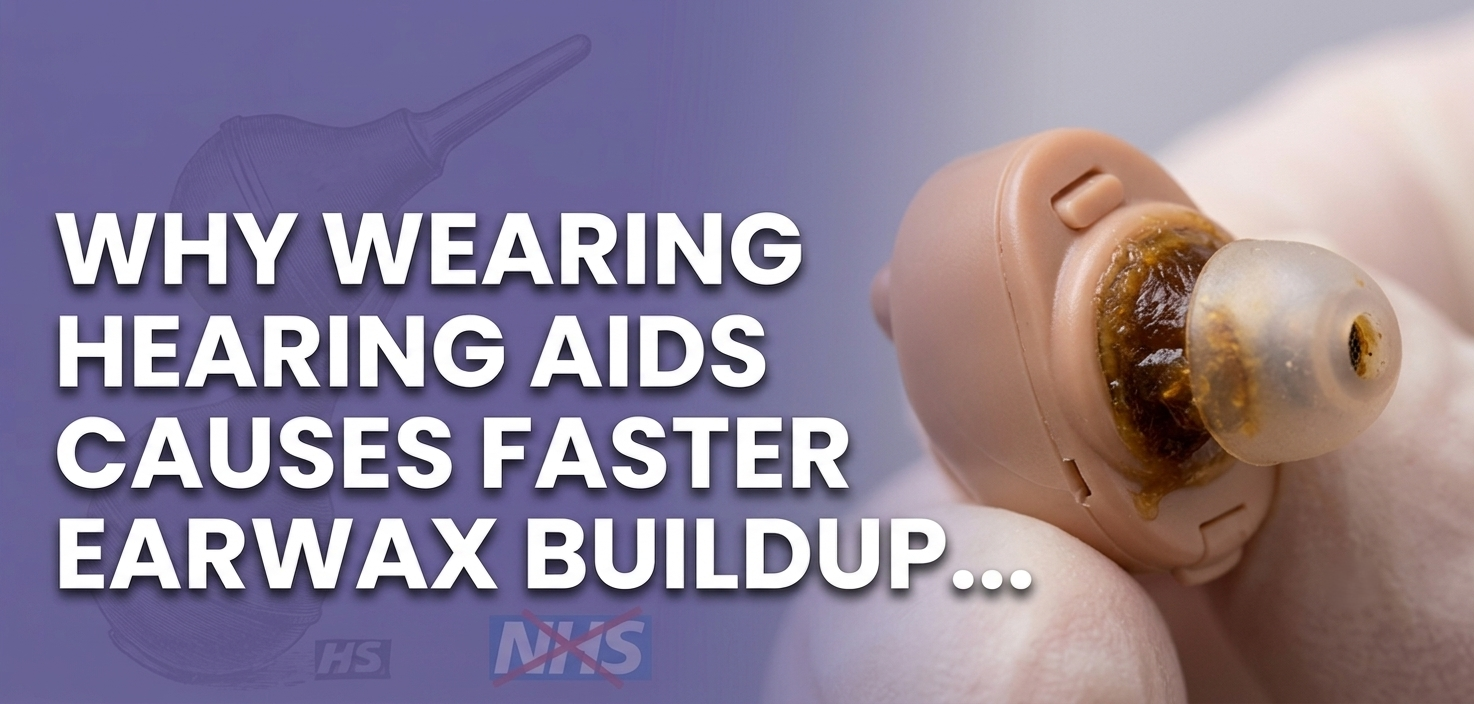
- Wearing hearing aids or in-ear earphones regularly (prevents natural wax migration)
- Having naturally narrow or curved ear canals
- Producing more wax than average
Pro Tip
Never use cotton buds inside your ear canal. They compact wax rather than clear it, and they can scratch the delicate skin of the canal too.
- Eustachian Tube Dysfunction
The Eustachian tubes connect your middle ears to the back of your nose. They help equalise pressure and allow fluid to drain properly.
When these tubes become swollen or blocked, pressure builds inside the ear, causing discomfort and muffled hearing.
Common Eustachian tube dysfunction symptoms include:
👉 Ear pressure
👉 Clicking or popping sounds
👉 Muffled hearing
👉 Feeling of fullness
👉 Discomfort during flights
👉 Symptoms after colds or allergies
Pro Tip
If your ears feel blocked and you notice popping sounds when you swallow or yawn, Eustachian tube dysfunction is a likely culprit.
- Allergies and Hay Fever
Many people associate allergies with sneezing and itchy eyes. However, allergic inflammation can also affect the ears.
When the nasal passages become inflamed, the Eustachian tubes may not open properly. As a result, pressure builds inside the middle ear.
This is particularly common during spring and high pollen periods.
You may notice:
👉 Ear pressure
👉 Blocked ears after being outdoors
👉 Popping while swallowing
👉 Muffled hearing
👉 Nasal congestion
Treating the allergy itself, with antihistamines or nasal corticosteroid sprays, typically helps the ear symptoms ease at the same time.
- Colds and Sinus Infections
When you have a cold or sinus infection (sinusitis), your throat and nose lining get inflamed. The mucus production increases throughout your upper respiratory system, including the Eustachian tube. This swelling can block the tube temporarily, preventing it from draining fluid from the middle ear and equalising pressure properly.
Common symptoms include:
👉 Ear fullness
👉 Nasal congestion
👉 Facial pressure
👉 Thick mucus
👉 Reduced hearing
Most people notice gradual improvement once the infection clears.
- Pressure Changes (Barotrauma)
Have your ears ever been blocked during a flight or while driving through hills?
That is barotrauma, a condition caused by a rapid change in air or water pressure that the Eustachian tube struggles to compensate for fast enough.
People are more likely to experience pressure-related blockage if they already have the following:
✔️ A cold
✔️ Allergies
✔️ Sinus congestion
✔️ Eustachian tube dysfunction
According to the Cleveland Clinic, barotrauma is one of the most common ear complaints among air travellers and can also occur during scuba diving, driving through mountains, or riding a fast lift. In most cases, it resolves within a few minutes to hours as the pressure equalises naturally.
This temporary blockage usually improves after swallowing, yawning, chewing, or using filtered earplugs designed for flying.
Pro Tip
If you have a cold or active sinus congestion before a flight, your Eustachian tube will already be under pressure. Use a saline nasal spray before boarding to help keep things clear.
- Water Trapped Inside the Ear (Otitis Externa)
Water can sometimes remain inside the ear canal after swimming, showering, or other water-based activities. While it often drains out naturally, trapped moisture can leave your ear feeling blocked for several hours.
The risk with persistent trapped moisture is that it creates a warm, damp environment where bacteria or fungi can multiply, potentially leading to otitis externa.
You may notice:
👉 Ear feels full after swimming
👉 Sloshing sensation
👉 Mild discomfort
👉 Temporary muffled hearing
👉 Itching inside the ear
- Middle Ear Infection (Otitis Media)
An infection in the middle ear can cause fluid to build up behind the eardrum. As pressure increases, your hearing may become muffled, and the ear can feel blocked.
Although middle ear infections are more common in children, adults can develop them too, especially after a cold or sinus infection.
Common symptoms include:
👉 Ear pain
👉 Feeling of pressure
👉 Fever
👉 Reduced hearing
👉 Fluid behind the eardrum
According to the NHS, most middle ear infections improve within a few days, but persistent or severe symptoms should be assessed by a healthcare professional.
- Changes in Hearing With Age
Not every blocked feeling in the ear is caused by something sitting inside it. Sometimes, a persistent muffled or distant quality to sounds is an early indicator of age-related hearing loss rather than a physical blockage.
According to RNID research, more than half of UK adults over the age of 55 have some degree of hearing loss, and because it tends to develop gradually, many people initially mistake it for a recurring blocked ear.
Signs may include:
👉 Frequently asking people to repeat themselves
👉 Turning up the television volume
👉 Difficulty hearing conversations
👉 Feeling that sounds are muffled
A professional hearing assessment can determine whether hearing changes are contributing to the sensation.
- Jaw Problems (TMJ Disorders)
The jaw joint sits very close to the ear. Problems affecting this joint can sometimes create symptoms that feel like an ear condition.
People with temporomandibular joint (TMJ) disorders may experience the following:
👉 Ear fullness
👉 Jaw pain
👉 Clicking while chewing
👉 Headaches
👉 Facial discomfort
Pro Tip
If your blocked ear is accompanied by jaw pain or clicking while chewing, avoid assuming it is earwax. The problem may start in your jaw rather than your ear.
- Less Common Ear Conditions
Occasionally, recurring ear blockage is linked to less common medical conditions affecting the ear or hearing system.
These may include:
👉 Ménière’s disease
👉 Cholesteatoma
👉 Acoustic neuroma
👉 Persistent fluid in the middle ear
These conditions are much less common than earwax or Eustachian tube dysfunction but should always be investigated if symptoms continue or become more severe.
How to Unblock Ears Safely: What Actually Helps
The best way to treat a blocked ear depends entirely on the underlying cause. Trying the wrong solution can sometimes make the problem worse.
The table below explains common causes and the most appropriate first step.
| Cause | What May Help |
| Earwax build-up | Professional microsuction removal by a trained audiologist |
| Eustachian tube dysfunction | Valsalva manoeuvre, steam inhalation, nasal sprays |
| Allergies | Antihistamines or nasal sprays |
| Cold or sinus infection | Decongestants, saline nasal rinse, rest |
| Air pressure changes | Swallowing, yawning, chewing gum, filtered earplugs |
| Water trapped in ear | Gentle drainage techniques |
| Ear infection | GP assessment, possible antibiotic treatment |
| Hearing loss | Hearing test followed by professional audiological assessment |
When dealing with a frustrating blockage, it is tempting to try risky home tricks or sharp tools. However, improper techniques can scratch your delicate canal lining or even tear your eardrum. Knowing how to unblock ears safely protects your hearing while relieving discomfort.
When Should You Seek Professional Help?
Occasional ear blockage is usually not a cause for concern. However, recurring symptoms should never be ignored.
It is time to seek professional advice if:
➡️ Your ears remain blocked for several days
➡️ Hearing continues to worsen
➡️ You experience severe ear pain
➡️ Fluid or blood comes from the ear
➡️ You develop sudden hearing loss
➡️ Blocked ears keep returning without an obvious reason
➡️ Dizziness affects your balance
RNID recommends seeking prompt assessment for sudden or persistent hearing changes, as early diagnosis can improve treatment outcomes.
Struggling With Blocked Ears in London? Dewaxify Audiology Can Help
If your ears keep blocking up, identifying the cause is just as important as relieving the symptoms.
Dewaxify Audiology, based in Ilford, East London, is a specialist ear-health clinic led by HCPC-registered audiologist Sita Parmar, with over 15 years of clinical experience. We have built a reputation for expert, patient-centred ear care across London, with a 4.9-star patient rating and a straightforward, no-fuss approach to diagnosis and treatment.
We provide safe microsuction earwax removal, comprehensive hearing assessments, hearing aid support, and personalised ear care for adults across London. Our experienced clinicians take the time to identify what is causing your symptoms before recommending the most appropriate solution.
If excess earwax is affecting your hearing, learn more about our earwax removal services on the Dewaxify Audiology home page.
If you have noticed recurring ear blockage, muffled hearing, or changes in your hearing, you can also book a free hearing test to assess your hearing health.
Early assessment can help rule out hearing loss, persistent earwax, or other ear conditions before they begin affecting your daily life.

Frequently Asked Questions (FAQs)
Why do my ears keep blocking up repeatedly?
Repeated ear blockage is often caused by earwax build-up, allergies, colds, or eustachian tube dysfunction symptoms. If the problem keeps returning, a professional examination can identify the underlying cause and recommend appropriate treatment.
Does a blocked ear always mean earwax?
No. While earwax is the most common cause, blocked ear causes include infections, allergies, Eustachian tube problems, pressure changes, trapped water, and hearing loss. A proper examination is the only reliable way to identify which is responsible.
How do I know if my blocked ear is wax or fluid?
Wax buildup usually causes a gradual drop in hearing without pain. Fluid accumulation often follows a cold or allergy flare-up and typically creates popping sounds, pressure, or a sudden underwater feeling.
Can blocked ears be a sign of hearing loss?
Sometimes. Although blocked ears are commonly caused by earwax or pressure changes, gradual hearing loss can create a similar sensation. A hearing test can determine whether your hearing has changed.