One moment your ear feels completely normal. The next moment it is warm to the touch, flushed red, and possibly uncomfortable. It can happen without warning and leave you wondering whether it is something harmless or a sign that needs attention.
A hot ear is one of those symptoms that feels oddly noticeable but is easy to dismiss. There are several reasons your ear might feel this way, ranging from a simple emotional response to something that genuinely needs a closer look.
This guide covers the most common causes so you know exactly what you are dealing with and when it is time to act.
What Does a Hot Ear Mean?
A hot ear simply means that one or both ears feel warmer than usual. Sometimes the ear also appears red or flushed. Before getting into the causes, it helps to understand the mechanism behind it.
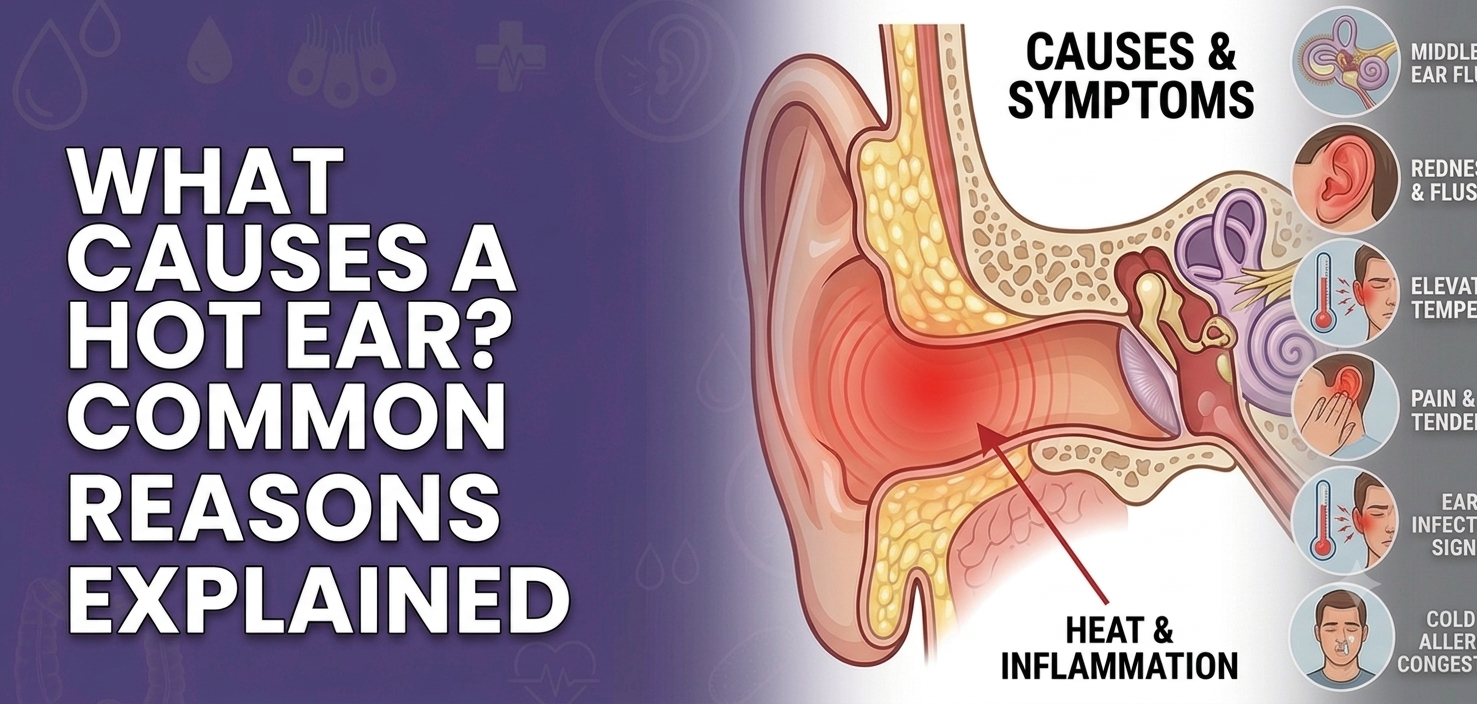
Your outer ear is covered in thin, sensitive skin with a high concentration of blood vessels sitting very close to the surface. When those vessels widen, more blood rushes through them, and the skin temperature rises noticeably. This process is called vasodilation.
Redness and warmth in the ears occur when blood vessels near the skin’s surface dilate. This can happen for a wide range of reasons, from intense emotions to infections and skin irritation. The key to identifying the cause often lies in the context:
- How long the sensation lasts,
- Whether it is painful, and
- What else is going on in your body at the time?
The hot ear feeling may last for only a few minutes or continue for several hours. For some people, it happens occasionally. Others may notice it regularly, especially after exposure to certain triggers.
While the sensation itself is usually harmless, do not ignore recurring episodes because they can point to an underlying condition. Ear pain or redness that is persistent, severe, or associated with fever or hearing loss should be assessed by a healthcare professional.
Common Causes of a Hot Ear
“Why do my ears burn and turn red?”
This question comes up frequently, and the answer depends on the pattern and severity of your symptoms and what is happening elsewhere in your body.
There is no single reason why your ear may suddenly feel hot. It is often caused by increased blood flow to the skin but can also be linked to nerve irritation or certain medical conditions.
Here is a breakdown of the most common ones.
- Emotional Stress and Anxiety
This is one of the most frequent and least talked about causes of a hot ear.
When you experience a strong emotion, whether that is stress, embarrassment, anxiety, or anger, your nervous system activates and releases hormones, including adrenaline and cortisol. These hormones cause blood vessels throughout the body to widen rapidly, including those in the ears.
The result is that familiar flush: your ears feel suddenly warm, they may turn visibly red, and the sensation often fades once the emotional moment passes. The hot ear lobes stress is particularly common because the earlobes have a rich blood supply and are especially sensitive to circulatory changes.
This type of flushing is a completely normal physiological response and does not require any treatment. It typically resolves on its own once your stress or emotional state settles.
Pro Tip
If you notice your ears consistently flare up during stressful periods, try slow breathing techniques to reduce your fight-or-flight response and ease the flushing.
- Changes in Temperature
Moving between environments can also cause your ears to feel hot.
If you come indoors from cold air, your blood vessels dilate to restore normal circulation, and your ears may feel warm as blood flow returns.
Similarly, spending time in direct sunlight or near a heat source raises the surface temperature of the ear quickly.
Wearing over-ear headphones or a tight hat for a prolonged period can trap heat around the ear and cause the same warming sensation.
In these cases, the cause is straightforward, and the solution is simply removing yourself from the heat source.
- Ear Infections
A hot ear accompanied by pain, discharge, or a feeling of pressure inside the ear is more likely to have an infectious cause. Ear infections can affect different parts of the ear and produce different patterns of symptoms.
There are two main types to be aware of:
Outer ear infection (otitis externa)
This affects the ear canal and is often caused by water getting trapped in the ear or by inserting objects like cotton buds. Symptoms include inflammation, redness, itching, and ear discharge. The outer ear may feel hot and tender to touch.
Middle ear infection (otitis media)
This occurs deeper in the ear, behind the eardrum. Symptoms include earache, temporary hearing loss, and sometimes discharge. It is more common in children but can affect adults too.
Both types of infection can cause the ear to feel noticeably warm or hot, often alongside other symptoms that make the cause clearer. A healthcare professional should always assess persistent or worsening ear infections.
- Skin Allergies or Irritation
Sometimes the problem is not inside the ear but on the skin itself.
Hair products, shampoos, perfumes, earrings, hearing aid materials, or even certain fabrics may irritate the delicate skin around the ear. This can make the ear feel warm, itchy, and slightly swollen.
The most common skin conditions include:
Eczema (Atopic Dermatitis)
Can affect the skin of the outer ear and ear canal, causing dryness, itching, and inflammation that makes the ear feel hot and uncomfortable.
Seborrhoeic Dermatitis
A skin condition that causes scaly patches, redness, and oiliness. It commonly affects areas around the ears and can cause persistent warmth and irritation.
Contact Dermatitis
An allergic or irritant reaction to something that has touched the ear. Common triggers include jewellery metals like nickel, skincare products, hearing aid materials, and hair dyes. The skin becomes inflamed, red, and hot at the point of contact.
These skin conditions tend to be recurring and may come and go. If you notice a pattern linked to a specific product or material, identifying and removing that trigger is usually the most effective first step.
- Seasonal Allergies
Though not a direct cause of a hot ear, seasonal allergies can contribute to sensations of warmth, fullness, and discomfort inside the ear canal.
If you have hay fever, you may notice ear symptoms becoming worse during periods of high pollen levels. Allergies at this time trigger inflammation throughout the nose, throat, and nearby tissues that some people in the UK experience as a sensation of heat.
- Red Ear Syndrome
Although uncommon, a distinctly recognisable condition called red ear syndrome causes recurring ear redness and burning in some people. It is a rare neurological disorder marked by recurring episodes of burning pain and redness in one or both outer ears. These episodes may last from a few minutes to several hours and often occur without an obvious cause.
According to Medical News Today, the condition is thought to involve the nervous system and blood vessels, and it has been linked to migraines, neck movement, touch, and stress in some individuals. In younger people, there is a noted association with migraine headaches, though researchers are still unclear whether the headache triggers the ear episode or the other way around.
Symptoms may include:
👉 Burning ear pain
👉 Bright red ear
👉 Warm skin
👉 Pain spreading to the face
👉 Episodes lasting several minutes
Red ear syndrome is an uncommon condition and should be diagnosed after other more common causes have been ruled out.
- Earwax Build-Up
Earwax itself does not usually make the ear feel hot. However, impacted earwax can trap moisture, irritate the ear canal, or contribute to infection, all of which may create warmth and discomfort.
If earwax is combined with inflammation or infection, your ear may also feel blocked, tender, or painful. Trying to remove earwax yourself can make the problem worse. Professional assessment is the safest option if symptoms persist.
When Should You Worry About a Hot Ear?
A brief, painless episode of warmth in your ear, especially after a stressful moment or a temperature change, is almost always harmless. Your body is simply doing its job.
However, some symptoms should never be ignored because they may indicate infection or another condition requiring medical care.
You should seek professional advice if you notice any of the following:
➡️ The ear is painful, swollen, or tender to touch
➡️ Discharge or an unusual smell is coming from the ear
➡️ Your hearing feels muffled or reduced
➡️ The redness is spreading beyond the ear
➡️ You have a fever alongside the ear symptoms
➡️ Episodes of heat and redness are recurring without an obvious trigger
➡️ Symptoms have not improved after a few days
These signs suggest a cause that needs proper assessment rather than a wait-and-see approach.
The NHS advises seeking urgent medical attention if ear pain is severe, follows an injury, or is associated with significant hearing loss.
How Is a Hot Ear Diagnosed?
Finding the cause begins with understanding your symptoms and examining the ear.
A clinician may ask about:
✅ When symptoms started
✅ How often they occur
✅ Recent illnesses
✅ Allergy history
✅ Stress levels
✅ Hearing changes
Depending on your symptoms, they may also examine the ear canal, check for earwax, assess signs of infection, or recommend a hearing assessment if hearing has been affected.
Treatment for a Hot Ear
Treatment depends entirely on what is causing the problem. There is no single solution because a hot ear can have several different causes.
The table below outlines the most common approaches to get relief.
| Cause | Possible Treatment |
| Stress | Relaxation techniques, lifestyle changes |
| Allergies | Antihistamines or allergy management |
| Sunburn | Cool compresses, after-sun care |
| Skin irritation | Avoid the trigger, and apply moisturisers |
| Infection | Medical assessment and treatment |
| Earwax build-up | Professional earwax removal |
Avoid using home remedies such as inserting cotton buds, hairpins, or other objects into the ear. These can cause injury, increase the risk of infection, and worsen the hot ear condition.
Can You Prevent a Hot Ear?
Not every cause of hot ear can be prevented, but a few simple habits may reduce your chances of recurring symptoms.
Looking after your ears every day can make a noticeable difference.
Consider these simple steps:
✔️ Wear sunscreen outdoors
✔️ Manage seasonal allergies early
✔️ Reduce stress levels
✔️ Avoid inserting objects into ears
✔️ Protect ears from extreme temperatures
✔️ Have persistent symptoms checked promptly
Small changes often help prevent temporary irritation from becoming a longer-term problem.
Uncomfortable Ears? Let Dewaxify Audiology Take a Look
If your hot ear is accompanied by blocked ears, hearing changes, or ongoing discomfort, it is worth having your ears examined by an experienced audiology professional.
At Dewaxify Audiology in Ilford, East London, we are dedicated to providing safe, professional ear care for patients across London. Our clinic is led by HCPC-registered audiologist Sita Parmar, with over 15 years of clinical experience. We have been rated 4.9 stars by our patients, and we offer same-day appointments for those who need prompt attention.
If earwax is contributing to your ear discomfort, warmth, or muffled hearing, our microsuction earwax removal service offers a quick, gentle, and clinically trusted solution. Microsuction is the gold standard for safe earwax removal involving no water, no mess, and no discomfort. Many patients notice an immediate improvement after a single appointment.
If you are concerned about any change in your hearing alongside your ear symptoms, we also offer a free hearing test for new patients. A quick, professional assessment gives you a clear picture of your hearing health and ensures nothing is being overlooked.
Your ears deserve proper attention. Book your appointment with Dewaxify Audiology today.

Frequently Asked Questions (FAQs)
Why do my ears burn and turn red without pain?
This often happens because of emotional stress, temperature changes, allergies, or flushing. If burning occurs frequently or is associated with hearing changes, seek professional medical advice
What are the most common red ear syndrome causes?
The exact cause is unknown, but red ear syndrome is thought to be linked to nerve irritation, migraines, or jaw joint disorders. It is considered a rare condition and requires medical evaluation.
Can stress cause a hot ear?
Yes. Emotional stress can increase blood flow to the skin, causing the ears to become warm and red (leading to the hot ear lobes stress). These episodes usually settle once your body relaxes, but recurring symptoms should still be assessed.
Can earwax cause my ear to feel hot?
Earwax build-up does not directly cause heat, but the pressure and inflammation it creates in the canal can contribute to warmth and discomfort. Professional earwax removal typically resolves these associated symptoms promptly.
When should I see a doctor about a hot ear?
See a doctor if your ear is painful, swollen, or discharging, if you have a fever, if hearing has changed, or if episodes of heat and redness keep recurring without an obvious cause. These signs warrant a proper clinical assessment.