
You have probably heard the phrase “trust your gut” used as general life advice. But when it comes to your actual digestive system, those words carry far more weight than most people appreciate.
Your gut does a great deal more than break down your meals. It influences your immune system, energy, sleep, concentration, and even your mood. When it is working well, you barely notice it. When it is not, your whole body tends to feel the consequences.
This guide gives you a clear, honest answer to the questions that actually matter:
- What is gut health?
- Why does it matter more than most people think?
- What can you do to take better care of your gut health?
What Is Gut Health?
‘Gut health’ refers to how well your digestive system functions and how balanced the microorganisms inside your gut are. These microorganisms are known as the gut microbiome.
Your digestive system includes organs such as the stomach, intestines, and colon. Inside this system lives an entire ecosystem of bacteria, viruses, and fungi (the gut microbiome) that quietly influence your health every day. Some of these microbes are helpful, while others can become harmful if they grow out of balance.
According to Guts UK, a healthy gut is one where these helpful microbes vastly outnumber the harmful ones. Together, they regulate several functions inside your body.
✅ Break down food efficiently.
✅ Absorb the nutrients your body needs.
✅ Filter out harmful substances.
✅ Maintain a protective barrier for unwanted bacteria.
✅ Supports regular bowel movements.
When these processes are working in balance, your digestive system supports everything else going on in your body, including your skin health and mental wellbeing.
Why Is Gut Health So Important? The Bigger Picture
Your gut affects several systems across the body, not just digestion. When your gut balance is healthy, your body is often better equipped to process nutrients and manage inflammation. On the other hand, an unhealthy gut may contribute to discomfort that keeps returning without a clear explanation.
According to Imperial College Healthcare NHS Trust, your gut microbiome is as unique as your fingerprint. It is shaped by your genes, the foods you eat, the medications you take, and the environment you live in. The interesting part is that it continues to change throughout your life.
Pro Tip: Your gut microbiome is unique. A personalised gut health test can give you clearer insights than following broad digestive health advice alone.
Here is why the importance of gut health goes well beyond your stomach.
Your Gut Runs a Large Part of Your Immune System.
Nearly 70% of your body’s immune system is physically located within the walls of your gut. Your microbes are in constant communication with your immune cells, essentially acting as an internal training academy. They teach your immune system how to recognise the difference between a harmless piece of food and a dangerous pathogen.
An unhealthy gut may sometimes make the body more sensitive to infections or digestive irritation. Having a healthy microbiome level prevents your system from overreacting, which significantly lowers your risk of chronic inflammation and autoimmune complications.
Pro Tip: Frequent illness or slow recovery may point to poor gut balance. Your immune system and microbiome health are more closely connected than you might think.
Your Gut and Your Brain Are in Constant Conversation
Have you ever felt “butterflies” in your stomach when nervous? This happens because your brain and your digestive tract are connected by a massive, bi-directional communication highway called the vagus nerve.
As per a UKRI research, your gut bacteria actually produce a vast array of neurochemicals that control your mood, sleep, and stress response. In fact, roughly 90% of your body’s serotonin (the primary chemical responsible for feelings of happiness and calm) is manufactured directly inside your intestines by your microbial inhabitants.
According to Digestive Health UK, patients with ongoing gut disorders are significantly more likely to develop conditions including anxiety and low mood.
Pro Tip: If digestive symptoms and low mood appear together, discuss both with your GP. The gut-brain connection may help explain the underlying cause.
It Determines How Much Energy You Actually Get from Your Food
Even if your diet looks good on paper, an unhealthy gut can quietly undermine your nutritional status. Your gut microbiome helps break down fibres and complex carbohydrates that your body cannot process on its own, converting them into short-chain fatty acids that feed your gut lining and fuel your cells.
When gut bacteria are out of balance, nutrient absorption suffers, leading to deficiencies in iron, vitamin B12, and magnesium. You may thus notice symptoms such as persistent fatigue, poor concentration, and reduced physical stamina.
Signs Your Gut May Be Out of Balance
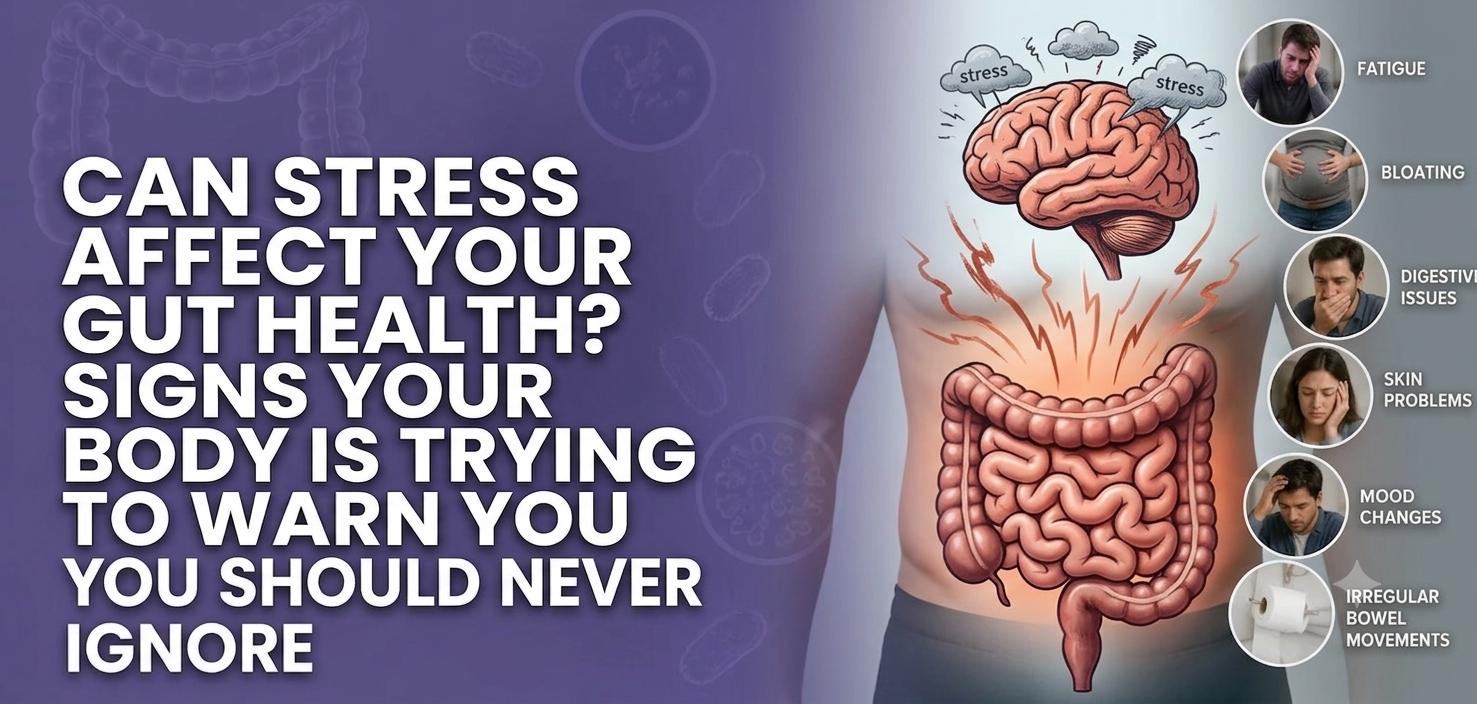
The symptoms of an unhealthy gut are not always obvious, and they do not always appear in your stomach. In many cases, they are subtle and easy to dismiss. Many people manage persistent symptoms for months, or even years, without ever connecting them to their gut.
Here are some common symptoms and what they indicate.
| Symptom | What It Could Indicate |
| Persistent bloating or excess gas | Food not being broken down properly; possible overgrowth of unfavourable bacteria |
| Irregular Bowel Movements | Disrupted gut motility, microbiome imbalance, or irritated mucosal barrier |
| Stomach cramps and abdominal pain | Possible inflammation, IBS, or bacterial overgrowth |
| Fatigue despite adequate sleep | Poor nutrient absorption that is compromising energy production |
| Frequent illness or slow recovery | Weakened immune function linked to gut dysbiosis |
| Skin flare-ups (acne, eczema) | Systemic inflammation from a compromised gut barrier |
| Low mood, anxiety, or brain fog | Disruption to the gut-brain axis and neurotransmitter balance |
| Newly developed food intolerances | Declining diversity or quality of gut bacteria |
| Unexplained weight changes | Impaired nutrient absorption or disrupted appetite regulation |
Occasional digestive discomfort is common. However, symptoms that continue for weeks or frequently return should not be ignored.
Recognising these signs of poor gut health early is very important. It allows you to take targeted action before minor imbalances turn into long-term functional conditions like irritable bowel syndrome (IBS).
What is Good for Gut Health?
Improving gut health usually involves supporting the good bacteria already living inside your digestive system. The good news is that you do not need extreme diets or expensive supplements to start making a difference. In many cases, consistent everyday habits make the biggest difference.
Foods That Support Healthy Digestion
Here are the food types to support the growth of good bacteria in your gut.
| Food Category | Found In |
| Fibre-rich foods | WholegrainsLentilsNutsBeansVegetablesFruits & Vegetables |
| Fermented foods | YoghurtKefirKimchiSauerkrautKombuchaFermented pickles |
| Prebiotic foods | GarlicOnionsLeeksAsparagusOatsBananas |
Drinking enough water and reducing ultra-processed foods (ones high in artificial sweeteners, emulsifiers, and refined sugars) also supports good microbiome health.
Pro Tip: Add one new plant-based food to your meals weekly. Small dietary changes can gradually improve gut microbiome diversity and support better digestive health over time.
Lifestyle Habits That Support Gut Balance
Along with food choices, lifestyle habits can also influence gut bacteria. These include:
✔️Getting regular sleep
✔️Managing stress levels
✔️Staying physically active
✔️Eating meals slowly
✔️Avoiding unnecessary antibiotics
A healthy lifestyle, thus, is a pathway to a healthy gut.
How Gut Health Testing Can Help
Gut health symptoms are often difficult to interpret based on symptoms alone. Two people may experience bloating for completely different reasons.
This is where gut health testing may provide additional insight.
What Gut Health Tests May Assess
Depending on the type of test, gut health kits may assess the following:
| Gut Health Area | What It May Help Identify |
| Gut bacteria balance | Levels of beneficial and harmful bacteria |
| Digestive function | How effectively does digestion occur |
| Microbiome diversity | The variety of microorganisms present |
| Gut inflammation markers | Signs of digestive irritation |
| Food sensitivities | Possible reactions to certain foods |
Testing may help you better understand patterns linked to your digestive health.
Who May Benefit from Gut Health Testing?
Testing may be worth considering if you regularly experience:
➡️ Persistent bloating
➡️ Unexplained digestive symptoms
➡️ Irregular bowel habits
➡️ Ongoing stomach discomfort
➡️ Food-related symptoms
➡️ Frequent digestive flare-ups
Pro Tip: Gut health tests are more useful when combined with symptom tracking, eating habits, and professional guidance to better understand possible digestive triggers.
Understand Your Gut from the Inside Out: Gut Health Testing at Dewaxify Audiology
Understanding what gut health means is one thing. Actually knowing the current state of your own gut is something else entirely. That is where professional testing makes the real difference.
At Dewaxify Audiology in Ilford, London, we have expanded our health services well beyond ear care. We now offer a range of clinically led at-home health tests designed to give you a clearer, more personalised picture of your health.
Our gut health testing service includes a range of stool and microbiome tests that can help identify bacterial imbalances, signs of inflammation, and other markers of digestive health. The process is straightforward:
- Order your test kit
- Complete it from home
- Receive detailed, clinically reviewed results
Whether you have been dealing with persistent digestive symptoms or unexplained fatigue, frequent illness or skin flare-ups, knowing your gut health is the right step.
Ready to find out what your gut is telling you?
Explore Gut Health Test Kits at Dewaxify Audiology
FAQs
Can stress affect gut health?
Yes. Stress can affect digestion, bowel habits, and the balance of gut bacteria. Many people notice digestive symptoms becoming worse during stressful periods.
Can gut health really affect my mental health?
Yes. Your gut and brain are connected via the gut-brain axis, and your gut microbiome produces neurotransmitters that influence mood and cognition. Research consistently links it to a higher likelihood of anxiety, low mood, and brain fog.
How do I know if my gut bacteria are out of balance?
Persistent bloating, irregular bowel habits, unexplained fatigue, skin flare-ups, frequent illness, or mood changes can all point to an imbalanced gut microbiome.
Is a gut health test worth doing?
Yes, in case you have persistent digestive symptoms, unexplained fatigue, skin issues, or mood changes that you have not been able to explain. A gut health test provides specific, personalised insight into your microbiome, far beyond what general dietary advice can offer.
Are gut health tests accurate?
Gut health tests can provide useful information about digestive function and microbiome balance. However, results should be interpreted alongside symptoms and professional advice where needed.