Spring does not just bring warmer weather and blooming flowers.
For many people in London, it also brings sneezing, itchy eyes, and a frustrating feeling of blocked ears.
If your ears suddenly feel clogged during allergy season, you are not imagining it.
Hayfever is extremely common in the UK. It affects around 1 in 5 people at some point in their lives.
While most people associate hay fever with sneezing and itchy eyes, allergy-related inflammation can also affect the Eustachian tubes.
This can lead to pressure changes, muffled hearing, popping sounds, and ear discomfort, making daily life annoying and tiring.
The good news is that this type of ear blockage is usually temporary and manageable.
Once you understand why it happens, it becomes easier to relieve the symptoms and protect your hearing health during spring.
In this blog, we break down exactly why hay fever causes ear problems, what symptoms to watch for, and what you can do to get some relief.
Can Hay Fever Cause Blocked Ears?
Yes, hay fever can cause blocked ears.
This happens when allergic inflammation affects the nasal passages and Eustachian tubes, which are responsible for balancing pressure inside the ears.
When these tubes become swollen or blocked with mucus during allergy season, you may feel ear fullness, pressure changes, and muffled hearing.
This is closely linked to spring allergies, especially during high pollen periods in London, where symptoms tend to peak.
Also Read>>>
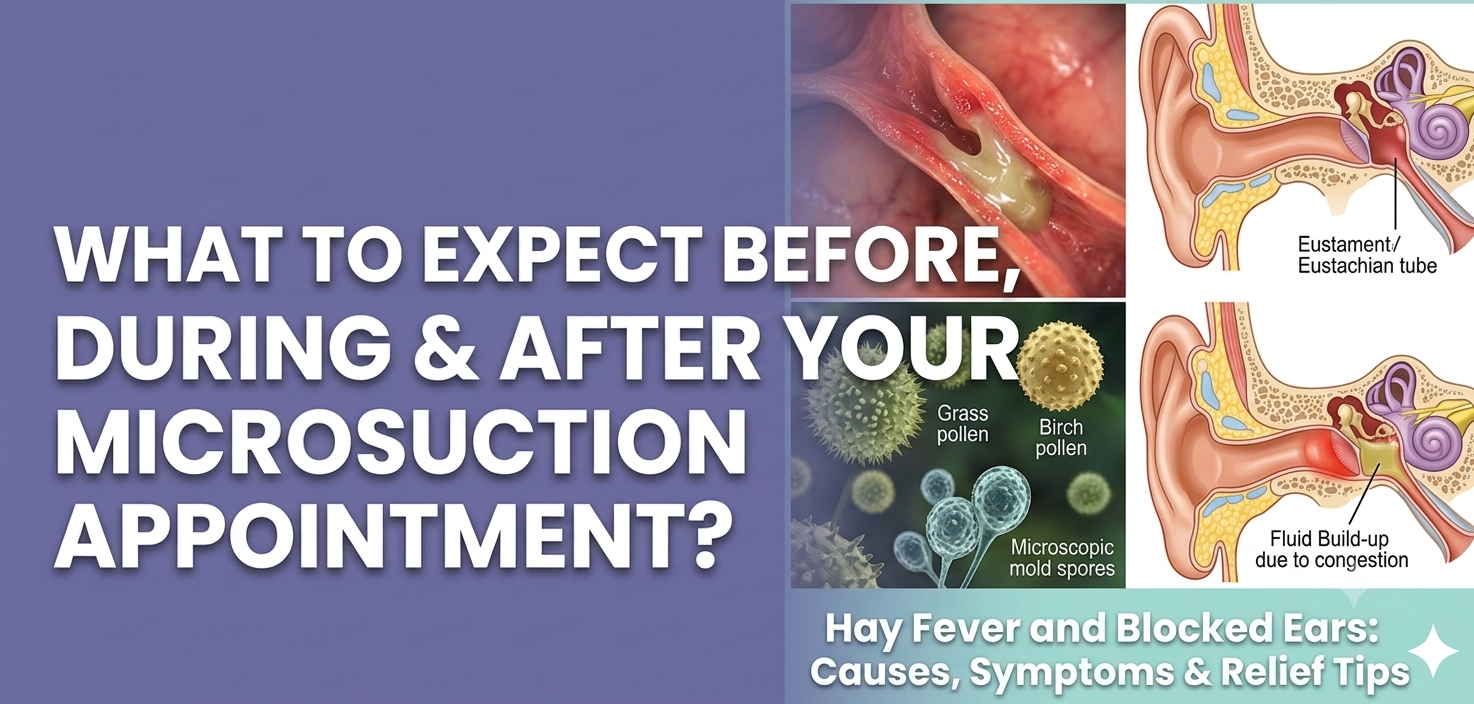
What to Expect Before, During & After Your Microsuction Appointment
How Are Hay Fever and Blocked Ears Connected?
To understand why hay fever affects your ears, it helps to know a little about how your body is wired.
Your ears, nose, and throat are all connected through a narrow passage called the Eustachian tube.
This tube runs from the middle ear down to the back of the throat.
Its job is to regulate pressure and drain fluid from the ear.
When you develop hay fever, your immune system overreacts to pollen in the air.
This triggers inflammation and increased mucus production throughout the upper respiratory tract, including the lining of the Eustachian tube.
When that tube becomes swollen or blocked with mucus, it can no longer equalise pressure properly.
This can lead to:
✔️ Ear pressure and fullness
✔️ Muffled hearing
✔️ Crackling or popping sounds
✔️ Mild dizziness
✔️ Temporary hearing changes
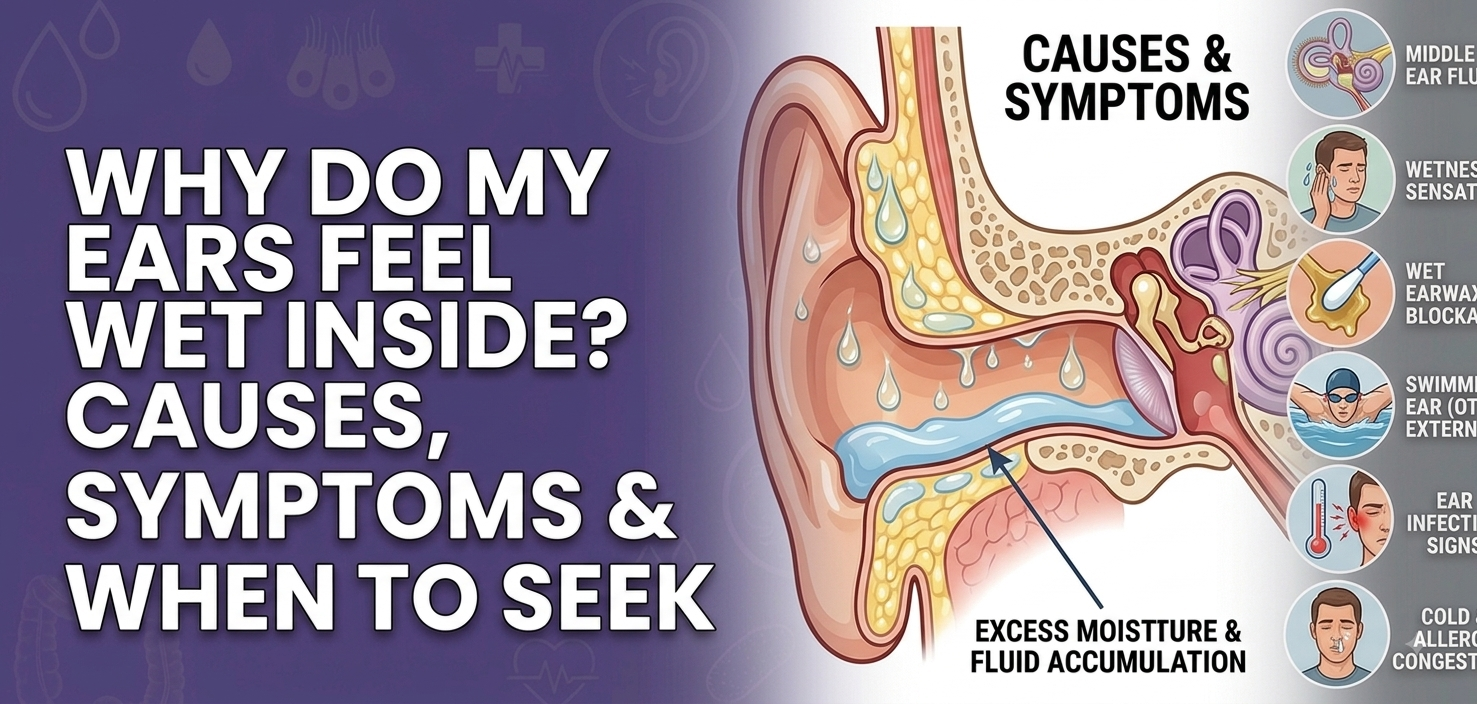
Many people describe this feeling as “having water stuck inside the ears”.
Pollen Severity in London
London’s urban environment can make hayfever symptoms worse than in rural areas.
City pollution can make pollen particles more potent, intensifying the immune response that leads to nasal inflammation and blocked ears.
In London and the South East, tree pollen season often begins as early as March, followed by grass pollen from late spring into summer.
According to the UK’s Met Office, pollen levels can rise significantly during warm, dry, and windy weather.
According to the NHS, hay fever symptoms often worsen during this time when pollen counts are high.
Many people notice their ear symptoms become worse, particularly after spending time in parks, gardens, or other green spaces.
Common Triggers During Spring
Certain allergens are more likely to cause blocked ears in spring. These include:
- Tree pollen
- Grass pollen
- Dust exposure
- Outdoor mould spores
- Air pollution particles
Research published by the British Society for Allergy & Clinical Immunology (BSACI) highlights that allergic inflammation can affect the upper airways and connected structures, including the Eustachian tubes.
When these tubes become swollen, pressure regulation inside the middle ear can be disrupted, creating sensations of fullness and congestion.
People with asthma, sinus issues, or sensitive airways may notice stronger ear symptoms during allergy season.
What Are the Ear-Related Symptoms of Hay Fever?
Dealing with blocked ears in spring can feel quite different from a standard cold or nasal congestion.
It can also feel different from regular earwax blockage or infection.
The symptoms tend to linger for as long as the pollen count remains high and may affect one or both ears.
Common ear symptoms linked to hay fever and seasonal allergies include:
Dull and Muffled Hearing Sensation
Sounds seem distant or unclear, as if you are listening to people talking while you are underwater.
This happens because swelling in the Eustachian tube prevents sound from travelling efficiently to the eardrum.
The effect can make conversations feel exhausting to follow, particularly in noisy environments.
Most people find it resolves once the underlying inflammation settles.
Also Read>>>
What Is Hard Impacted Ear Wax and Why It’s So Difficult to Remove
Intense Internal Popping or Crackling
You may hear strange clicking noises every time you try to swallow food.
This is caused by the Eustachian tube briefly opening and closing as it attempts to equalise pressure in the middle ear.
The sensation can feel uncomfortable but is generally harmless.
It tends to be more noticeable in quiet environments or first thing in the morning.
Constant Feeling of Heavy Fullness
The pressure inside the ear can make your head feel incredibly weighted, as if your ears are packed tight or stuffed with cotton wool.
This sensation is caused by fluid or mucus sitting behind the eardrum without being able to drain properly.
It can affect concentration and make everyday tasks feel more tiring than usual.
The feeling often fluctuates throughout the day depending on pollen levels and posture.
Mild Dizziness or Unsteady Balance Issues
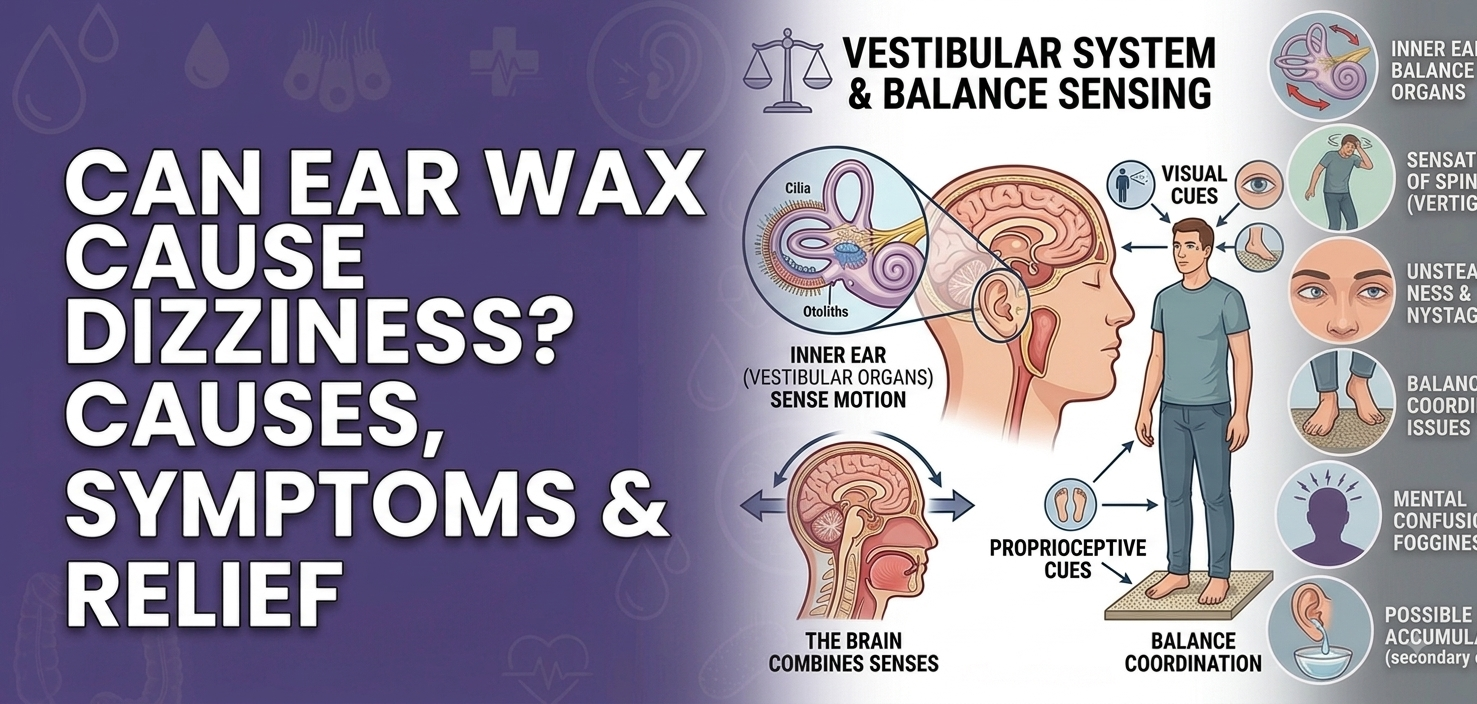
The fluid buildup can temporarily disrupt the delicate balance sensors located inside your ears, making you feel slightly dizzy.
Your inner ear plays a central role in spatial awareness, and any disruption to its normal pressure can throw that system off.
You may notice this most when standing up quickly or moving your head.
Itchy Ears
You may feel a mild irritation inside the ear canal, which is a direct response to the same histamine release that causes your nose and eyes to itch during hayfever season. The itching can be distracting and is sometimes accompanied by a tickling sensation deep inside the ear.
It is important to avoid inserting objects into the ear canal to scratch, as this can cause damage or push earwax further in.
Tinnitus
You may hear a ringing or buzzing sound in your ear, which can range from faint background noise to something more persistent and distracting.
Tinnitus during hayfever season is typically caused by pressure changes and inflammation affecting the auditory system.
It usually subsides once the allergic response is under control.
However, if tinnitus continues beyond the pollen season, a hearing assessment is advisable.
Ear Pain or Discomfort
Some mild pain or pressure-related discomfort is common, especially with swallowing or yawning, as these actions cause the Eustachian tube to move.
The pain is usually a dull ache rather than sharp, and it can shift between ears or affect both sides at once.
Applying a warm compress to the outside of the ear can offer some temporary relief.
If you are experiencing any of these alongside your usual hay fever symptoms, your ears are most likely being affected by the same allergic response.
For London commuters, ear pressure can be particularly noticeable during daily travel.
Moving between outdoor pollen exposure and enclosed spaces such as the London Underground, trains, or office buildings may make congestion feel more pronounced.
Can Hay Fever Cause Ear Problems?
This is a question that comes up often, and the short answer is: not directly, but it can increase your risk.
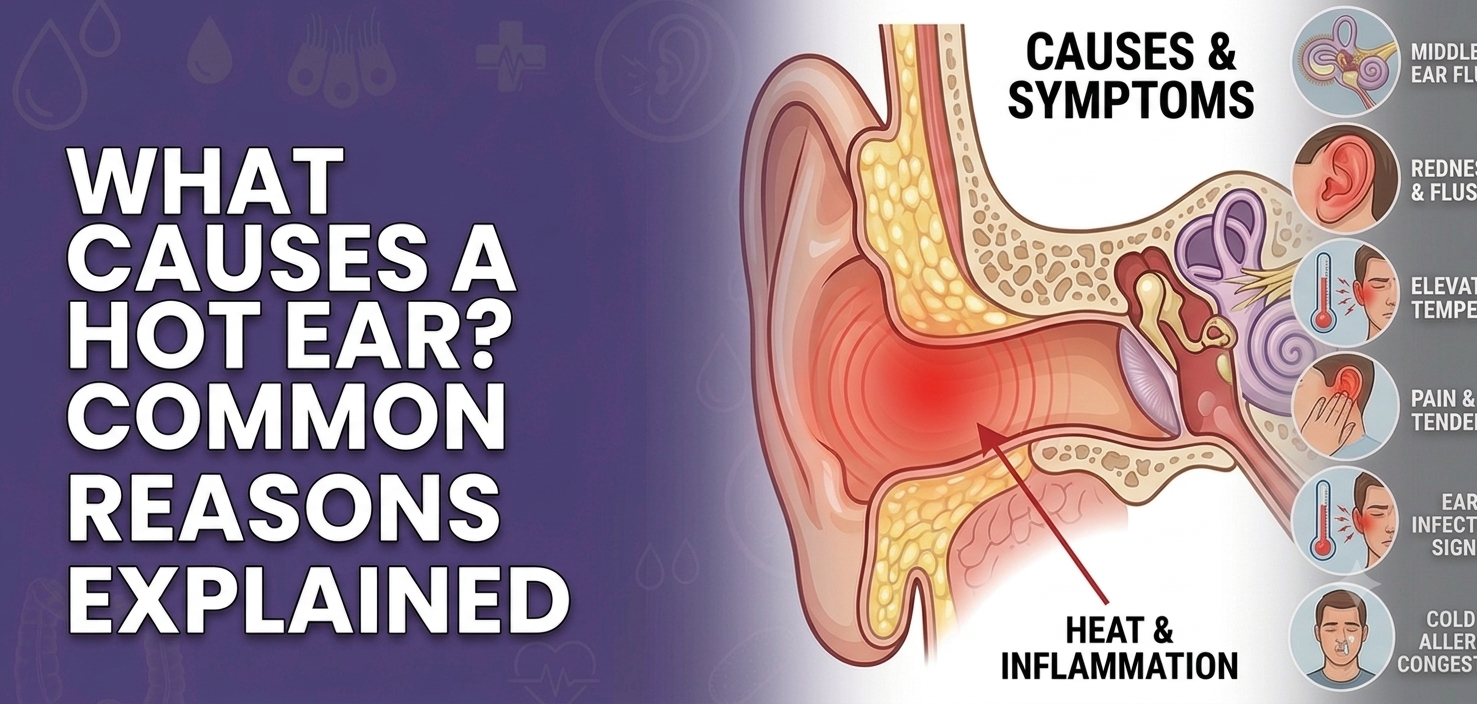
When the Eustachian tube stays blocked for a prolonged period, fluid can accumulate behind the eardrum.
This creates a warm, moist environment where bacteria or viruses can multiply.
The condition that results from this fluid build-up is known as otitis media with effusion, more commonly called glue ear.
It is most often seen in children, but adults with persistent allergies or hay fever can be affected too.
Hay Fever-Induced Blocked Ears vs Earwax Build-Up: How to Tell the Difference
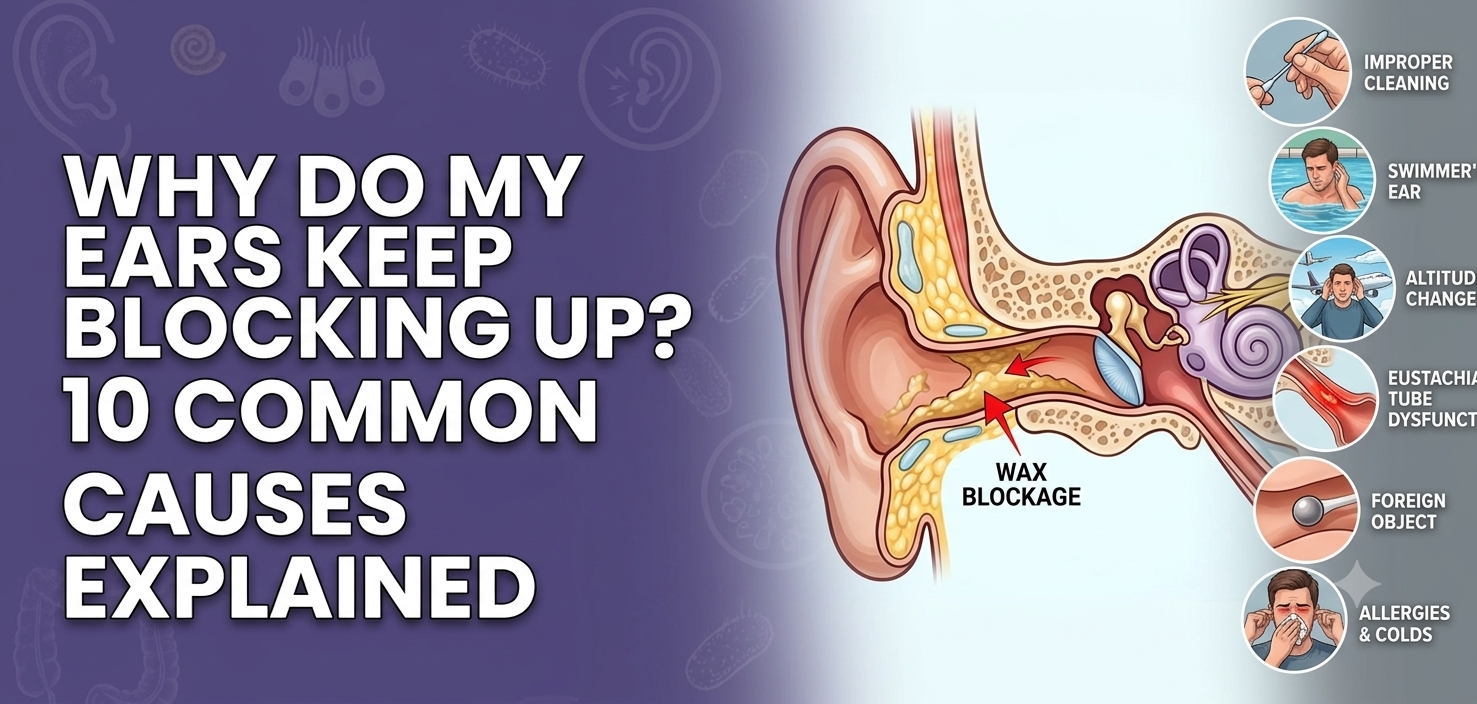
Blocked ears can have more than one cause, and it is worth knowing whether your symptoms are driven by hay fever, earwax build-up, or a combination of both.
The table below can help you understand the key differences:
| Feature | Hay fever-induced Blocked Ears | Earwax Blockage |
| Caused by | Inflammation | Wax accumulation |
| Timing | Seasonal (spring/summer) | Any time of year |
| Feeling | Pressure, muffled hearing | Fullness, dulled hearing |
| Other symptoms | Sneezing, runny nose, itchy eyes | No allergy symptoms |
| Eases when | Pollen count drops | After earwax removal |
| Risk factors | Allergies, pollen exposure | Narrow ear canals, hearing aids |
It is also possible to have both conditions at the same time.
Hay fever can increase the production of mucus throughout the ear, nose, and throat.
This may contribute to earwax becoming stickier and harder to clear naturally.
Allergies may thus intensify irritation in already sensitive ears.
What Can You Do About Hay Fever-Induced Blocked Ears?
The good news is that there are several effective ways to manage allergy-led blocked ears during spring.
The right approach depends on how severe your symptoms are and whether the blockage is driven purely by allergy inflammation or also involves earwax.
Here’s what you can do:
Manage Hay Fever Symptoms Early
Since blocked ears in spring are typically a downstream effect of allergic inflammation, treating your hay fever is the most logical first step.
Managing the root cause often helps the ears clear on their own.
Here are some commonly recommended options:
👉 Antihistamine tablets: available over the counter from pharmacies
👉 Nasal corticosteroid sprays: reduce nasal inflammation effectively
👉 Decongestants or saline nasal rinses: temporarily relieve Eustachian tube pressure
👉 Allergy eye drops: for itchy or watery eyes alongside ear symptoms
The NHS recommends starting hay fever treatment before the season begins if you are a regular sufferer, as this can help prevent symptoms from becoming severe.
Try the Valsalva Manoeuvre.
If your ears feel blocked due to Eustachian tube dysfunction, the Valsalva manoeuvre can pop the tubes open and offer temporary relief.
To do this, close your mouth, pinch your nostrils shut, and gently breathe out as if blowing your nose.
You may hear or feel a small pop as pressure equalises.
Be gentle.
Forcing this too hard can cause damage.
Stay Hydrated
Drinking plenty of water helps to thin the mucus that can clog your Eustachian tube.
When mucus is thinner, it drains more easily, reducing the build-up that causes seasonal ear congestion.
Aim for at least six to eight glasses of water a day, especially during the spring months when you are likely spending more time outdoors.
Reduce Pollen Exposure
You cannot avoid pollen entirely, but limiting your exposure makes a real difference.
Small practical steps can reduce the volume of allergens you breathe in, which in turn lowers the intensity of your body’s allergic response.
Some simple habits to try include:
✅ Keep windows and doors closed on high-pollen days
✅ Shower and change clothes after being outdoors
✅ Wear wraparound sunglasses outdoors
✅ Vacuum your indoor spaces regularly
✅ Check the daily pollen forecast on the Met Office website
✅ Avoid drying laundry outside during peak pollen periods
The best way to circumvent pollen-driven blocked ears is to avoid outdoor exercise near parks and green spaces (Hyde Park, Victoria Park, or Hampstead Heath).
Try not going to these open places during peak morning pollen hours.
Try Pressure-Balancing Techniques
Simple movements can help open the Eustachian tubes naturally.
You can try:
- Swallowing repeatedly
- Yawning gently
- Chewing gum
- Breathing steam carefully
Avoid forcefully blowing your nose because this can increase pressure inside the ears.
When Should You See a Hearing Specialist?
Most cases of hay fever-led blocked ears resolve once pollen levels drop or when the hay fever itself is treated.
However, there are some situations
where it is worth seeking professional advice sooner rather than later.
You should speak to your GP if:
➡️ Ear symptoms persist beyond hay fever season
➡️ You experience significant ear pain
➡️ Your hearing seems noticeably reduced
➡️ You develop tinnitus that does not go away
➡️ You notice fluid leaking from the ear
➡️ You have a high temperature alongside ear discomfort
A hearing specialist can check whether the problem is linked to allergies, earwax, infection, or another hearing condition.
According to guidance from the Royal National Institute for Deaf People RNID, untreated hearing problems can affect communication, concentration, and overall wellbeing.
Hearing changes that persist for more than a few weeks should always be assessed professionally.
If you have been experiencing muffled hearing for more than a few weeks or every spring, a hearing test is a sensible next step to rule out any underlying hearing loss.
In London, you can also self-refer for a free NHS hearing check through certain GP practices and audiology clinics without needing a GP referral first.
Hayfever and Earwax: When Both Are to Blame
It is worth knowing that hayfever and earwax build-up can occur at the same time, and together they can make symptoms feel significantly worse.
Hayfever increases mucus production throughout the ear, nose, and throat, which can cause earwax to become stickier and harder for the ear to clear naturally.
During spring, when pollen counts are at their highest, this combination is particularly common among seasonal allergy sufferers in London.
If your blocked ears are not improving despite managing your hayfever, earwax build-up could be adding to the problem, and that is where professional ear care makes all the difference.
How Dewaxify Audiology Can Help
At Dewaxify Audiology, we understand that ear problems during hay fever season can be frustrating and disruptive.
Our clinic in Ilford, East London, is led by HCPC-registered audiologist Sita Parmar, and we specialise in providing safe, professional ear care for patients across London.
If your blocked ears are being made worse by a build-up of earwax, our microsuction earwax removal service offers a quick, gentle, and highly effective solution.
Microsuction is the gold standard for earwax removal, with no water, no mess, and no discomfort.
Many patients notice an immediate improvement in their hearing after just one appointment.
We also offer a free hearing test for patients who are concerned about muffled or reduced hearing linked to seasonal ear congestion or any other cause.
Early assessment can help rule out wax build-up, hearing changes, or allergy-related ear issues before symptoms worsen.
Do not let seasonal ear congestion and stubborn blockages stop you from enjoying the beautiful spring weather.
Book your appointment with Dewaxify today.

FAQ
Can hay fever cause blocked ears?
Yes. Hay fever can inflame the Eustachian tubes, making it harder for the ears to balance pressure properly. This often causes fullness, popping, and muffled hearing during allergy season.
Is seasonal ear congestion the same as an ear infection?
No, they are different. Seasonal ear congestion is caused by Eustachian tube dysfunction due to allergies. An ear infection involves bacteria or viruses and typically causes more severe pain and may require antibiotics.
Can allergies cause temporary hearing loss?
Yes. Allergies can create pressure and fluid build-up inside the middle ear, which may temporarily reduce hearing clarity until inflammation improves.
Should I remove earwax if my ears feel blocked during hay fever?
Possibly. Earwax and allergy-related swelling can happen together. A hearing specialist can examine the ears safely and determine whether wax removal is needed.
Should I get a hearing test if hay fever is affecting my hearing?
Yes, it is a good idea. A hearing test can confirm whether any hearing change is temporary and allergy-related or whether there is an underlying issue that needs attention. Dewaxify Audiology offers a free hearing test for new patients.