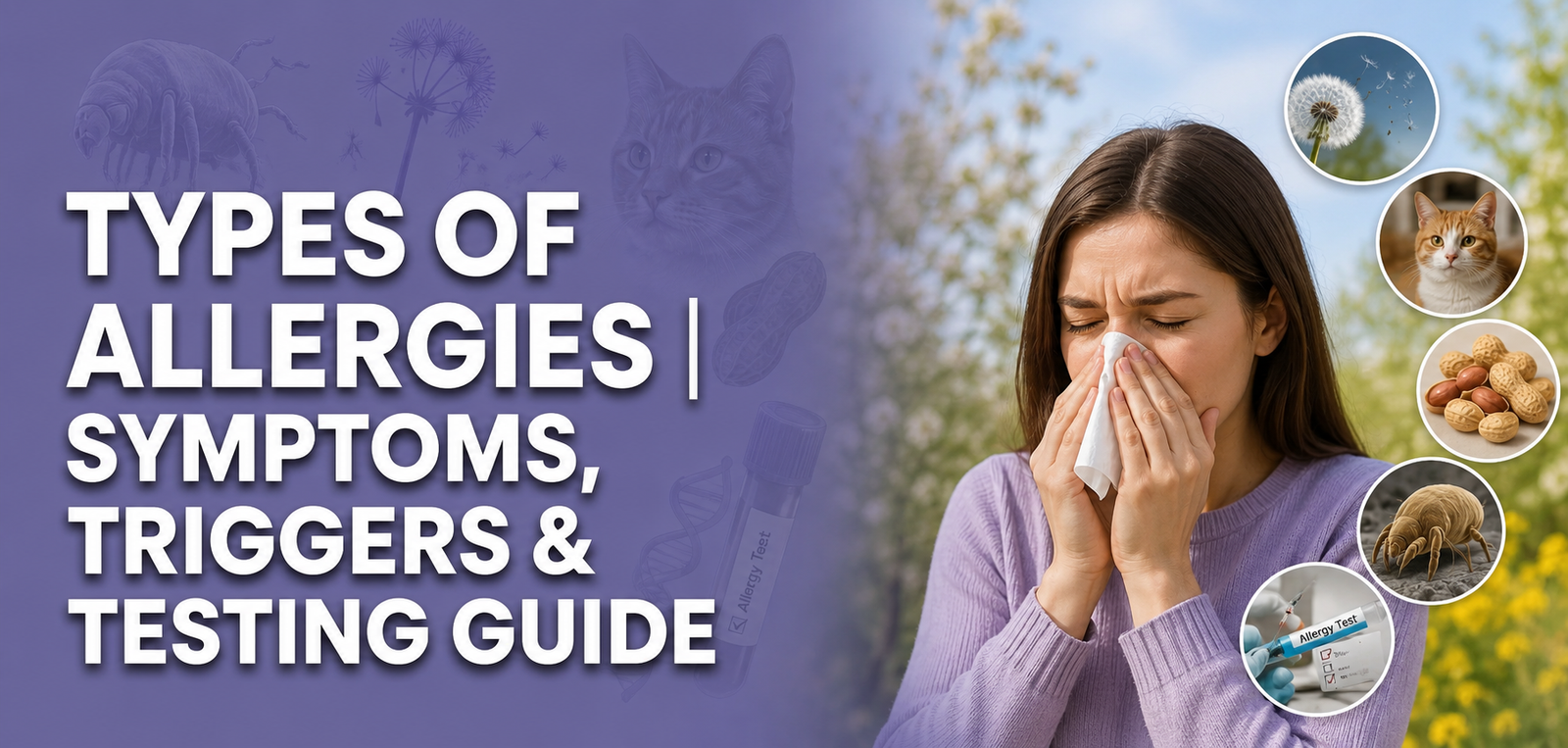
Do you find yourself waking up with a blocked nose every spring, or perhaps you notice an unexpected rash after trying a new skincare product?
These uncomfortable reactions are incredibly common, and just like you, many people struggle to pinpoint exactly what is causing these discomforts.
Many of these unexplained events are cases of mistaken identity, played out inside your body, also known as allergies.
Since allergy triggers can overlap, identifying the exact source is not always straightforward.
Understanding the different types of allergies can help you recognise patterns, manage symptoms better, and decide when testing may be useful.
This blog breaks down:
- The most common types of allergies
- Their symptoms and warning signs
- Common allergy triggers
- Available allergy testing options
Before diving into the specific categories, it is helpful to understand what is actually happening inside your body when a reaction occurs.
What Happens Inside Your Body During an Allergic Reaction?
An allergy happens when the immune system reacts to a substance (called an allergen) that is usually harmless.
The body mistakenly treats them as threats and releases chemicals such as histamine.
It is this flood of histamine that creates the inflammation, sneezing, itching, and swelling we recognise as symptoms.
According to the NHS, allergies can develop at any stage of life and may become more noticeable after repeated exposure to certain allergens.
Now that we understand how allergies develop, let’s dive into the most common allergy types.
The Most Common Types of Allergies You Should Know
Medical professionals generally categorise allergic reactions based on the source of the allergen and how it enters the human body.
The table below provides a snapshot of the primary types of allergies that humans experience.
| Allergy Category | Primary Route of Exposure | Common Examples |
| Food | Ingested through meals or drinks | Nuts, dairy, shellfish, wheat |
| Environmental – Seasonal | Inhaled from outdoor environments | Tree, grass, and weed pollens |
| Environmental – Indoor | Inhaled inside homes or workplaces | Dust mites, mould spores, pet dander |
| Skin | Direct physical contact with the skin | Latex, nickel, and certain fragrances |
| Pets | Proteins found in animal skin cells | Cats, Dogs, Rabbits, Horses |
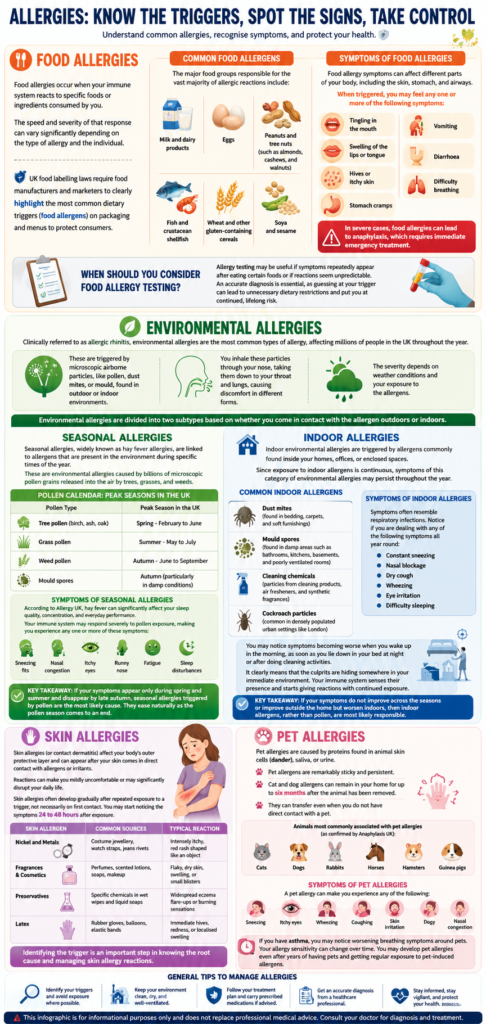
Understanding each type of allergy is important for accurate diagnosis, prevention, and care. Let’s study them in detail one at a time.
Also Read >>>
What Is an Allergy? Causes, Symptoms & Common Triggers
Food Allergies: Common Triggers, Symptoms, and Risks
Food allergies occur when your immune system reacts to specific foods or ingredients consumed by you.
The speed and severity of that response can vary significantly depending on the type of allergy and the individual.
The major food groups responsible for the vast majority of allergic reactions include the following:
- Milk and dairy products
- Eggs
- Peanuts and tree nuts (such as almonds, cashews, and walnuts)
- Fish and crustacean shellfish
- Wheat and other gluten-containing cereals
- Soya and sesame
UK food labelling laws require food manufacturers and marketers to clearly highlight the most common dietary triggers (food allergens) on packaging and menus to protect consumers.
Symptoms of Food Allergies
Food allergy symptoms can affect different parts of your body, including the skin, stomach, and airways.
When triggered, you may feel any one or more of the following symptoms:
- Tingling in the mouth
- Swelling of the lips or tongue
- Hives or itchy skin
- Stomach cramps
- Vomiting
- Diarrhoea
- Difficulty breathing
In severe cases, food allergies can lead to anaphylaxis, which requires immediate emergency treatment.
When Should You Consider Food Allergy Testing?
Allergy testing may be useful if symptoms repeatedly appear after eating certain foods or if reactions seem unpredictable.
An accurate diagnosis is essential, as guessing at your trigger can lead to unnecessary dietary restrictions and put you at continued, lifelong risk.
Environmental Allergies
Clinically referred to as allergic rhinitis, environmental allergies are the most common types of allergy, affecting millions of people in the UK throughout the year.
These are triggered by microscopic airborne particles, like pollen, dust mites, or mould, found in outdoor or indoor environments.
You inhale these particles through your nose, taking them down to your throat and lungs, causing discomfort in different forms.
The severity depends on weather conditions and your exposure to the allergens.
Environmental allergies are divided into two subtypes based on whether you come in contact with the allergen outdoors or indoors.
Seasonal Allergies
Seasonal allergies, widely known as hay fever allergies, are linked to allergens that are present in the environment during specific times of the year.
These are environmental allergies caused by billions of microscopic pollen grains released into the air by trees, grasses, and weeds.
In the UK, different plants release pollen at different times, which means triggers and symptom timing can vary from person to person.
| Pollen Type | Peak Season in the UK |
| Tree pollen (birch, ash, oak) | Spring – February to June |
| Grass pollen | Summer – May to July |
| Weed pollen | Autumn – June to September |
| Mould spores | Autumn (particularly in damp conditions) |
Symptoms of Seasonal Allergies
According to Allergy UK, hay fever can significantly affect your sleep quality, concentration, and everyday performance.
Your immune system may respond severely to pollen exposure, making you experience any one or more of these specific symptoms:
- Sneezing fits
- Nasal congestion
- Itchy eyes
- Runny nose
- Fatigue
- Sleep disturbances
Indoor Allergies
Indoor environmental allergies are triggered by allergens commonly found inside your homes, offices, or enclosed spaces.
Since exposure to indoor allergens is continuous, symptoms of this category of environmental allergies may persist throughout the year.
The most frequent indoor culprits include:
- Dust mites (found in bedding, carpets, and soft furnishings)
- Mould spores (found in damp areas such as bathrooms, kitchens, basements, and poorly ventilated rooms)
- Cleaning chemicals (particles from cleaning products, air fresheners, and synthetic fragrances)
- Cockroach particles (common in densely populated urban settings like London)
Symptoms of Indoor Allergies
Symptoms often resemble respiratory infections. Notice if you are dealing with any of the following symptoms all year round:
- Constant sneezing
- Nasal blockage
- Dry cough
- Wheezing
- Eye irritation
- Difficulty sleeping
You may notice symptoms becoming worse when you wake up in the morning, as soon as you lie down in your bed at night or after doing cleaning activities.
It clearly means that the culprits are hiding somewhere in your immediate environment. Your immune system senses their presence and starts giving reactions with continued exposure.
Skin Allergies
Skin allergies (or contact dermatitis) affect your body’s outer protective layer and can appear after your skin comes in direct contact with allergens or irritants.
The reactions can make you mildly uncomfortable or may significantly disrupt your daily life.
The skin serves as our body’s primary barrier, but certain molecules can penetrate the surface and alert the immune cells residing beneath.
This can lead to chronic, dry, or blistering rashes that are difficult to heal unless you completely remove the allergen from your daily routine.
The table below outlines the common triggers for skin-based inflammation and where they are typically found.
| Skin Allergen | Common Sources | Typical Reaction |
| Nickel and Metals | Costume jewellery, watch straps, jeans rivets | Intensely itchy, red rash shaped like an object |
| Fragrances & Cosmetics | Perfumes, scented lotions, soaps, makeup | Flaky, dry skin, swelling, or small blisters |
| Preservatives | Specific chemicals in wet wipes and liquid soaps | Widespread eczema flare-ups or burning sensations |
| Latex | Rubber gloves, balloons, elastic bands | Immediate hives, redness, or localised swelling |
Identifying the trigger is an important step in knowing the root cause and managing skin allergy reactions.
Pet Allergies
Pet allergies are caused by proteins found in animal skin cells (dander), saliva, or urine.
Pet allergens are remarkably sticky and persistent.
Cat and dog allergens can remain in your home for up to six months after the animal has been removed.
They can transfer even when you do not have direct contact with a pet.
As confirmed by Anaphylaxis UK, pet allergies are most commonly associated with the following animals:
- Cats
- Dogs
- Rabbits
- Horses
- Hamsters
- Guinea pigs
Symptoms of Pet Allergies
A pet allergy can make you experience any of the following:
- Sneezing
- Itchy eyes
- Wheezing
- Coughing
- Skin irritation
- Nasal congestion
If you have asthma, you may notice worsening breathing symptoms around pets.
Your allergy sensitivity can change over time.
You may develop pet allergies even after years of having pets and getting regular exposure to pet-induced allergens.
How Can You Diagnose Your Allergies?
You can diagnose your allergy by understanding symptom history and doing a trigger assessment.
Visiting a healthcare professional helps, as they may ask you questions about your lifestyle, environment, food habits, and family history.
Testing is another effective and smart approach to clearly identify possible allergens.
Your GP may recommend different tests depending on your symptoms and suspected triggers to get data-driven insights.
The good news is that allergy testing is now more accessible than ever in the UK, and it does not always require a lengthy wait for an NHS referral.
Here are some common types of allergy tests.
| Test Type | Purpose |
| Blood allergy test | Measures immune response to allergens |
| Skin prick test | Checks immediate allergic reactions |
| Elimination diet | Helps identify food-related triggers |
| Patch testing | Used for skin allergies |
| At-home allergy test kits (Best Way) | Allows screening of common allergens from home |
Whichever testing method you choose, always discuss your results with a qualified clinician before making significant changes to your diet, lifestyle, or medication.
Explore Allergy Testing at Dewaxify
Recurring sneezing, skin irritation, digestive discomfort, or blocked sinuses can sometimes point to an underlying allergy trigger.
But without proper testing, identifying the exact cause is not always easy.
At Dewaxify, London, we offer convenient allergy testing solutions designed to help you better understand possible sensitivities linked to food, environmental, indoor, and other common allergens.
Why patients choose our testing services:
✔️ Accredited UK laboratory analysis
✔️ Clear and easy-to-understand digital reports
✔️ Convenient at-home testing options
✔️ Fast turnaround times
Whether your symptoms are seasonal, ongoing, or difficult to identify, allergy testing may help provide clearer answers and support more informed lifestyle choices.
Frequently Asked Questions (FAQs)
Can allergies develop suddenly in adults?
Yes. Allergies can develop at any age. Some adults experience symptoms for the first time after repeated exposure to allergens such as pollen, pets, foods, or environmental irritants.
Can seasonal and indoor allergies occur at the same time?
Yes. It is common to be sensitive to both outdoor pollen and indoor allergens such as dust mites. Overlapping symptoms can make it difficult to identify the specific trigger without a formal allergy test.
What is the most accurate way to find out what you are allergic to?
Clinical testing is the most reliable method for identifying triggers. Professional blood tests analyse specific antibodies in your system. They provide a safe and highly precise overview of your sensitivities without the risk of physical reaction.
Are allergy symptoms always severe?
No. Symptoms can range from mild sneezing or itching to severe reactions affecting breathing. The intensity often depends on the allergen and your immune response.
How do I know if I should get an allergy test?
If you experience recurring, unexplained symptoms such as sneezing, skin rashes, digestive issues, or breathing difficulties, an allergy test can help pinpoint the cause. Testing is particularly worthwhile when symptoms are affecting your sleep, work performance, or quality of life.