Do you often deal with constant sneezing, itchy skin, bloating after certain foods, or watery eyes that seem to appear out of nowhere?
If yes, your body could be trying to tell you something.
Understanding what is an allergy is the first step towards managing symptoms and improving your overall well-being.
Allergies affect millions of people across the globe.
A recent report from Natasha Allergy Research Foundation states that 1 in 3 people in the UK suffer from one form of allergy or another, and the number keeps rising every year.
From seasonal pollen reactions to food allergies and skin flare-ups, allergic conditions can impact daily life in many ways.
While some symptoms are mild, others can be life-altering.
Yet many people still confuse allergies with intolerances or minor sensitivities.
So, what is an allergy, exactly?
How does it develop?
And how do you know whether your symptoms are an allergy or something else entirely?
This guide breaks it all down.
From causes and allergy symptoms to the difference between an allergy and an intolerance and what an allergy test can tell you, we will cover everything.
Understanding the Basics: What is an Allergy?
An allergy occurs when the body reacts unusually to a substance that is generally harmless to most people. Things like pollen, pet hair, dust, or certain foods can trigger the immune system to respond as though they are dangerous, leading to symptoms such as sneezing, itching, swelling, or breathing discomfort.
Here is what happens in your body:
- Your immune system encounters an allergen for the first time (through inhalation, swallowing, or touching).
- It produces antibodies called immunoglobulin E (IgE), which latch onto immune cells.
- The next time you are exposed, these antibodies trigger the release of histamine, a chemical that causes inflammation and the symptoms we associate with allergic reactions.
Think of it as a false alarm.
Your immune system mistakes a harmless substance for a threat and responds with force.
Key Takeaway
Allergies affect around 20 million people in the UK. They are rising year on year. Early testing is one of the most effective ways to identify your triggers and take control of your health.
(Source: NARF, UK)
What Causes Allergies?
The exact reason why some people develop allergies is not always clear.
However, your risk of developing allergies is higher if:
- A close family member has allergies, asthma, or eczema
- You have a personal history of asthma or eczema
- You have continuous exposure to certain allergens, such as pollution or pollen
- You have an overactive immune system that makes the body react strongly to certain triggers.
Not everyone is affected the same way.
Some people live with mild, manageable symptoms.
Others face reactions that significantly disrupt daily life.
Image Suggestion:
A split image of a person sneezing (on the left side of the image) and a close-up of a skin rash or hives (on the right side)
Common Allergy Symptoms
Allergy symptoms can vary widely from person to person, depending on how the allergen has entered your body.
They typically appear within minutes of exposure to an allergen, though some reactions can take a few hours to develop.
The table below breaks down the primary categories of allergic reactions along with the symptoms they trigger:
| Symptom Category | What It Means | Common Symptoms |
| Respiratory | Usually affect the nose, throat, or lungs and are commonly linked to pollen, dust, mould, or pet allergies | • Sneezing• Runny or blocked nose• Coughing• Wheezing• Shortness of breath |
| Skin-Based | Often triggered after touching certain substances or eating certain foods | • Itching• Rashes• Hives• Swelling• Eczema flare-ups |
| Digestive | Affects the digestive system and causes stomach discomfort (caused by the ingestion of a food allergen) | • Nausea• Vomiting• Stomach cramps• Diarrhoea |
| Eye | Irritates the eyes, especially during seasonal allergy periods or exposure to dust and pet dander | • Watery eyes• Redness• Itching• Swollen eyes |
| Severe Allergic Reactions | Triggers a serious reaction called anaphylaxis, which requires immediate medical attention | • Difficulty breathing• Swelling of the throat• Dizziness• Rapid heartbeat or drop in blood pressure• Loss of consciousness |
The NHS guidance on anaphylaxis advises immediate emergency treatment if these symptoms occur.
Key Takeaway
An allergy is an immune system reaction to a normally harmless substance. Symptoms can affect the skin, breathing, digestion, or overall health. Identifying allergy symptoms early helps prevent long-term inflammation and allows for better management through targeted health tests.
Most Common Allergy Triggers
Living in a bustling city like London exposes residents to unique environmental triggers.
Almost any substance can be an allergen and trigger an allergy.
While some triggers are seasonal, others can occur throughout the year.
Let’s understand the common allergy triggers.
Environmental Allergens
| Allergen | Source | About the Allergen |
| Pollen | Grasses, trees, and weeds | Peaks in spring and summerLeading cause of hay fever in the UK |
| House Dust Mites | Bedding, carpets, and upholstery | Present in most homes all year roundToo small to see with the naked eye |
| Pet Dander | Skin flakes, saliva, and fur of animals | Can cause reactions even if the animal is no longer in the room. |
| Mould Spores | Damp indoor and outdoor environments | More common in autumn and winterThrive in poorly ventilated spacesMay affect breathing or skin health |
Food Allergens
The Food Standards Agency (FSA) identifies 14 major food allergens that must be declared on UK food labels. These allergens and their common sources are as follows:
| Allergen | Common Sources |
| Peanuts | Peanut butter, satay sauces, snack bars, baked goods |
| Tree nuts | Almonds, walnuts, cashews, pistachios, hazelnuts |
| Cow’s milk | Dairy products, butter, cheese, yoghurt, cream |
| Eggs | Baked goods, mayonnaise, pasta, quiches |
| Wheat and gluten-containing cereals | Bread, pasta, cereals, sauces, coatings |
| Shellfish and fish | Prawns, crabs, lobsters, salmon, tuna, and other seafood. |
| Soya/soybeans | Tofu, soy milk, edamame, processed foods |
| Sesame | Tahini, hummus, sesame oil, bread rolls |
| Crustaceans | Prawns, crabs, and lobsters |
| Celery | Soups, sauces, seasonings, and salads |
| Mustard | Condiments, marinades, salad dressings, curries |
| Lupin | Lupin flour (used in some breads and pastries) |
| Sulphur dioxide and sulphites | Dried fruits, wine, vinegar, processed meats |
| Molluscs | Mussels, oysters, squid, scallops |
Other Common Allergens
| Allergen | Common Trigger | Reaction |
| Insect Stings | Bee or wasp stings | Localised swellingCan cause anaphylaxis in severe cases |
| Latex (Rubber) | Rubber gloves, balloons, and medical equipment | Skin irritationHivesBreathing difficulties |
| Medicines | Penicillin, aspirin, ibuprofen, and certain anaesthetics | RashesSwellingAnaphylaxis (in rare cases) |
What Is The Difference Between An Intolerance and An Allergy?
Many people confuse food intolerance with food allergy, but they are not the same.
While they may share similar symptoms, they are biologically very different.
An intolerance occurs when the body struggles to digest a specific food.
An allergy, however, is a systemic immune response that requires careful monitoring and often medical intervention.
Here’s the feature-wise distinction between the two:
| Feature | Allergy | Intolerance |
| Immune System | Involved (IgE antibodies) | Not involved (Digestive system) |
| Reaction Speed | Usually immediate (minutes) | Often delayed (hours or days) |
| Severity | Can be life-threatening (Anaphylaxis) | Generally not life-threatening |
| Trigger Amount | Even a trace amount triggers a reaction | Small amounts may be tolerated |
| Common example | Peanut allergy | Lactose intolerance |
Both conditions, allergy and intolerance, can significantly affect your quality of life.
A proper test is the most reliable way to tell them apart.
What Is an Allergy Test and Why Do You Need One?
If you have been experiencing recurring symptoms but cannot pinpoint the cause, an allergy test could be the missing piece of the puzzle.
An allergy test is a clinical tool used to identify the specific substances triggering your immune response.
Rather than relying on guesswork or eliminating foods and products, a test provides a definitive biological map of your sensitivities.
It is important to understand that allergy tests do not treat allergies.
They provide valuable information on what may be affecting your immune system and overall well-being.
Why Allergy Testing Matters
Allergy symptoms are sometimes mistaken for colds, skin conditions, or digestive issues.
Testing helps diagnose the root cause when someone experiences ongoing or unexplained symptoms. It helps:
- Identify triggers
- Avoid unnecessary dietary restrictions
- Manage symptoms more effectively
- Seek medical advice when needed
What Are The Types of Allergy Testing?
There is no single test that works for every type of allergy.
The right test depends on your symptoms, medical history, and the suspected allergen.
Some tests are designed to identify immediate allergic reactions, while others help detect delayed sensitivities or intolerances.
Understanding how each test works can help you make informed decisions about their health.
Here is a detailed look at the most widely used allergy testing methods:
Blood Allergy Tests
Blood allergy tests are commonly used to measure the level of Immunoglobulin E (IgE) antibodies in the blood.
These antibodies are produced by the immune system when the body reacts to a specific allergen.
The higher the concentration of specific IgE antibodies, the more likely it is that an allergy is present.
Blood allergy tests are often recommended for people who cannot undergo skin testing due to severe eczema, skin conditions, or certain medications.
Blood tests are one of the most versatile forms of allergy testing.
A single sample can test multiple allergens at the same time.
Unlike skin tests, there is no risk of a physical allergic reaction during the procedure, making it a very safe option for those at risk of anaphylaxis.
Blood testing is commonly used for:
- Food allergies: Such as peanuts, tree nuts, dairy, and eggs
- Environmental allergies: Including pollen, dust mites, and mould
- Pet allergies: Specifically, pet dander and saliva proteins
Skin Prick Tests
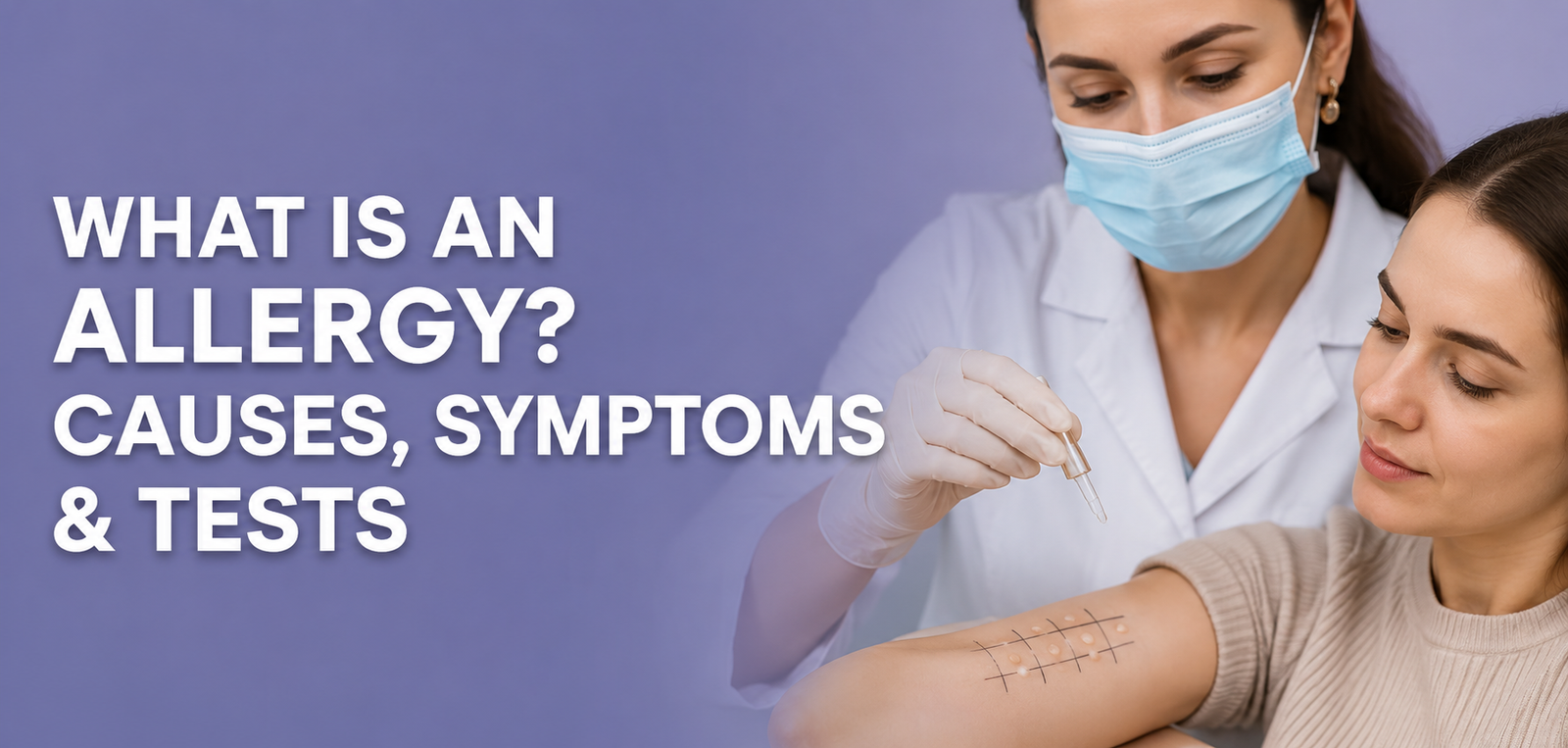
A skin prick test is one of the most commonly performed allergy tests in specialist clinical settings.
During the test, a small drop of allergen solution is placed on the forearm.
A lancet (a tiny, fine-pointed device) is then used to gently prick the skin, allowing a trace amount of the allergen to enter just below the surface.
If your immune system recognises the allergen as a threat, it will trigger a localised reaction at the test site.
This typically appears as a small, raised, itchy bump (known as a wheal) within 15-20 minutes.
The size of the wheal helps indicate the degree of sensitivity.
A larger wheal generally suggests a stronger immune response, though results are always interpreted alongside your full symptom history.
Skin prick tests are fast, well-tolerated, and can test for multiple allergens in a single session.
However, they must be carried out by a trained professional and are not suitable for people with severe eczema, dermatographism.
Patch Test
A patch test is used to identify delayed allergic skin reactions, a type of allergy known as allergic contact dermatitis.
It is designed to detect reactions that develop slowly (typically 24 to 72 hours after exposure to a substance).
During the test, small quantities of potential allergens are applied to adhesive patches.
These are then placed on your back and left in position for 48 hours.
Your skin is examined by a clinician at 48 and 96 hours to check for any signs of reaction, such as redness, swelling, or blistering.
Patch tests are commonly used to identify sensitivities to:
- Metals: Such as nickel, found in jewellery and belt buckles
- Fragrances: In perfumes, hair dyes, cosmetics, and skincare products
- Preservatives: In topical creams or personal care products
- Rubber compounds: Such as latex
It is important to note that patch tests are not suitable for diagnosing food allergies or immediate allergic reactions such as hay fever or anaphylaxis.
Elimination Diets
An elimination diet is a structured dietary approach used to identify food triggers when other tests have not provided a clear diagnosis or when a food intolerance is suspected.
The process involves removing one or more suspected foods from your diet completely for a defined period (typically two to six weeks).
Once the elimination phase is complete, foods are carefully reintroduced one at a time, with close monitoring of any returning symptoms.
This step-by-step reintroduction helps pinpoint which specific food is causing the reaction.
Elimination diets can be a useful diagnostic tool, but they come with important caveats:
✅ They should always be carried out under the supervision of a qualified dietitian or healthcare professional.
✅ Eliminating multiple food groups without guidance can lead to nutritional deficiencies.
✅ They are better suited to identifying food intolerances than true IgE-mediated food allergies.
✅ Results can take several weeks and require careful record-keeping.
For suspected immediate food allergies (particularly in children), an elimination diet should not replace clinical allergy testing.
At-Home Allergy Testing Options
At-home allergy testing allows people to check for possible allergies or sensitivities without visiting a clinic in person.
These tests usually involve collecting a small blood sample or health sample at home and sending it to a certified laboratory for analysis.
Results are typically returned digitally within 5-10 days, along with a detailed breakdown of your sensitivities.
At-home allergy tests are designed to be convenient, especially for people managing busy schedules or ongoing symptoms that need further investigation.
Depending on the test type, they may help identify reactions linked to foods, environmental allergens, or other common triggers.
Many people now prefer convenient at-home health testing services.
Thanks to clinically validated testing technology, you no longer need to wait months for a referral to start understanding your body.
Dewaxify Audiology’s allergy testing services offer access to allergy and sensitivity testing kits designed to help you better understand potential triggers.
These tests help you explore possible sensitivities linked to foods or environmental allergens from the comfort of your home.
When Should You Consider Getting an Allergy Test?
Consider testing if you:
- Experience recurring allergy symptoms
- Notice reactions after eating specific foods
- Suspect a trigger from a pet, pollen, or the environment
- Want to identify the cause of ongoing symptoms
- Have eczema or asthma linked to possible allergens
Getting clarity early helps you avoid triggers, reduce symptoms, and make more informed choices about your health every day.
Key Takeaway
Allergy testing can help identify possible triggers and support better symptom management, especially when reactions are ongoing or difficult to explain.
The Path to Relief: Managing Your Allergies
Once you have identified your triggers through a health test, management becomes much simpler.
- Avoid Allergens: The most effective way to manage an allergy is to avoid or reduce exposure to the triggers.
- Monitor Symptoms: Keeping track of symptoms may help identify patterns or triggers.
- Take Medication: Antihistamines, nasal sprays, and eye drops can manage mild allergy symptoms.
- Get Emergency Solutions: For those at risk of anaphylaxis, carrying an adrenaline auto-injector (like an EpiPen) is essential.
- Seek Medical Advice: Always follow advice from a qualified healthcare professional.
Are you still dealing with seasonal hay fever or suspect a food sensitivity?
That might be an allergy. Understanding what an allergy is aids in managing symptoms and improving quality of life.
Identifying triggers early may help prevent discomfort and reduce the risk of severe reactions.
Take Control of Your Health With Dewaxify Audiology
Living with unexplained symptoms can be frustrating, exhausting, and, at times, overwhelming. But you do not have to keep guessing.
If you are experiencing ongoing allergy symptoms or want to better understand your possible triggers, Dewaxify is here to help.
Based in Ilford, London, Dewaxify is led by Sita Parmar, an HCPC-registered audiologist with over 15 years of clinical experience.
We now offer a growing range of clinically led health testing kits.
These kits are designed to give you fast, accurate, and actionable results from the comfort of your home.
Here is what you can expect with Dewaxify’s allergy testing kits:
✅ Simple finger-prick blood sample
✅No clinic visit required
✅ Tests for a wide range of food and environmental allergens
✅ Samples analysed by accredited laboratories: For clinically reliable results
✅ Digital results delivered within 5–10 days
✅ No GP referral needed
✅ Rated 4.9/5 by our patients
Whether you are looking to confirm a suspected allergy, identify an unknown trigger, or simply take a more proactive approach to your health, our allergy test kits are a practical, stress-free place to start.
Ready to find your answers?
Don’t let allergies dictate your lifestyle any longer.
Explore our full range of tests and order your kit today to begin your journey toward a clearer, symptom-free future.
What is an allergy?
An allergy is an immune system reaction to a normally harmless substance, such as pollen, pet dander, or certain foods. The body mistakenly treats the substance as dangerous and triggers symptoms.
What are the most common allergy symptoms?
Common allergy symptoms include sneezing, itchy eyes, skin rashes, wheezing, swelling, stomach discomfort, and blocked sinuses. Symptoms vary depending on the allergen and the severity of the reaction.
What is the difference between an intolerance and an allergy?
An allergy involves the immune system and may cause severe reactions. An intolerance usually affects digestion and is generally less serious, although symptoms can still be uncomfortable and disruptive.
What is an allergy test used for?
An allergy test helps identify substances that may be triggering allergic reactions. It can support diagnosis and help people manage symptoms more effectively through lifestyle or dietary adjustments.
Is an allergy test painful?
Modern allergy blood tests only require a small sample, which is relatively painless. Skin prick tests may cause minor, temporary itching that is not painful.
Can allergy tests be done at home?
Yes. Some allergy tests are available as at-home kits.