Have you ever felt “butterflies” before an important meeting or lost your appetite during a stressful week?
That is not a random coincidence, and it is not just in your head.
The connection between stress and gut health is well established, and it runs deeper than most people realise.
Your gut and brain are constantly communicating.
When one is under pressure, the other feels it too.
Stress can quickly influence how your digestive system feels and functions.
If digestive discomfort keeps appearing during busy or emotionally challenging periods, your body may be trying to tell you something.
This guide breaks down exactly how stress affects your gut, what signs to look out for, and why understanding this connection could change the way you approach your health.
Can Stress Affect Gut Health?
Yes. Stress can affect how your digestive system works.
It triggers the release of hormones, such as cortisol and adrenaline, which alter digestion and disrupt the balance of your gut bacteria.
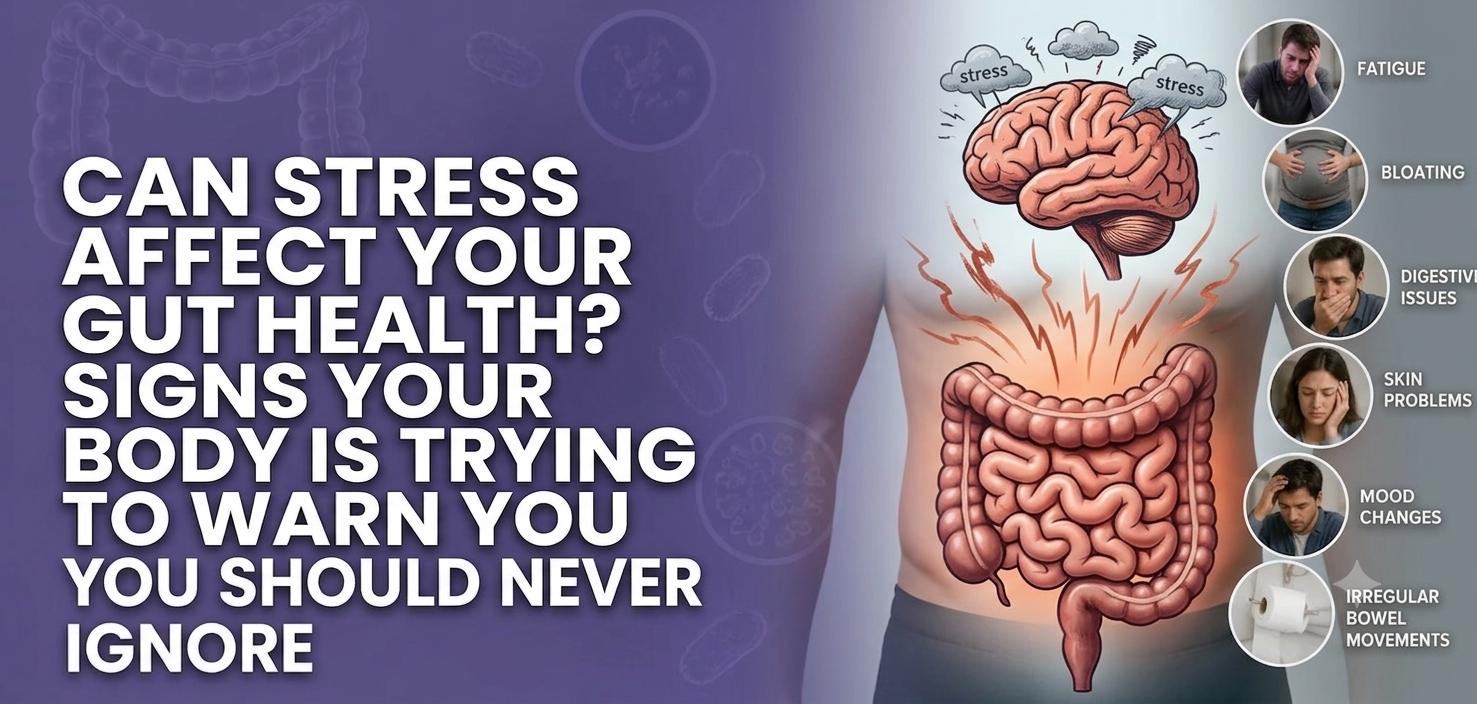
Symptoms may range from bloating and stomach cramps to diarrhoea and persistent fatigue.
So while occasional stress is a normal part of life, ongoing stress can have a greater impact on your gut over time.
Also Read >>>
What Is Gut Health? Understanding Your Gut, Your Microbiome, and Why It All Matters
The Dynamic Link: Stress and Digestion Processes
The relationship between your brain and digestive system is often called the gut-brain axis.
This two-way communication means that what affects your mind can also affect your gut, and vice versa.
Research published by Harvard Health Publishing explains that the brain and gut communicate continuously, which is why stress can trigger or worsen digestive symptoms.
This connection is why emotional states affect your physical digestion.
Your brain detects a stressful situation (whether a work deadline or a difficult conversation).
It then sends a signal through this axis that immediately begins to alter how your gut functions in forms such as the following:
👉 Slowing the food movement through the digestive tract
👉 Increasing stomach acid production
👉 Affecting how nutrients are absorbed
👉 Changing the balance of healthy gut bacteria
👉 Increasing sensitivity to pain in the digestive system
Researchers now believe that conditions like Irritable Bowel Syndrome (IBS) may result from over-communication between the gut and the brain along this very pathway.
Understanding Stress and Gut Microbiome
Your gut microbiome is made up of trillions of microorganisms that help digest food, support your immune system, and produce important nutrients.
According to a clinical review published by the NCBI, chronic psychological tension alters both the composition and metabolic activity of these microscopic organisms.
Here is what actually happens inside your body when stress kicks in:
Release of Cortisol and Adrenaline
These stress hormones divert blood flow away from your digestive organs and toward your muscles and lungs.
Your digestion slows down or speeds up erratically as a result.
Disrupted Gut Motility
Stress can either speed up the movement of food through your digestive tract, causing loose stools and urgency, or slow it down, leading to constipation and bloating.
Weakened Intestinal Chemical Balance
Stress reduces the production of stomach acid and digestive enzymes, which means food is not broken down as efficiently.
The natural acidity levels shift away from normal ranges, making it difficult for essential nutrients to dissolve properly.
Lowered Cellular Immune Protection
Your gut lining produces fewer protective antibodies, leaving you exposed to everyday seasonal bugs and environmental irritants.
Also Read >>>
6 Warning Signs of Poor Gut Health You Should Never Ignore
The important thing to understand is that this is not a one-time event.
When stress becomes chronic, these effects accumulate, and your gut health suffers progressively over time.
As this cycle continues, the impact of stress and gut health becomes increasingly evident.
It affects everything from digestion and nutrient absorption to the balance of your gut microbiome.
Here is how stress affects the microbiome specifically:
✔️ It reduces microbial diversity: Chronic stress reduces beneficial gut bacteria, making the microbiome less resilient to disruption.
✔️ It encourages harmful bacteria to grow: When beneficial bacteria decline, inflammatory strains take over, fuelling gut inflammation.
✔️ It affects serotonin production: Around 95% of serotonin is produced in the gut. Stress can disrupt this, impairing serotonin production and affecting mood, sleep, and emotional resilience.
✔️ It weakens immune defences: Your gut houses nearly 70% of your immune system. An imbalanced microbiome weakens immune responses, thus raising your risk of infections and inflammation.
Pro Tip
Chronic stress affects your microbiome even when you feel you are managing well mentally.
Physical symptoms in your gut can be the first sign that your stress levels are higher than you think.
Stress and Gut Health: Know the Warning Signs
Stress does not always announce itself loudly and affects people differently.
Some notice symptoms immediately, while others experience gradual changes over several weeks.
Your genetics, lifestyle, diet, sleep quality, and existing digestive health can all influence how your gut responds.
The table below breaks down the digestive changes and how they might make you feel.
| Digestive Change | How It May Feel |
| Slower digestion | Feeling full for longer |
| Faster digestion | Frequent bowel movements |
| Increased stomach acid | Heartburn or indigestion |
| Sensitive intestines | Cramping or discomfort |
| Appetite changes | Eating much more or much less |
The connection between stress and gut health can show up in several ways.
Besides digestive symptoms, watch for these signs that your body may be responding to ongoing stress.
👉 Increased Food Sensitivities
Stress can alter your gut lining and microbiome, making previously tolerated foods suddenly problematic. If new food sensitivities appeared during a stressful period, your gut health could be the link.
👉 Persistent Fatigue and Low Energy
Gut stress impairs nutrient absorption, leaving you drained no matter how much you sleep. Rest-resistant fatigue is an overlooked sign of gut disruption.
👉 Skin Flare-Ups
When stress disrupts your gut microbiome, the resulting inflammation travels through the gut-skin axis, showing up as eczema, acne, or redness on your skin.
👉 Mood Changes, Anxiety, and Brain Fog
An unsettled gut, which produces most of the body’s serotonin and communicates directly with the brain, can trigger anxiety, low mood, and poor concentration.
Pro Tip
Keeping a simple diary of your meals, stress levels, and digestive symptoms can help you identify patterns that are otherwise easy to overlook.
The Long-Term Consequences of Unmanaged Stress and Gut Health
Ignoring the regular warnings from your stomach can lead to much larger health complications over time.
Sustained psychological pressure can gradually turn temporary symptoms into chronic functional disorders.
NHS data shows a strong link between long-term stress and IBS.
In fact, 60% of people with chronic bowel issues also deal with ongoing anxiety.
Over time, that stress can wear down your gut lining, making it easier for irritants to set off your immune system.
What Can You Do About Stress-Related Gut Symptoms?
Managing the connection between stress and digestion involves working on both sides. Practical steps that may help include:
✅ Prioritise sleep: Poor sleep spikes cortisol and wrecks your microbiome. So, rest well, and your gut will thank you.
✅ Include fibre-rich foods: Prebiotics in oats, garlic, leeks, and bananas nourish gut bacteria, helping you withstand stress.
✅ Try mindful eating: Eating slowly and mindfully lets your digestive system do its job without stress getting in the way.
✅ Move your body regularly: Moving your body regularly boosts gut diversity and keeps your stress response in check.
✅ Consider stress management techniques: Breathwork, mindfulness, and therapy calm the brain and, in turn, ease your gut.
✅ Get your gut tested: Not sure what’s causing your symptoms? A gut health test takes the guesswork out.
Pro Tip
Healthy habits support your gut over time. Focus on consistency rather than perfection, especially during periods when life feels particularly stressful.
Support Your Gut Health with Dewaxify
Stress is unavoidable. But the damage it does to your gut does not have to go unchecked.
Understanding the connection between stress and gut health is the first step towards making informed decisions about your wellbeing.
At Dewaxify Audiology in Ilford, London, we believe that better health begins with better information. Under our Colour of Health programme, we offer a growing range of at-home health tests designed to give you clear, clinically reviewed results that tell you what is actually happening inside your body.
Our gut health testing service allows you to assess the state of your gut microbiome from the comfort of home.
Whether you have been experiencing persistent bloating, stress-related bowel changes, ongoing fatigue, or mood shifts you cannot explain, a gut health test gives you a starting point for real answers.
Explore Gut Health Test Kits at Dewaxify Audiology
Frequently Asked Questions (FAQs)
Can stress affect gut health even if I eat a healthy diet?
Yes. A healthy diet supports your digestive system, but ongoing stress can still affect digestion, gut bacteria, and digestive comfort through the gut-brain connection.
Can stress change the gut microbiome?
Research suggests that long-term stress may influence the balance and diversity of bacteria in the gut microbiome, although scientists continue to study this relationship.
How quickly can stress affect your digestion?
The gut-brain axis works in real time. Some people notice digestive symptoms within minutes of a stressful event, such as nausea, cramping, or an urgent need to use the bathroom. Chronic changes to the microbiome build up more gradually over weeks or months.
How do I know if my gut symptoms are caused by stress or something else?
Symptoms that consistently appear or worsen during stressful periods are a strong indicator of a stress-gut connection. A gut health test can reveal the state of your microbiome and help distinguish between stress-related disruption and other underlying causes.