

Ear wax in children is far more common than most parents realise and in many cases, it’s completely normal.
Children naturally produce ear wax to protect their ears from dust, bacteria, and infection. However, when wax builds up faster than it can clear, it may lead to blocked ears, temporary hearing loss, discomfort, or difficulty concentrating at school.
Parents are often unsure:
- Is this normal?
- Should ear wax be removed?
- What is safe for children — and what isn’t?
This guide explains:
- What causes excessive ear wax in children
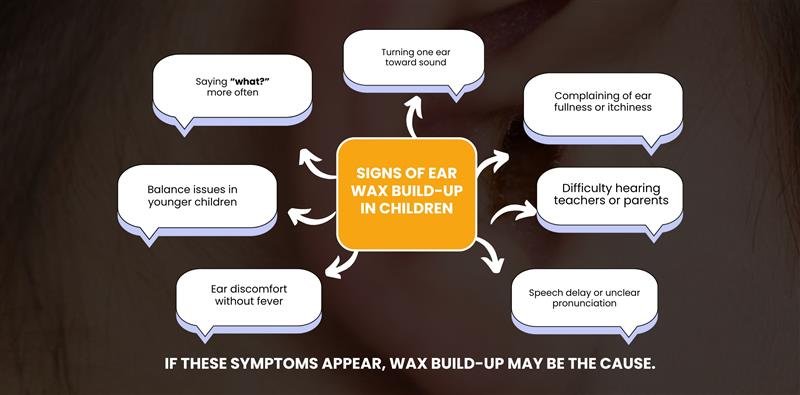
- Signs that wax has become a problem
- How to remove ear wax in children safely
- When professional treatment is the best option
Why Do Children Have Ear Wax?
Ear wax, also known as cerumen, is a natural and essential part of ear health, especially in children.
Despite its name, ear wax is not a sign of poor hygiene. In fact, it is the ear’s built-in defence system.
Children’s ears are still developing and are more exposed to dust, germs, and moisture from everyday activities such as playing outdoors, swimming, and frequent hand-to-face contact (kidshealth).
Ear wax helps protect the ear canal during this stage of growth by creating a protective barrier.
In children, ear wax:
- Traps dust, dirt, and bacteria before they can reach the eardrum
- Protects the eardrum from irritation and injury
- Prevents infection by maintaining a slightly acidic environment that discourages bacterial and fungal growth
- Moisturises the ear canal skin, preventing dryness, cracking, and itching
- Moves outward naturally as the child talks, chews, or yawns, carrying old wax and debris with it
Because of this natural self-cleaning process, healthy ears do not need regular cleaning.
In most children, ear wax clears on its own without any intervention.
Problems only arise when this natural movement is disrupted or when wax builds up faster than it can exit the ear.
Also Read>>>
How to Prevent Ears Blocked After Swimming and Protect Your Hearing Safely with Expert Tips
What Causes Excessive Ear Wax in Children?
Some children naturally produce more ear wax than others, and in many cases, this is completely normal.
However, problems arise when wax builds up faster than the ear can clear it naturally.
When this happens, ear wax can become trapped, hardened, or compacted, leading to blocked ears and hearing difficulties.
Several factors can increase the likelihood of excessive ear wax in children (Verywell health)
1. Narrow or Curved Ear Canals
Children naturally have smaller and sometimes more curved ear canals than adults.
This limits the space available for wax to move outward.
As a result, wax is more likely to collect inside the canal instead of exiting on its own, especially as it thickens over time.
2. Genetics
Ear wax type and production are strongly influenced by genetics.
If one or both parents tend to produce heavy, sticky, or fast-building ear wax, children are more likely to experience the same pattern.
This is one of the most common and unavoidable causes of wax build-up in children.
3. Use of Earbuds or Headphones
Frequent use of in-ear headphones or earbuds can interfere with the ear’s natural cleaning process.
These devices often push wax deeper into the ear canal, where it becomes compacted and harder to remove naturally.
Over time, this can lead to blockages, even in children with otherwise healthy ears.
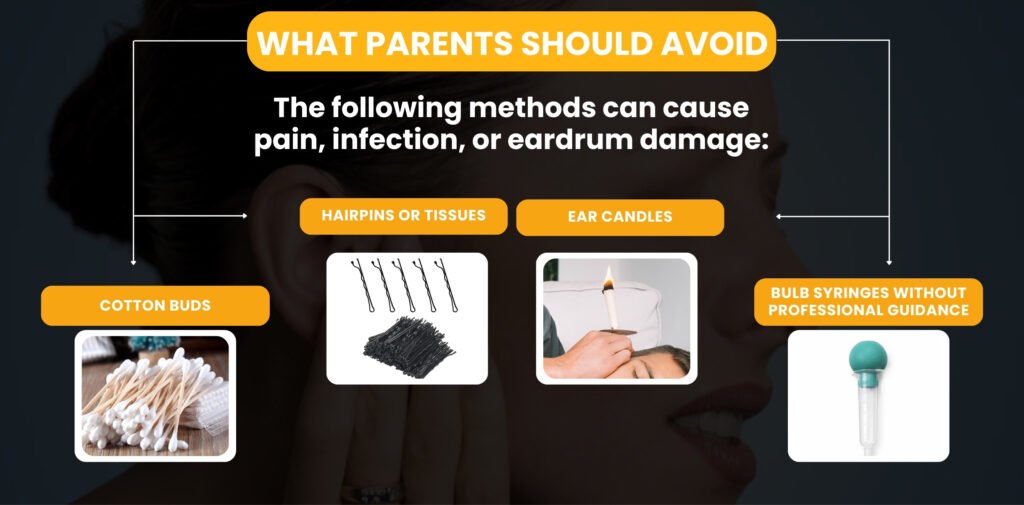
4. Over-Cleaning with Cotton Buds
Although many parents use cotton buds with good intentions, they are a leading cause of excessive ear wax in children.
Cotton buds do not remove wax from the ear.
Instead, they push it deeper, compressing it against the eardrum and turning soft wax into a firm blockage.
Must Read>>>>
The Complete Guide to Ear Health: Tips for Preventing Hearing Problems
5. Skin Conditions
Children with eczema, psoriasis, or dry skin conditions may produce more ear wax or experience flaking inside the ear canal.
This can mix with wax, making it thicker and more difficult to clear naturally, increasing the risk of blockage and irritation.
6. Frequent Swimming
Swimming or regular exposure to water can soften ear wax, causing it to swell.
While softened wax may seem easier to remove, it often expands and blocks the ear canal instead, particularly in children who already produce more wax than average.
How to Remove Ear Wax in Children Safely
Many parents ask how to remove ear wax in children at home, especially when they notice reduced hearing, itching, or a feeling of blocked ears. While it can be tempting to act quickly, knowing when to treat ear wax — and when to leave it alone — is essential for protecting your child’s ears.
In most cases, ear wax does not need to be removed unless it is causing symptoms. The safest approach is always the least invasive one, especially for children.
Safe Options at Home
1. Leave It Alone
If your child has no discomfort, hearing issues, or behavioural changes, no treatment is needed.
Ear wax is designed to move outward naturally and often clears on its own over time.
For many children, doing nothing is the safest and most appropriate option.
2. Olive Oil Drops
For mild wax build-up, medical-grade olive oil can help soften the wax, allowing it to move out of the ear naturally.
How to use:
- 1–2 drops once daily
- Use for up to 5 days
- Stop immediately if pain, dizziness, or irritation occurs
Olive oil does not remove wax instantly, but it can make natural clearance easier and reduce the risk of hard blockages.
3. Monitor Hearing and Behaviour
Sometimes the safest step is careful observation rather than treatment.
Pay attention to whether your child’s hearing, speech, or behaviour improves or worsens over a few days.
Monitoring helps parents avoid unnecessary intervention while ensuring early action if symptoms persist.
4. Keep Ears Dry After Swimming or Bathing
After swimming or bathing, gently drying the outer ear with a towel can help prevent wax from swelling and blocking the ear canal.
Keeping ears dry supports the ear’s natural self-cleaning process.
Avoid inserting anything into the ear canal drying should only involve the outer ear.
5. Seek Professional Advice Early (Without DIY Tools)
If you are unsure whether wax is causing symptoms, seeking professional advice early is a safe option.
An ear check can confirm whether wax is present and whether treatment is necessary.
This prevents repeated home attempts that may push wax deeper and make removal more difficult later.
A Quick Reminder for Parents
If ear wax does not cause symptoms, it does not need to be removed.
If symptoms appear, start with the gentlest options first and avoid inserting objects into the ear.
When home care is not effective or symptoms persist, professional removal is the safest next step.
Best Way to Remove Ear Wax in Children
When ear wax causes blocked hearing, discomfort, or repeated issues, the best way to remove ear wax in children is professional treatment.
Children’s ears are sensitive and still developing. Professional removal ensures:
- No damage to the ear canal or eardrum
- Immediate improvement in hearing
- Reduced risk of infection
- Calm, child-friendly handling
At Dewaxify, we use microsuction, the gold-standard method for safe ear wax removal.
What is Microsuction and Why is it Ideal for Children?
Microsuction is a safe and gentle way to remove ear wax using a small suction device and a special light that lets the clinician see clearly inside the ear.
Because the wax is removed under direct vision, it is done carefully and accurately.
Unlike older methods, no water is used, which makes microsuction more comfortable for children and lowers the risk of infection or dizziness.
Microsuction is ideal for children because it is:
- ✅Quick and usually painless
- ✅No pressure or flushing, which helps reduce fear
- ✅Safe for children aged six and above
- ✅Gives instant hearing improvement in most cases
- ✅Completed in under 30 minutes
For parents, microsuction offers reassurance that ear wax is removed safely, calmly, and by a trained professional.

When Should a Child See a Specialist?
Book a professional ear check if your child:
- Complains of blocked hearing
- Has ear pain or discomfort
- Shows speech or learning difficulties
- Experiences repeated ear infections
- Uses hearing aids
- Has wax that does not clear with drops
Early treatment helps prevent hearing and developmental issues.
Dewaxify: Trusted Ear Care for Children in London
Dewaxify is a specialist ear care clinic in Ilford, East London, founded in 2017 by Sita Parmar, Audiological Scientist.
We provide calm, child-friendly care focused on safety, reassurance, and clear explanations for parents.
Services for Children
- Paediatric Microsuction Ear Wax Removal
- HD Otoscopy with live visual explanation
- Hearing checks and monitoring
- Parent education and aftercare advice
Appointments:
- From £60
- 25–30 minutes
- Suitable for children aged six and above
Is ear wax normal in children?
Yes. Ear wax protects the ear and is only a problem if it causes symptoms.
What causes excessive ear wax in children?
Genetics, narrow ear canals, cotton bud use, swimming, and earbuds are common causes.
How to remove ear wax in children safely?
Olive oil drops for mild cases or professional microsuction for blockages.
Can ear wax affect my child’s hearing or speech?
Yes. Blocked ears can reduce hearing and affect speech and learning.
Is microsuction safe for children?
Yes. It is safe, quick, and recommended for children aged six and above