


Noticing changes in your hearing can be worrying.
Many people immediately fear the worst and ask the same question:
Is my hearing loss permanent or temporary?
The good news is that a large number of hearing issues are temporary and treatable, especially when identified early.
However, some types of hearing loss are permanent and require timely diagnosis to prevent further damage.
This guide explains:
- The difference between temporary and permanent hearing loss
- Common causes of each
- Signs that suggest hearing may recover
- Warning signs that require urgent attention
- When to visit a hearing specialist at Dewaxify
Understanding the Two Types of Hearing Loss
When hearing changes, the first step is understanding what type of hearing loss you may be experiencing.
This distinction often determines whether hearing can recover or needs long-term management.
Broadly, hearing loss falls into two main categories:
Temporary hearing loss and Permanent hearing loss.
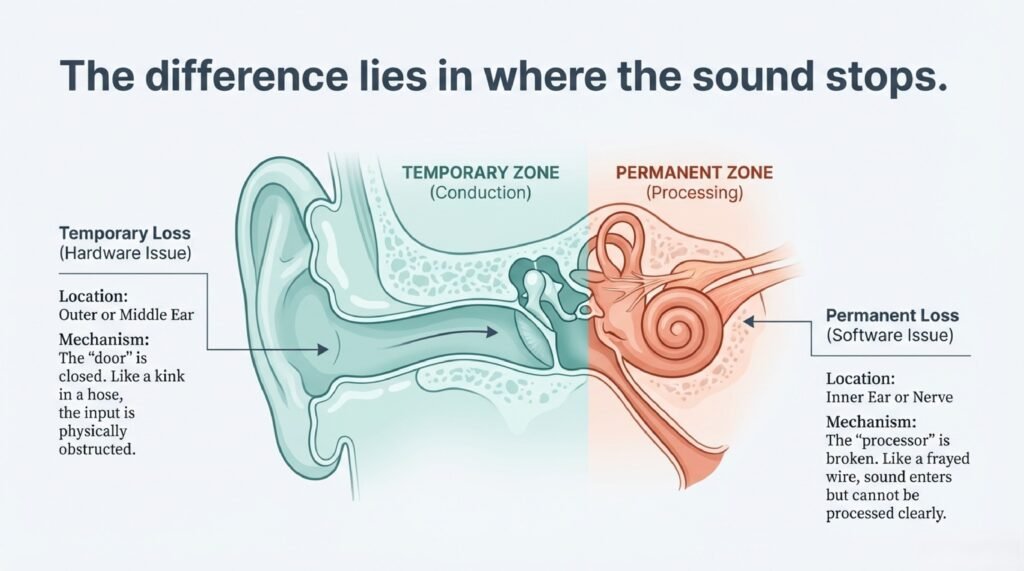
The key difference lies in where the problem occurs inside the ear.
Temporary hearing loss usually happens when sound cannot travel properly through the ear canal or middle ear.
In these cases, the inner ear remains healthy and undamaged.
Permanent hearing loss occurs when delicate inner ear structures or the hearing nerve are damaged.
Once damaged, these parts cannot naturally repair themselves.
Understanding this difference can feel reassuring.
Many people discover their hearing issue is temporary and treatable after proper assessment.
This is why identifying the type of hearing loss early is so important.
It helps reduce anxiety and ensures the right treatment is started without delay.
Also Read >>>
Blocked Ears Due to Cold? Causes, Relief & When to See a Specialist
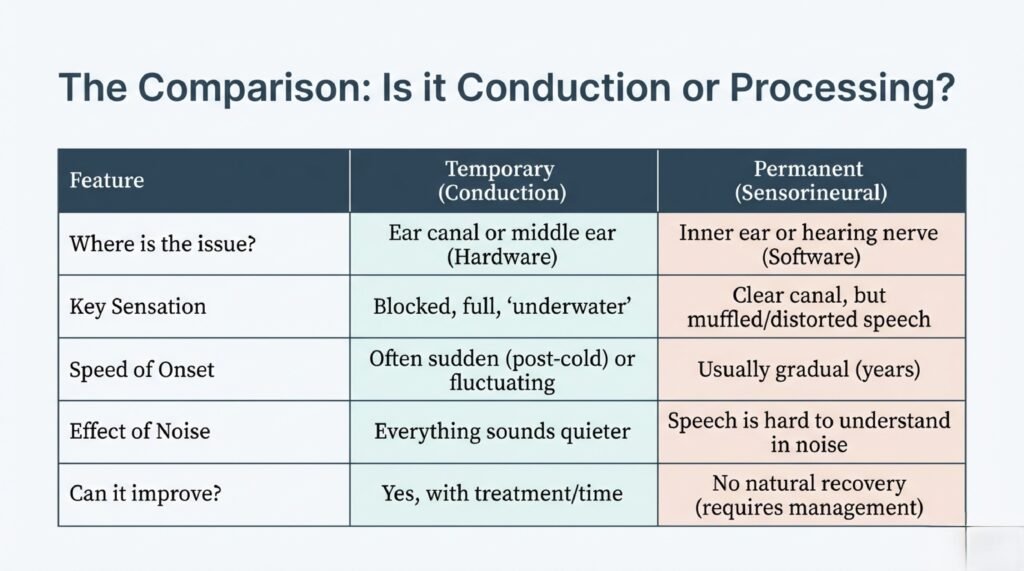
Temporary vs Permanent Hearing Loss
| Type | Where the Issue Is | Can It Improve? |
| Temporary hearing loss | Ear canal or middle ear | Yes |
| Permanent hearing loss | Inner ear or hearing nerve | No |
Temporary hearing loss affects sound conduction.
Permanent hearing loss affects sound processing.
What Causes Temporary Hearing Loss?
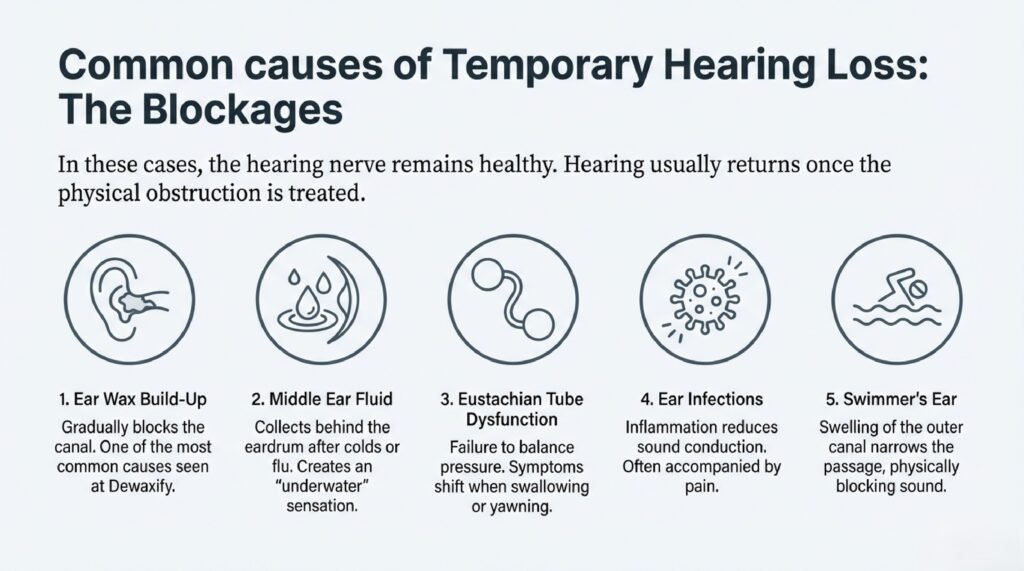
Temporary hearing loss happens when sound is blocked or reduced before it reaches the inner ear.
The hearing nerve remains healthy, which is why hearing often returns once the cause is treated.
Many everyday conditions can lead to this type of hearing change.
Most are common, manageable, and not a sign of permanent damage.
1. Ear Wax Build-Up
Ear wax can gradually block the ear canal, stopping sound from reaching the eardrum.
This often causes muffled hearing, fullness, or pressure in one or both ears.
Hearing usually improves immediately after professional wax removal.
This is one of the most common causes we see at Dewaxify.
2. Middle Ear Fluid
Fluid can collect behind the eardrum after colds, flu, or sinus infections.
This fluid dampens sound and creates a blocked or underwater sensation.
As the body heals and fluid drains, hearing typically returns to normal.
Children and adults can both experience this.
3. Eustachian Tube Dysfunction
The Eustachian tube helps balance pressure between the ear and the throat.
When it does not open properly, hearing may feel dull or uneven.
Symptoms often change with swallowing, yawning, or head movement.
This condition usually improves with time or simple treatment.
4. Ear Infections
Inflammation and fluid in the ear can reduce sound conduction temporarily.
Pain is common, but some infections cause hearing loss without discomfort.
Once the infection settles, hearing generally improves.
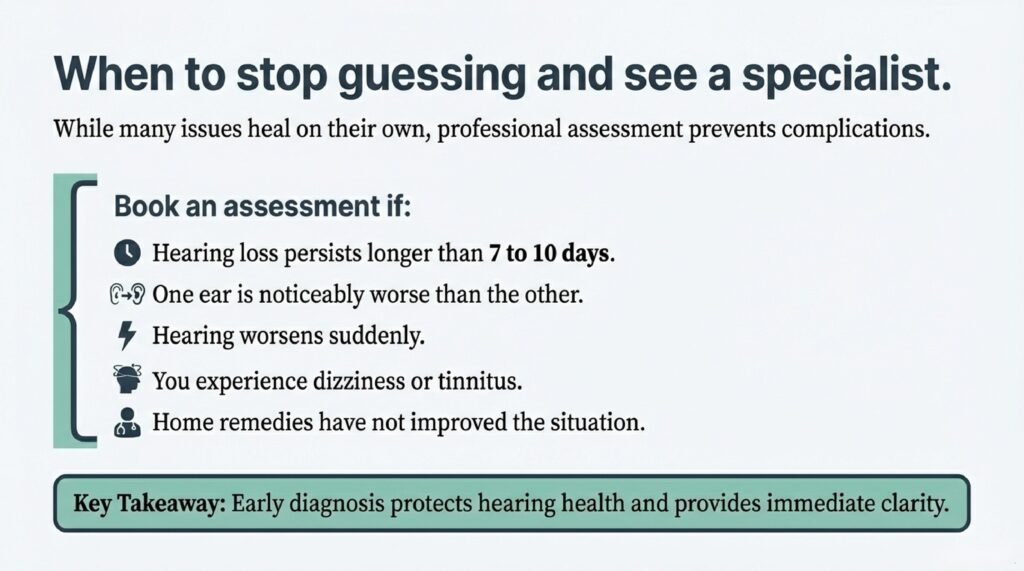
Persistent symptoms should always be checked.
5. Swimmer’s Ear
Swimmer’s ear causes swelling of the outer ear canal.
This swelling narrows the ear passage and blocks sound.
Hearing returns as the inflammation settles with appropriate treatment.
Also Read >>>
Muffled Hearing in One Ear Without Pain: Why It Happens and What to Do
Signs Hearing Loss Is Likely Temporary
Temporary hearing loss often follows clear and familiar patterns.
Recognising these signs can help reduce worry while you plan the next step.
Many people notice changes suddenly, especially after illness or congestion.
Others feel symptoms come and go throughout the day.
Common signs include:
- Sudden muffled hearing after a cold, flu, or sinus infection
- A full, blocked, or pressured feeling in the ear
- Hearing that improves, then worsens again
- Crackling, popping, or clicking sounds
- Hearing improves after swallowing or yawning
- Hearing returns after ear wax removal
These symptoms usually suggest sound blockage rather than nerve damage.
That means hearing is often recoverable with the right care.
However, temporary does not mean something should be ignored.
Persistent symptoms still deserve professional assessment.
Identifying the cause early helps prevent complications and speeds up recovery.
What Causes Permanent Hearing Loss?
Permanent hearing loss occurs when the inner ear or hearing nerve becomes damaged.
Unlike temporary issues, these structures cannot repair themselves.
This type of hearing loss usually develops gradually, but it can also appear suddenly.
Understanding the causes helps explain why early diagnosis is so important.
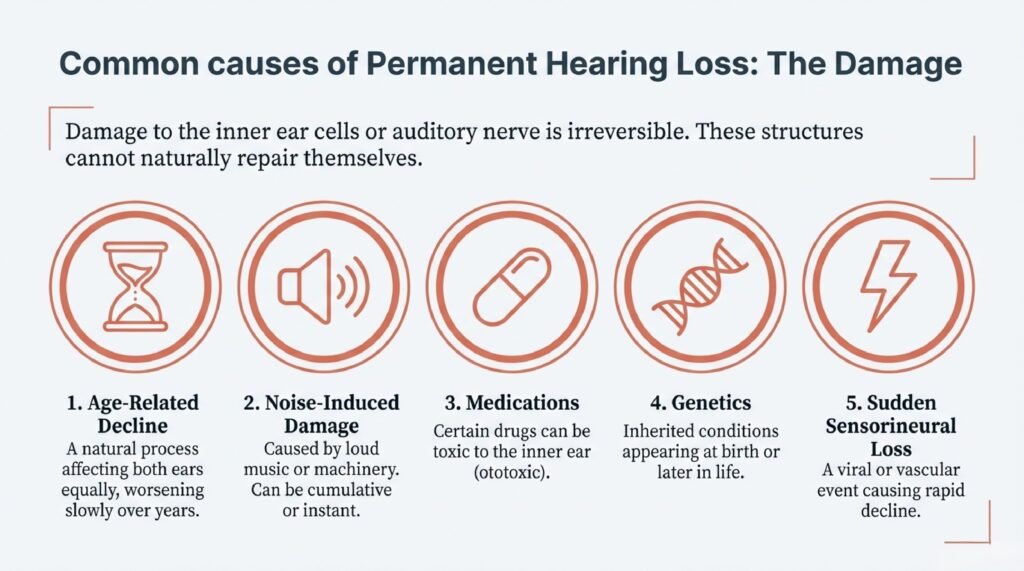
1. Age-Related Hearing Loss
Hearing can naturally decline as we get older.
This often affects both ears equally and worsens slowly over time.
Speech may sound unclear, especially in noisy environments.
This is one of the most common forms of permanent hearing loss.
2. Noise-Induced Hearing Loss
Loud sounds can damage delicate inner ear cells.
This includes music, machinery, power tools, or sudden explosions.
Damage may build up over years or happen after one loud exposure.
Once damaged, these cells do not recover.
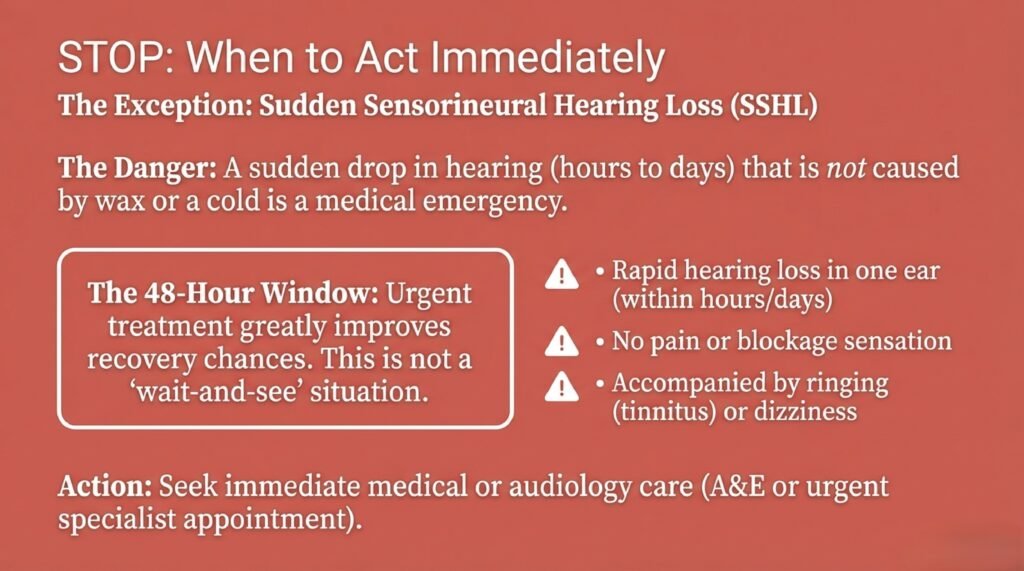
3. Sudden Sensorineural Hearing Loss
This involves rapid hearing loss over hours or days.
It usually affects one ear and may include ringing or dizziness.
This is a medical emergency and needs urgent treatment.
Early action greatly improves recovery chances.
4. Certain Medications
Some medications can be toxic to the inner ear.
Hearing changes may happen during or after treatment.
Always report hearing changes to your healthcare provider promptly.
5. Genetic Factors
Some people inherit conditions that affect hearing.
These may appear at birth or later in life.
Genetic hearing loss is usually permanent and progressive.

Signs Hearing Loss May Be Permanent
Permanent hearing loss often presents more subtly than temporary issues.
Instead of sudden blockage, symptoms tend to develop gradually.
Many people first notice problems in everyday conversations.
Voices may sound unclear, even when they seem loud enough.
Warning signs include:
- Hearing slowly worsens over months or years
- Difficulty understanding speech, especially in noise
- Ringing, buzzing, or humming sounds in the ear
- No blocked or full sensation in the ear
- Hearing does not improve with drops or ear cleaning
- Hearing tests show inner ear or nerve involvement
These signs suggest the problem is not related to sound blockage.
Instead, they point toward inner ear or nerve damage.
This does not mean nothing can be done.
Early assessment helps protect remaining hearing and guide the right support.
Professional evaluation is essential when these symptoms appear.
Clues That Suggest Permanent Hearing Loss
| Symptom | What It Suggests |
| Gradual decline | Age or noise-related loss |
| Ringing in ears | Inner ear damage |
| No blockage feeling | Not wax or fluid |
| Speech distortion | Nerve involvement |
| No improvement over time | Permanent cause |
Sudden Hearing Loss: When to Act Immediately
A sudden drop in hearing can be frightening and confusing.
If it happens without pain or blockage, it may be sudden sensorineural hearing loss.
This condition affects the inner ear or hearing nerve.
It is not caused by wax, fluid, or infection.
Hearing can decline over hours or within a few days.
Most people notice it in one ear only.
Red Flags to Watch For
- Sudden hearing loss within hours or days
- Ringing or buzzing in the affected ear
- Dizziness or balance problems
- One ear sounding much quieter than the other
These symptoms should never be ignored.
This is a medical emergency, not a wait-and-see situation.
Urgent treatment within 48 hours greatly improves recovery chances.
If this happens, seek immediate medical or audiology care.
Acting quickly can make a significant difference to long-term hearing.
What You Can Do at Home
If hearing loss feels mild and temporary, there are a few safe steps you can try.
These measures support natural recovery and reduce irritation.
Always avoid inserting anything into the ear canal.
This can worsen blockage or cause injury.
Safe Actions to Try
- Avoid cotton buds or sharp objects
- Use steam inhalation if you feel congested
- Try saline nasal spray to ease pressure
- Rest well and stay hydrated
- Avoid loud noise or headphones
These steps may help when symptoms are caused by congestion or pressure changes.
However, they are not a substitute for professional care.
Do not self-diagnose for long periods.
If hearing does not improve, assessment is important.
Early advice prevents unnecessary worry and protects hearing health.
Dewaxify: Helping You Understand Your Hearing
Dewaxify is a specialist ear care clinic based in Ilford, East London.
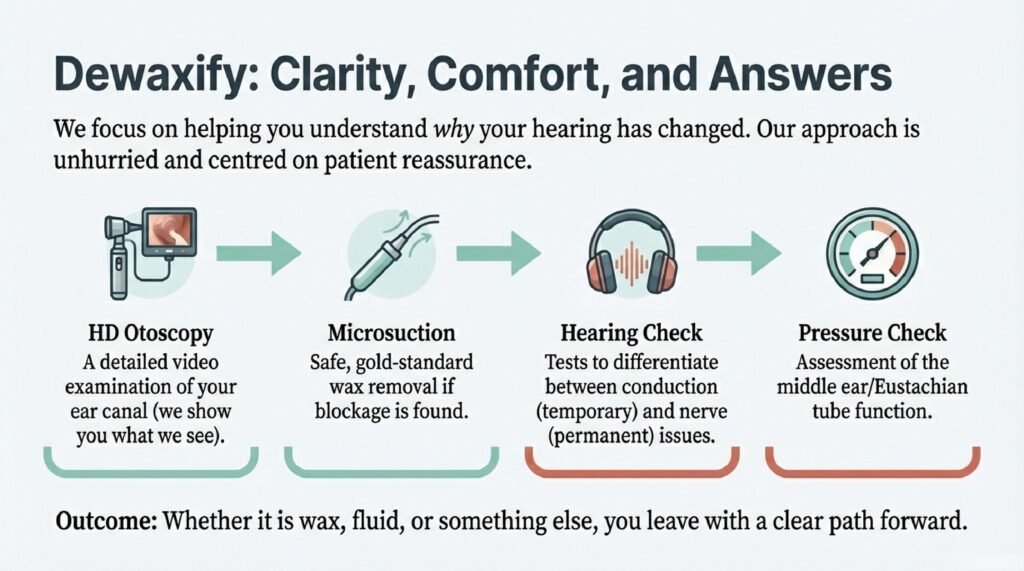
We focus on helping people understand why their hearing has changed.
Through careful assessment, we determine whether hearing loss is temporary or permanent.
Our approach is clear, unhurried, and centred on patient reassurance.
How We Help
- Detailed ear examination using HD otoscopy
- Safe microsuction ear wax removal
- Hearing tests to identify hearing loss type
- Middle ear pressure checks
- Guidance on next steps, including ENT referral when needed
Appointments are available for adults and children aged six and above.
Each visit allows enough time for proper assessment and explanation.
If you are unsure about your hearing, a professional check can provide clarity and peace of mind.
SAME-DAY HELP AVAILABLE
Get Checked Today
Frequently Asked Questions
Can hearing loss come back on its own?
Yes, if caused by wax, fluid, or infection.
How do I know if my hearing loss is permanent?
Persistent symptoms with tinnitus or speech distortion suggest permanent loss.
Should I wait to see if hearing improves?
Short-term waiting is fine, but persistent or sudden loss needs assessment
Does wax removal restore hearing?
Yes, if wax is the cause.
Is sudden hearing loss an emergency?
Yes. Treatment within 48 hours is critical.