


Feeling ear and jaw pain on one side can be worrying, especially when it appears suddenly and feels sharp, dull, or pressure-like.
Many people panic and think something serious is happening, but most causes are simple and very treatable.
Conditions like jaw tension, sinus pressure, or stubborn earwax can trigger this discomfort.
Your ear and jaw share the same nerves, so pain in one area often affects the other.
This connection can make even small issues feel confusing and stressful.
That’s why it helps to understand early symptoms and know when to get checked.
In this guide, we explain the –
- common causes,
- the warning signs,
- and when you should seek professional help
Why Ear and Jaw Pain Often Happen Together
It can feel confusing when your ear hurts, yet your jaw feels tight or heavy at the same time.
Many people assume something serious is going on, but the truth is simpler.
Your ear, jaw joint, throat, and nearby muscles share the same nerve pathways.
This means irritation in one area can easily create pain in another.
That’s why the pain often feels mixed or hard to locate.
To help you understand it better, here are a few examples:
- A jaw joint issue can feel exactly like an earache.
- A blocked ear can build pressure that pushes into the jaw.
- A throat infection can send pain upward toward your ear and jaw.
- Tight neck muscles can also trigger sharp pain around the ear.
When these areas “talk” to each other through shared nerves, the pain becomes confusing.
You might feel worried because the discomfort doesn’t stay in one spot.
That’s completely normal, and many people feel the same way.
The good news is that most causes are simple once a specialist checks them.
A quick exam can pinpoint the exact source and help you get relief faster.
Also Read>>>
Can Hayfever Cause Blocked Ears? What You Must Know Before It Gets Worse
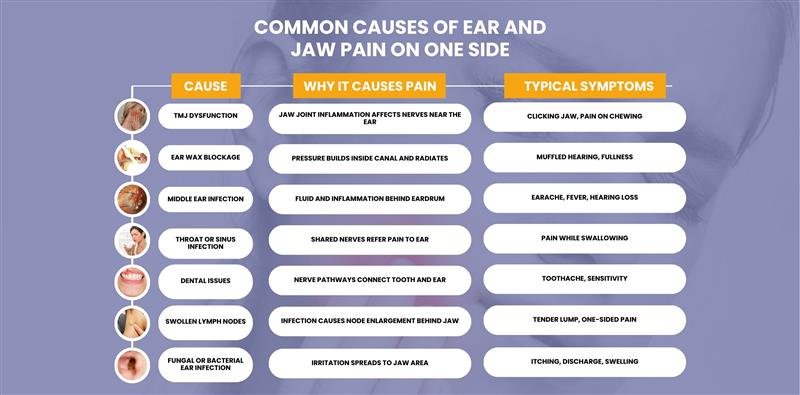
Common Causes of Ear & Jaw Pain on One Side
1. TMJ Dysfunction (Jaw Joint Issues)
TMJ (Temporomandibular Joint) problems are one of the most common reasons for ear and jaw discomfort on one side.
The TMJ sits right in front of your ear, so even small changes in this joint can cause big symptoms.
Many people notice pain when they clench their jaw, grind their teeth, or chew mostly on one side.
Stress can also tighten the jaw muscles and make the pain worse.
You may feel:
- Pain under the ear
- Jaw clicking or popping
- Facial tenderness
- Headaches
- A feeling of fullness or muffled hearing
These symptoms often confuse people, and that worry is completely normal.
The pain spreads because the TMJ lies very close to the ear canal.
Both areas also share important nerves, so irritation moves easily between them.
This is why simple jaw tension can feel like a deep inner-ear problem.
What can help:
- Avoid chewing gum
- Eat softer foods for a few days
- Use warm compresses to relax tight muscles
- Reduce clenching during stress
- See a dentist if the pain lasts longer than expected
Small changes often bring noticeable relief.
But if the pain keeps returning, a specialist assessment can help you understand the root cause and find the right treatment.
2. Ear Wax Build-Up
A deep or stubborn wax blockage can create strong pressure inside the ear canal.
This pressure often spreads behind the jaw bone and feels uncomfortable or heavy.
Many people get scared when this happens, but wax is one of the most harmless causes of one-sided pain.
The pain usually comes from the wax pressing against sensitive nerves inside your ear.
Common signs include:
- Fullness or heaviness in one ear
- Muffled or distorted sound
- Itching or irritation
- Sudden blockage after showers
If you feel these symptoms, the wax may be sitting too deep to clear at home.
This can make the pain feel sharp, dull, or simply annoying throughout the day.
The good news is that wax-related pain improves very quickly once the blockage is removed.
Microsuction ear wax removal offers immediate relief because it clears the wax safely without pushing it deeper.
Dewaxify provides this treatment in a calm and controlled environment, so you feel comfortable throughout the process.
Must Read>>>
Best Ear Wax Removal Drops in the UK: What Works & When to See a Specialist
3. Ear Infection in the Outer or Middle Ear
An ear infection is a very common cause of pain in jaw and ear, especially when it appears suddenly.
Both bacterial and fungal infections can create irritation that spreads into the neck, jaw, and throat.
This often makes the discomfort feel stronger on one side, which worries many people.
Outer ear infection (Otitis Externa)
This type often comes from trapped water or cleaning with cotton buds.
It affects the skin of the ear canal and can feel very sensitive.
Key symptoms:
- Sharp pain
- Itching
- Swelling
- Discharge
Middle ear infection (Otitis Media)
This usually follows a cold or sinus infection.
Pressure builds behind the eardrum and creates discomfort that radiates outward.
Key symptoms:
- Ear pressure
- Throbbing pain
- Mild fever
- Reduced hearing
Pain from infections often feels worse when chewing or lying down
It may also add to your worry, especially when it feels like pain behind ear or deep inside the jaw.
A quick check with a specialist can help confirm the cause and guide you toward proper treatment.
4. Dental or Sinus Problems
Dental issues can easily cause ear and jaw pain on one side, even when your teeth feel normal.
A tooth infection, wisdom tooth eruption, or gum abscess can send pain upward into your ear and jaw.
This happens because your teeth and ear share nerve pathways, so the discomfort often feels mixed or misleading.
Many people feel worried because the pain seems to move around the face or neck.
Sinus problems can create the same confusion.
When you have a cold or allergy, sinus pressure can trap fluid behind the ears.
This pressure often creates pain behind ear, especially on one side.
The sensation can feel heavy, warm, or tight, depending on the congestion.
These issues are often mistaken for an ear infection, which can delay proper treatment.
That’s why a professional examination helps you understand what’s truly causing the pain.
A quick check can separate dental, sinus, and ear-related problems, so you get the right care faster.
5. Swollen or Inflamed Lymph Nodes
Swollen lymph nodes can also cause ear and jaw pain on one side, especially when your body is fighting an infection.
These nodes sit behind the jaw and under the ear, so swelling in this area can feel sharp or tender.
Many people get worried because the pain feels sudden or one-sided, but this reaction is very normal.
Lymph nodes simply enlarge to help your body recover faster.
You may notice:
- Tenderness behind the ear
- Pain when turning your head
- One-sided discomfort
These symptoms often rise and fall as the infection heals.
Most lymph node swelling settles on its own once your body clears the illness.
If the swelling feels hard, lasts too long, or keeps growing, a quick clinical check offers reassurance and proper guidance.
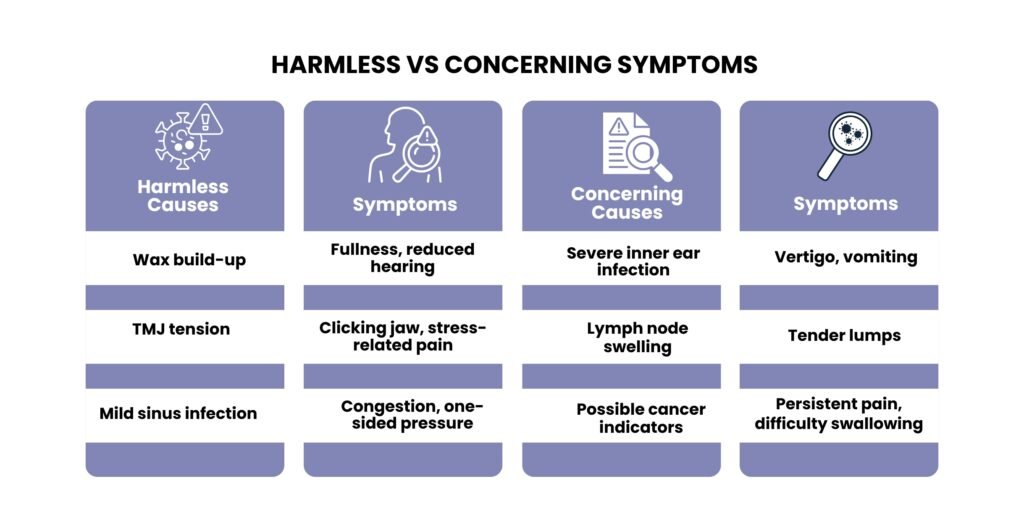
Could Ear and Jaw Pain on One Side Be Cancer?
Many people worry about ear and jaw pain on one side cancer, especially when the pain lasts longer than expected.
It’s natural to feel scared when symptoms appear suddenly or feel unusual.
The important thing to remember is that cancer is not a common cause of this pain.
Most cases come from simple issues like jaw tension, infections, or ear wax.
Cancer-related pain usually appears with other warning signs.
These can include a persistent sore throat, unexplained weight loss, or a lump in the neck.
You may also notice pain that does not improve at all over time.
If any of these symptoms appear together, you should get checked for clarity.
A quick clinical assessment often eases fear and gives clear answers.
Early reassurance can make a huge difference when you’re feeling anxious.
When the Pain is Behind the Ear
Feeling pain behind ear on one side can be unsettling, especially when it starts suddenly.
Many people imagine the worst, but most causes are simple and easy to treat.
This pain often comes from irritation in nearby tissues rather than the ear itself.
Common reasons include:
- Swollen lymph nodes
- Mastoid tenderness from infection
- TMJ inflammation
- Referred pain from a throat infection
Because these structures sit close together, the discomfort can feel sharp, heavy, or warm.
You may also feel the pain move between your jaw, neck, and ear, which adds to the confusion.
That reaction is completely normal, and many people experience the same pattern.
If the pain behind ear becomes severe, stays for too long, or appears with a fever, you should get checked.
A quick assessment can rule out serious issues and help you find fast relief.
What You Can Do at Home When Ear and Jaw Pain Starts
You can try a few simple steps at home if the pain feels mild and the cause seems clear.
These 6 methods often calm the discomfort and help your body settle.
- Warm Compress on the Jaw or Ear
Use a warm, not hot, cloth or heat pack for 10–15 minutes.
Apply it to the sore area two to four times a day.
Warmth relaxes tight jaw muscles and eases TMJ-related pain.
Keep the pack wrapped in a thin towel to protect your skin.
Stop if the warmth increases pain or skin becomes red.
If swelling or fever appears, skip heat and see a clinician.
- Avoid Chewing Hard Foods
Choose soft meals like soups, smoothies, or mashed vegetables for a few days.
Avoid chewy meat, crusty bread, nuts, and gum while you heal.
Eating gently reduces strain on the temporomandibular joint.
Try to chew evenly on both sides if possible.
If you grind teeth while asleep, mention it to your dentist.
- Use Over-the-Counter Pain Relief
Paracetamol or ibuprofen can ease short-term inflammation and pain.
Follow the medicine label and speak to a pharmacist if unsure.
Don’t mix multiple anti-inflammatories without professional advice.
Use medicine for the shortest effective time to control symptoms.
If pain persists despite meds, arrange a clinical check-up.
- Steam Inhalation for Sinus Pressure
Boil water, remove from heat, and inhale steam from a safe distance.
Breathe for 5–10 minutes, two or three times daily as needed.
Steam helps loosen mucus and may relieve Eustachian tube blockage.
Add a saline nasal spray afterward to clear softened mucus.
Avoid steam for small children or anyone who risks scalding.
- Avoid Cotton Buds or Ear Cleaning Tools
Never insert cotton buds into the ear canal; they can push wax deeper.
Tools may scratch the delicate ear skin and cause infection.
If you hear popping or feel sudden pain, stop all ear poking.
For suspected wax blockage, professional microsuction is safer and faster.
Dewaxify offers gentle microsuction to remove hard wax without pushing it in.
- When Home Care is Not Enough
If pain worsens, becomes constant, or comes with fever, seek medical help.
If hearing drops suddenly, or you notice pus or heavy bleeding, get checked.
Persistent one-sided pain beyond a few days needs specialist assessment.
A quick clinical exam can rule out serious causes and guide treatment.
Quick Checklist to Try at Home
- Warm compress for tight jaw muscles.
- Soft foods; avoid hard chewing.
- Short-term OTC pain relief if suitable.
- Steam for sinus-related pressure.
- No cotton buds; avoid ear tools.

When One-Sided Ear and Jaw Pain Needs a Specialist Visit
It’s completely normal to wonder when one-sided pain in jaw and ear needs proper medical attention.
Most people wait and hope the pain settles, but sometimes the body needs a closer look.
Seeing a specialist early can save you days of discomfort and worry.
You should book an appointment if you experience:
- Pain lasting longer than seven days
- Ear discharge, fever, or vertigo
- Reduced hearing in one ear
- Severe pain under the ear or pain behind ear
- A lump that lasts more than three weeks
- Symptoms that keep getting worse despite home care
These signs suggest your ear, jaw, or throat may need a detailed check.
A specialist can confirm whether your pain comes from wax, TMJ issues, an infection, or something deeper.
The right diagnosis brings quick relief and gives you peace of mind, especially when discomfort feels confusing.
Dewaxify: Trusted Ear Wax Removal & Ear Care Clinic in London
At Dewaxify, you’re treated by qualified ear-care specialists who focus on safe, gentle, and effective solutions for blocked ears.
Every visit includes a clear examination of your ear canal and professional microsuction performed with clinical accuracy.
Whether it’s pain, reduced hearing, or stubborn wax build-up, our team ensures you get the right treatment and guidance, immediately.
We also provide quick hearing checks for those looking to stay on top of their ear health.
- Google Rating: ⭐ 4.9/5 from over 300 reviews
- Price: From £60
- Appointment Time: 25–30 minutes
- For: Adults & children 6+
- Location: Fully accessible clinic in Ilford
7-Day Relief Plan for Ear and Jaw Pain
| Day | Step | Why It Helps |
| 1 | Apply warm compress twice daily | Reduces muscle tension |
| 2 | Switch to soft foods | Relieves TMJ stress |
| 3 | Take steam or saline for sinus pressure | Opens Eustachian tubes |
| 4 | Avoid cotton buds or scratching | Prevents irritation |
| 5 | Monitor pain location and triggers | Helps identify cause |
| 6 | Take Dewaxify’s free hearing test | Detect hearing changes |
| 7 | Book specialist exam at Dewaxify | Confirm diagnosis |
Frequenlty Asked Questions
What causes pain under the ear behind the jaw bone on the left side?
Common causes include TMJ issues, wax build-up, swollen lymph nodes, or sinus pressure.
Is ear and jaw pain on one side cancerous?
This is rare. Cancer-related symptoms usually include persistent throat pain, neck lumps, or difficulty swallowing. Ear and jaw pain alone is rarely a sign of cancer.
Why do I have pain behind my ear?
It may be due to lymph node swelling, TMJ tension, or an outer ear infection
Can an ear infection cause jaw pain?
Yes. Middle or outer ear infections can spread inflammation to nearby nerves
Should I worry about one-sided jaw and ear pain?
Most causes are harmless, but persistent or severe pain needs a specialist exam.