Many adults are surprised when a clinician tells them they have narrow ear canals.
This discovery often comes after repeated blocked ears, frequent wax build-up, or difficulty keeping ears clear.
A common question follows:
Are narrow ear canals in adults genetic, or can they develop later in life?
The answer is not always straightforward.
In reality, narrow ear canals can be present from birth, develop gradually, or worsen over time due to several factors.
This guide explains:
- What narrow ear canals actually mean
- Whether they are genetic or acquired
- Why they cause recurring ear problems
- How they affect ear wax, hearing, and infections
- When to seek professional care at Dewaxify
What Are Narrow Ear Canals?
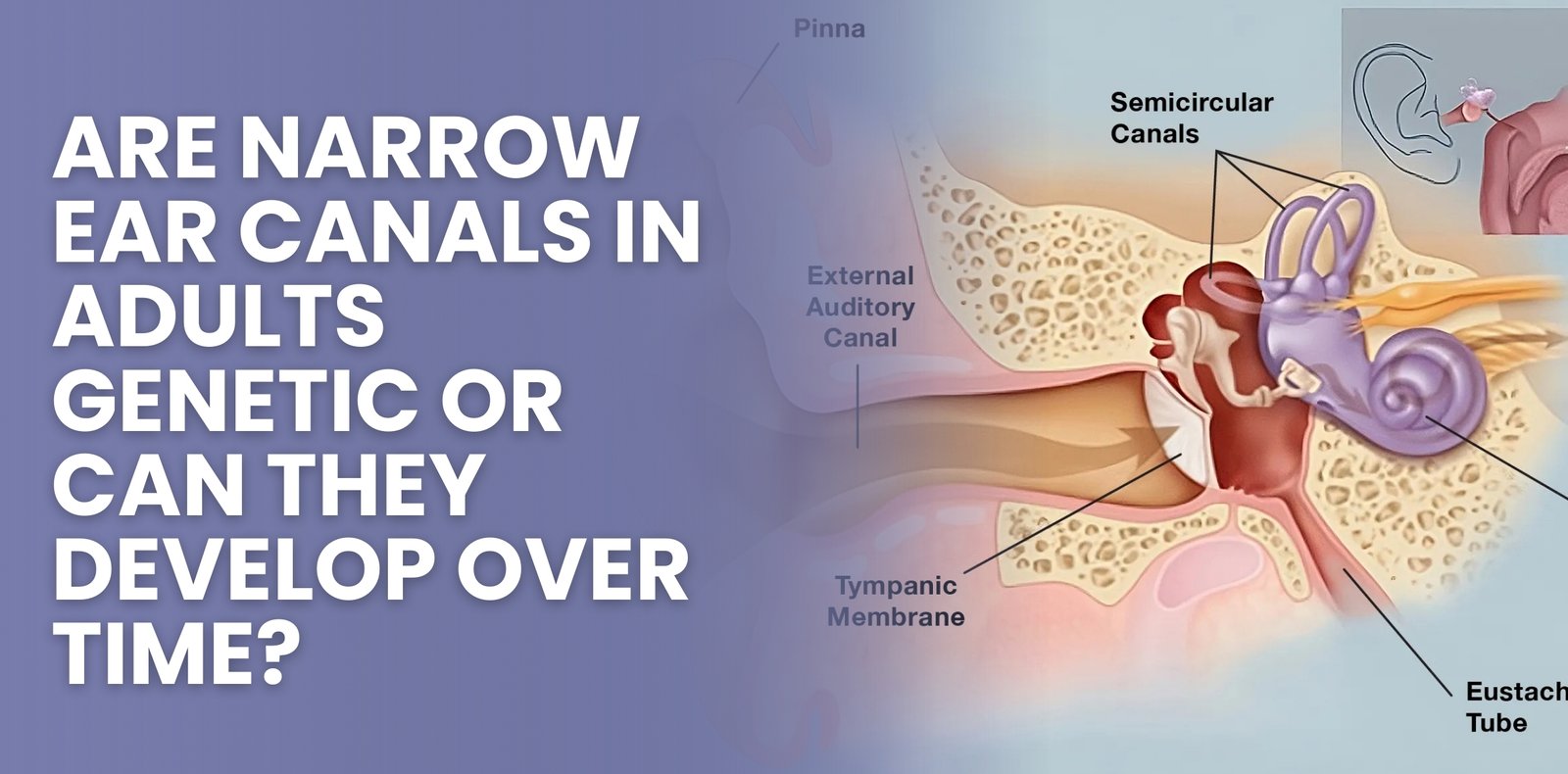
The ear canal is the passage that carries sound from the outer ear to the eardrum.
Its width and shape vary from person to person.
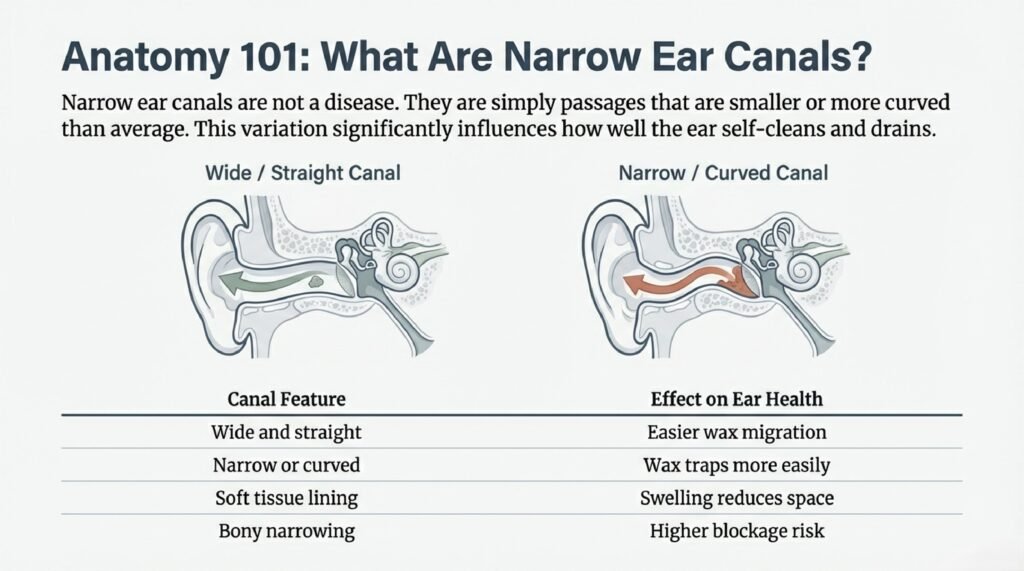
Narrow ear canals are simply canals that are smaller or more curved than average.
They are not a disease, but they can influence how well the ear self-cleans and drains.
Are Narrow Ear Canals Genetic?
Yes. In many adults, narrow ear canals are genetic.
Some people are simply born with:
- Smaller ear canals
- Sharper canal bends
- Thicker canal walls

These traits often run in families.
If parents or siblings struggle with wax build-up, blocked ears, or repeated ear cleaning, genetics may be the reason.
Genetic narrowing is usually present lifelong, even if symptoms appear later.

Must Read
How to Tell If Hearing Loss Is Permanent or Temporary
Can Narrow Ear Canals Develop Over Time?
Yes.
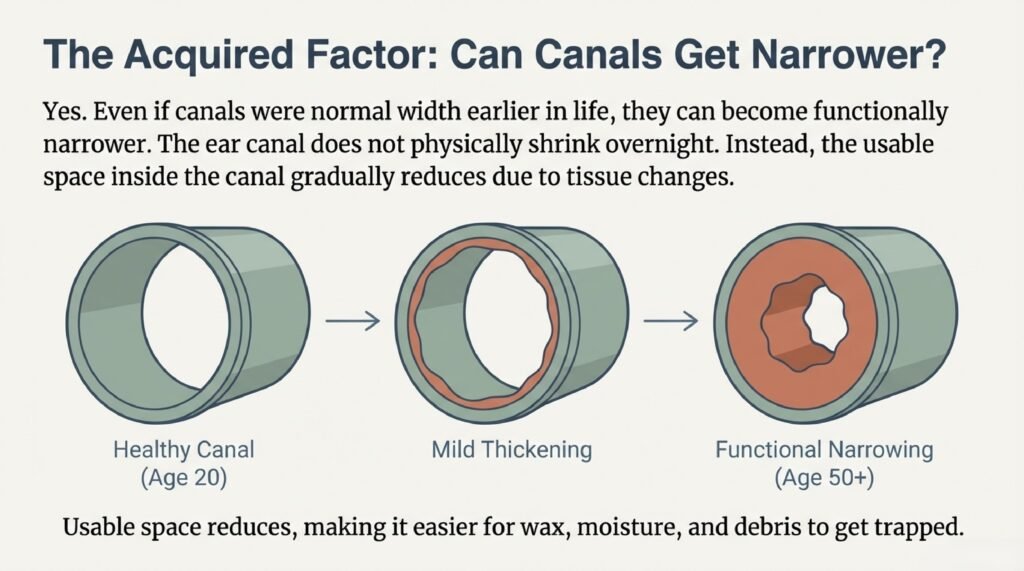
Even if your ear canals were a normal width earlier in life, they can become functionally narrower as the years go by.
This doesn’t mean the ear canal physically shrinks overnight. Instead, the usable space inside the canal gradually reduces, making it easier for wax, moisture, and debris to get trapped.
Several factors contribute to this process.
Factors That Can Cause Ear Canals to Become Narrower Over Time
1. Chronic Inflammation
One of the most common reasons ear canals become narrower in adulthood is ongoing inflammation.
Repeated ear infections, eczema, dermatitis, or persistent irritation cause the delicate skin lining the ear canal to swell. When this swelling becomes frequent or long-lasting, the canal never fully returns to its original width.
Over time:
- The canal remains slightly swollen
- Skin thickens as a protective response
- Even mild inflammation reduces space in an already narrow area
This is why some adults feel like their ears are “always a bit blocked,” even when there isn’t much wax present.
2. Repeated Wax Impaction
Frequent ear wax blockage doesn’t just cause temporary symptoms. It can actually change how the ear canal behaves over time.
When wax repeatedly builds up and becomes impacted:
- The canal lining gets stretched and irritated
- The skin becomes more sensitive
- Inflammation becomes more likely after each blockage
Many people fall into a cycle:
wax builds up → blockage → irritation → narrower canal → faster blockage next time.
This is something clinicians at Dewaxify see often in adults who’ve had blocked ears for years and only seek help when hearing suddenly drops.
3. Age-Related Skin Changes
As we age, the skin inside the ear canal changes just like skin elsewhere on the body.
Common age-related changes include:
- Reduced elasticity
- Increased dryness
- Slower healing after irritation
Drier skin is more prone to cracking and inflammation, which can cause swelling inside the canal. Dryness also makes ear wax harder and less mobile, increasing the chance of compaction.
The combination of stiffer skin + harder wax makes the ear canal behave as if it’s narrower, even if the underlying structure hasn’t changed much.
4. Swimmer’s Ear History
Repeated water exposure can have a long-term impact on ear canal health.
When water regularly gets trapped inside the ear:
- The skin becomes soft and irritated
- Natural oils are stripped away
- Inflammation becomes more likely
Over time, the canal lining can thicken as a protective response. This thickening reduces the internal space and makes drainage worse, leading to even more irritation after future water exposure.
People who swim frequently, shower without drying their ears properly, or live in humid environments often experience this gradual narrowing effect.
5. Trauma or Surgery
Past trauma to the ear canal can also contribute to narrowing.
This includes:
- Previous ear surgery
- Repeated ear syringing
- Aggressive ear cleaning
- Frequent use of instruments inside the ear
Even minor trauma can lead to:
- Scar tissue formation
- Changes in canal shape
- Areas that swell more easily than before
Over time, these changes can make the canal less flexible and more prone to blockage, especially when combined with wax or inflammation.
Why These Factors Often Work Together
In many adults, it’s not just one cause.
For example:
- Mild genetic narrowness combined with age-related skin changes
- Wax impaction plus repeated inflammation
- Water exposure alongside sensitive skin
When these factors stack up, the ear canal becomes less forgiving, and problems that once happened occasionally start happening regularly.
Genetic vs Acquired Narrow Ear Canals
| Feature | Genetic | Acquired |
| Present from childhood | Yes | No |
| Family history | Often | Rare |
| Gradual onset | No | Yes |
| Linked to infections | Sometimes | Common |
| Can worsen over time | Mild | Often |
Why Narrow Ear Canals Cause Problems
Narrow ear canals interfere with the ear’s natural self-cleaning process.
Common issues include
- Frequent ear wax build-up
- Blocked or muffled hearing
- Water trapping after swimming
- Recurrent ear infections
- Itching or discomfort
- Difficulty using earbuds or hearing aids
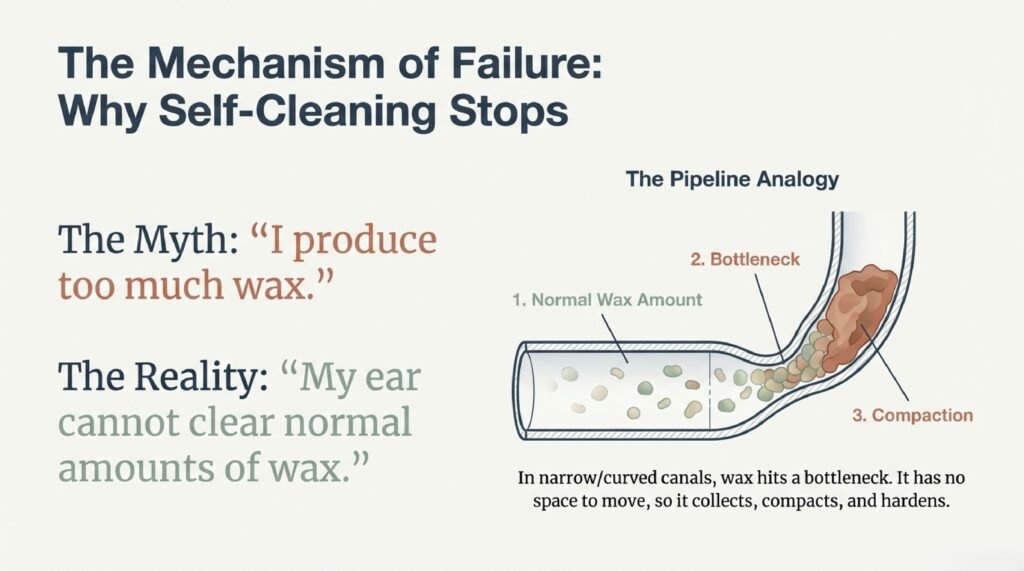
Wax has less space to move outward, so it compacts instead.
Related Post
Ear Feels Blocked but No Wax? What’s Really Causing That Fullness and How to Stop It
Narrow Ear Canals and Ear Wax
People with narrow ear canals in adults usually produce a normal amount of ear wax.
The problem is not wax overproduction, but poor natural clearance.
In healthy ears, wax slowly migrates outward on its own. However, when the ear canal is narrow or curved, wax has less space to move. Instead of clearing naturally, it collects, compacts, and hardens over time.
Why Wax Gets Trapped in Narrow Ear Canals
Several factors make wax more likely to build up when canals are narrow:
- Limited space prevents wax from moving outward
- Curves in the canal cause wax to stick and settle
- Dry or ageing skin makes wax harder and less mobile
- In-ear devices push wax deeper into the canal
Even small amounts of wax can cause symptoms in narrow canals because there is so little room available.
Can Narrow Ear Canals Affect Hearing?
Yes, indirectly.
Narrow canals do not damage hearing nerves, but they increase the likelihood of:
- Conductive hearing loss from wax
- Muffled sound transmission
- Recurrent temporary hearing dips
Once wax or blockage is removed, hearing usually returns to normal.
How Narrow Ear Canals Are Diagnosed
Diagnosis is simple and non-invasive.
At Dewaxify, we use HD otoscopy to examine the canal and eardrum clearly.
This allows us to assess:
- Canal width
- Skin condition
- Wax pattern
- Infection or inflammation
Patients often see their canal shape live on screen.
What Can You Do If You Have Narrow Ear Canals?
If you have narrow ear canals in adults, the anatomy itself cannot be changed.
However, the symptoms like blocked ears, recurring wax build-up, and muffled hearing; can be managed very effectively with the right habits and preventive care.
Small daily choices make a big difference when ear canals are narrow, because even minor irritation or wax movement can quickly lead to blockage.
1. Avoid Cotton Buds and Ear Probing
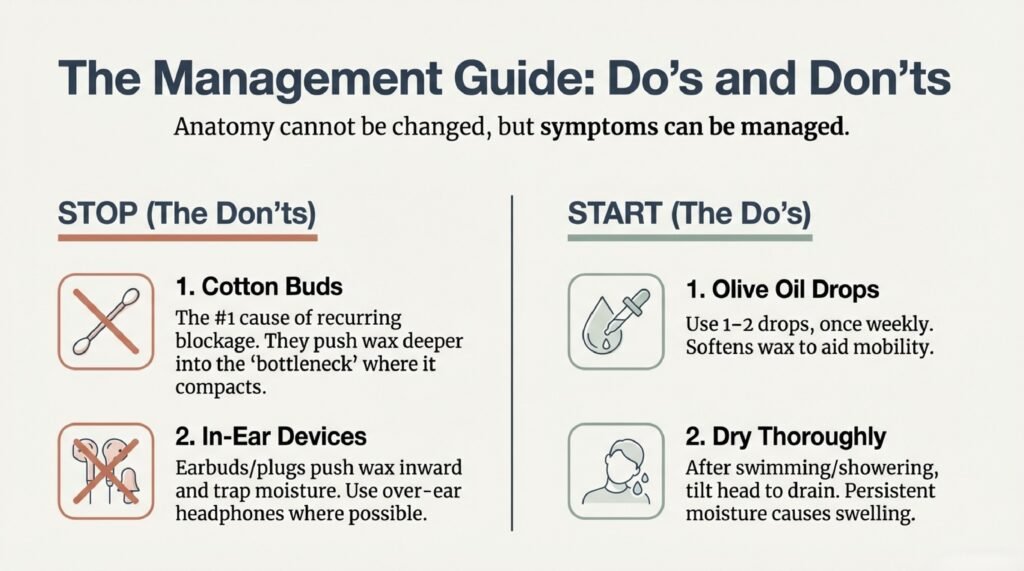
Cotton buds are one of the biggest causes of recurring blockages in narrow ear canals.
Instead of removing wax, they push it deeper, where it becomes compacted against the eardrum.
In narrow canals, there is very little room for error. Even gentle probing can:
- Worsen wax impaction
- Irritate the canal lining
- Trigger swelling that further narrows the canal
If your ears feel blocked, professional assessment is always safer than self-cleaning.
2. Use Preventive Olive Oil Drops Correctly
Occasional olive oil drops can help soften ear wax, making it less likely to harden and block the canal.
For adults with narrow ear canals:
- Use 1–2 drops, once or twice a week
- Avoid daily or excessive use
- Stop if discomfort or discharge develops
Oil does not remove wax, but it improves mobility, which is crucial when clearance is limited.
3. Limit the Use of In-Ear Devices
Earbuds, earplugs, and hearing aids can significantly worsen wax build-up in narrow canals. They:
- Push wax inward
- Prevent natural outward movement
- Increase warmth and moisture inside the ear
If possible:
- Use over-ear headphones
- Clean in-ear devices regularly
- Remove them periodically during the day
This reduces both wax compaction and irritation.
4. Dry Ears Thoroughly After Water Exposure
Water trapped in narrow ear canals can cause swelling and inflammation, making blockages more likely.
After swimming or showering:
- Gently dry the outer ear with a towel
- Tilt your head to allow water to drain
- Avoid inserting tissues or cotton
Persistent moisture can increase the risk of swimmer’s ear and recurring canal narrowing.
5. Schedule Regular Professional Ear Checks
Because narrow ear canals increase the risk of repeated blockages, preventive checks are often more effective than waiting for symptoms.
Regular assessments allow:
- Early wax removal before full blockage
- Monitoring of canal health
- Reduced risk of infection and hearing disruption
At Dewaxify, many patients with narrow ear canals benefit from routine microsuction to stay comfortable and avoid sudden hearing loss.
The safest and most effective treatment is microsuction ear wax removal.
Why microsuction works best
✅No water used
✅Precise removal under magnification
✅Safe for narrow and curved canals
✅Reduces infection risk
✅Immediate symptom relief

Best Treatment for Narrow Ear Canals in Adults
Syringing is often unsuitable for narrow canals due to pressure and water retention.
Managing Narrow Ear Canals Safely
| Method | Suitable | Why |
| Cotton buds | No | Push wax deeper |
| Syringing | Often no | Water traps easily |
| Olive oil drops | Yes | Softens wax |
| Microsuction | Yes | Precise and safe |
| Regular checks | Yes | Prevents blockage |
When to See a Specialist
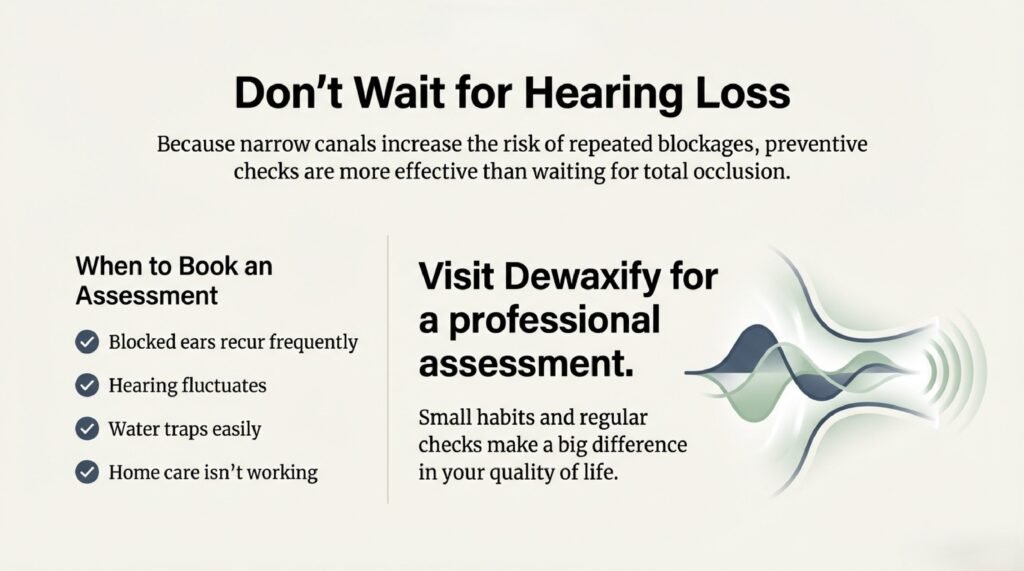
You should book an ear assessment if:
⚠️Blocked ears recur frequently
⚠️Hearing fluctuates
⚠️Water traps easily after swimming
⚠️Itching or discomfort persists
⚠️Home care does not help
Early management prevents repeated infections and hearing disruption.
Dewaxify: Specialists in Narrow Ear Canals
Dewaxify is a specialist ear care clinic based in Ilford, East London, founded by Audiological Scientist Sita Parmar.
We regularly assess and treat adults with narrow ear canals, recurring wax build-up, and related hearing concerns.
Using HD otoscopy and microsuction, we focus on accurate diagnosis and safe wax removal, particularly for narrow or curved ear canals where home care is often ineffective.
Same-day appointments are available for adults and children aged six and above.
You can take a free hearing test online to check whether wax or canal narrowing is affecting your hearing.
SAME-DAY HELP AVAILABLE
Get Checked Today
FAQs
Are narrow ear canals common in adults?
Yes. Many adults have them, especially if blockages recur.
Can ear canals shrink with age?
They do not shrink, but inflammation and wax can reduce usable space.
Do narrow ear canals mean hearing loss?
No. Hearing loss is usually temporary and due to blockage.
Is microsuction safe for narrow canals?
Yes. It is the safest and most precise method.
How often should ears be checked?
Every 6 to 12 months if blockages recur.