
If every spring or summer brings a stuffy nose, itchy eyes, and that annoying feeling of fullness in your ears, you’re not imagining it.
Hayfever, or seasonal allergic rhinitis, doesn’t just make you sneeze; it can affect your ears, too.
Allergies inflame the nasal passages and Eustachian tubes, disrupting how your ears balance air pressure.
The result?
A clogged, muffled, or “underwater” sensation that can linger for weeks.
In this blog, we’ll explain exactly how hayfever causes ear blockage, share safe home remedies and when a professional help is needed.
Why Hayfever Causes Ear Blockage
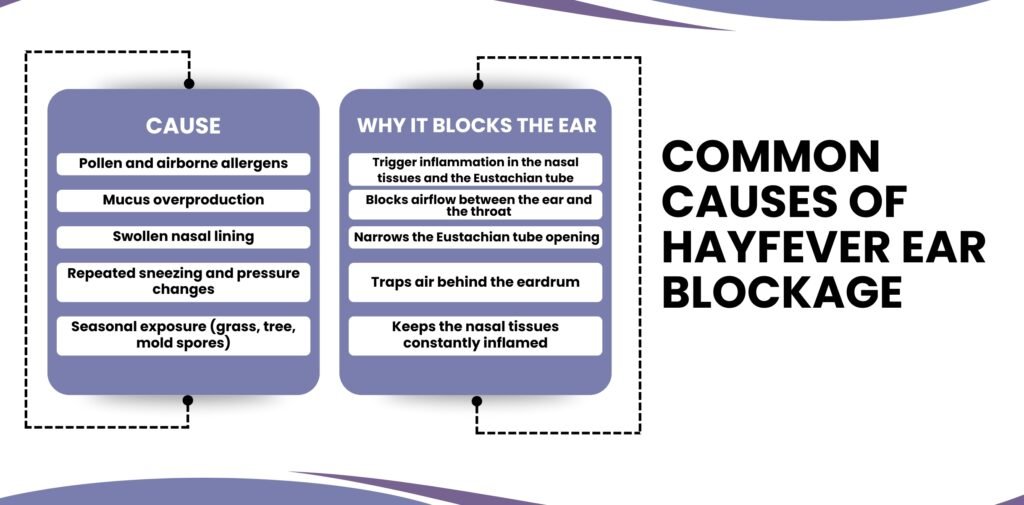
When pollen, dust, or pet dander enters your nose, your immune system reacts as if it’s under attack.
It releases histamine, which causes swelling and extra mucus.
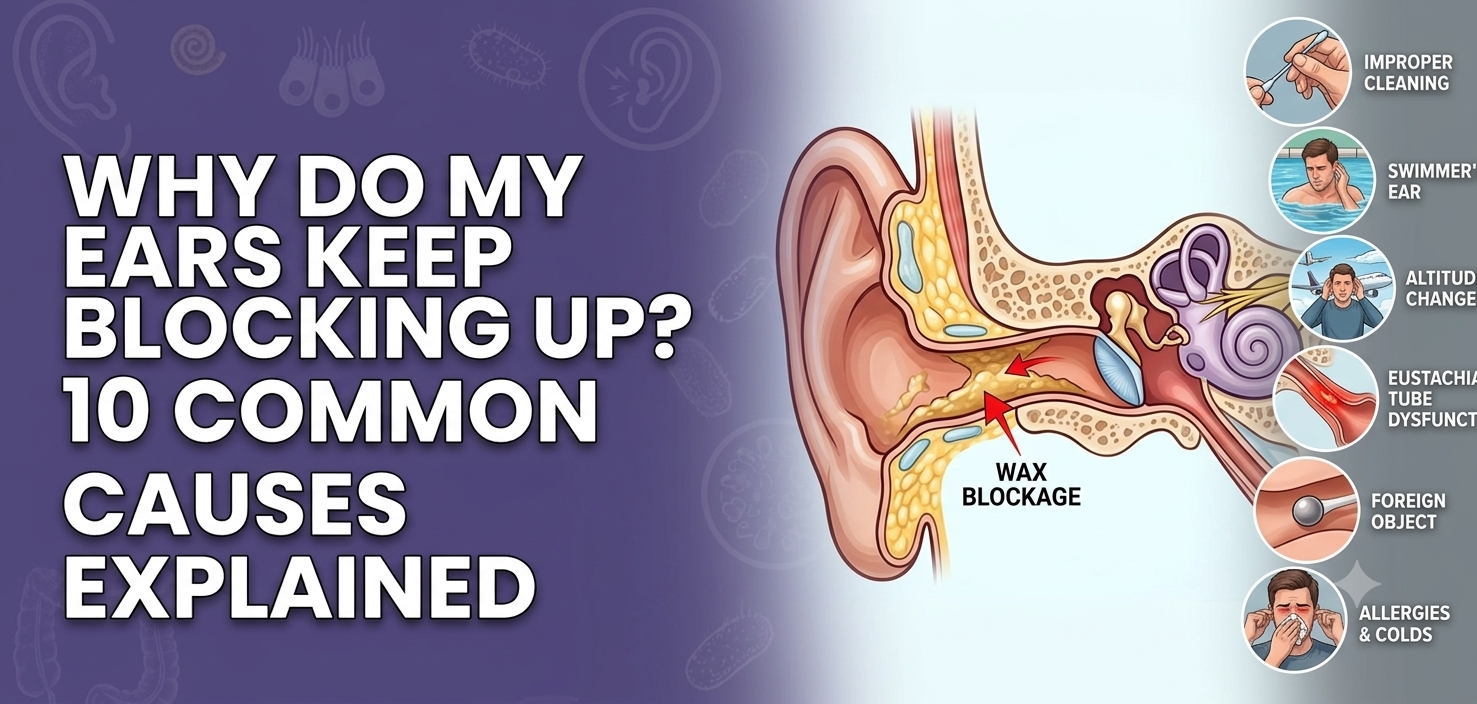
This inflammation extends to the Eustachian tubes, tiny passageways that connect the middle ear to the back of your throat.
When these tubes swell shut, pressure builds up behind your eardrum, and you feel a blockage or reduced hearing.
Over time, persistent inflammation may even lead to fluid accumulation (otitis media with effusion), causing dizziness or mild balance issues.
In short: hayfever can block ears by swelling the nasal passages, increasing mucus, and trapping pressure behind the eardrum.
Related Blog Post>>>
How to Improve Ear Health: Simple Daily Habits, Expert Tips, and Natural Care Practices
Common Causes of Hayfever Ear Blockage
Symptoms: How to Know if Your Blocked Ears Are Allergy Related
- A feeling of fullness or pressure inside the ear
- Reduced or muffled hearing
- Crackling or popping when swallowing
- Dizziness or imbalance
- Temporary ringing or buzzing sounds
- No pain or discharge (which differentiates it from infection)
If symptoms persist beyond two weeks, it’s time to visit a specialist.
Also Read>>>>
The Complete Guide to Ear Health: Tips for Preventing Hearing Problems
How to Relieve Allergy-Related Ear Blockage at Home
If your eardrum is intact and you don’t have chronic ear problems, these home strategies can help restore pressure balance safely.
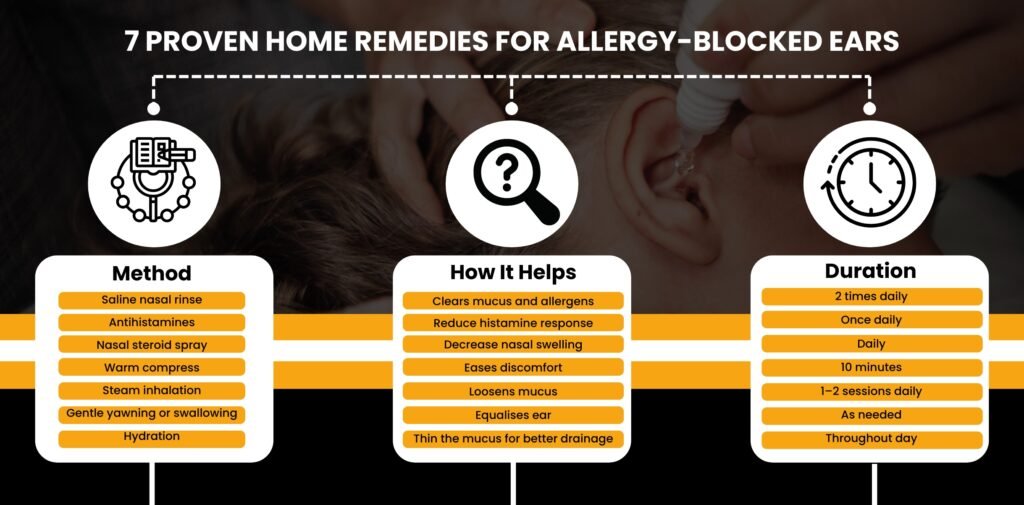
1. Saline Nasal Rinse
A saline rinse is an excellent way to clear the source of the problem.
Use a neti pot or a squeeze bottle designed for nasal irrigation.
Fill it with a pre-mixed or homemade isotonic saline solution.
Lean over a sink and tilt your head sideways.
Gently pour or squeeze the solution into the upper nostril.
It will flow through your nasal passage and drain out the lower nostril.
This action physically flushes out pollen, allergens, and thick mucus.
This directly reduces the inflammation that often blocks the opening of the Eustachian tube.
Perform this once or twice daily.
2. Antihistamines
Over-the-counter (OTC) antihistamines help control your body’s allergic response.
They work by blocking the effects of histamine, which causes swelling and mucus production.
Look for non-drowsy options like loratadine (Claritin) or cetirizine (Zyrtec).
Read the instructions carefully and take the recommended dosage.
They are most effective if you start taking them early in the hayfever season before symptoms become severe.
3. Nasal Steroid Sprays
These sprays (containing ingredients like fluticasone or mometasone) are powerful anti-inflammatories.
They specifically target swelling inside the nose.
To use them correctly, shake the bottle, tilt your head slightly forward, and point the spray tip away from your nasal septum (the center wall of your nose).
Spray into one nostril while gently closing the other.
This reduces inflammation around the Eustachian tube opening.
Use them once or twice a day as directed.
Remember, they require 3 to 7 days of consistent use to reach full effectiveness.
4. Warm Compresses
This method offers fast comfort and pain relief.
Simply soak a clean washcloth or towel in warm (not hot) water.
Wring out the excess water.
Lie down and apply the warm, moist compress over the outer ear and the area just below it.
Leave it in place for about 10 minutes.
The heat helps improve circulation and relax the muscles near the Eustachian tube, easing the feeling of fullness and pressure.
5. Steam Inhalation
Inhaling warm, moist air helps to thin out thick, sticky mucus.
You have two easy options:
First, sit in your bathroom with the door closed and run a hot shower to create a steamy environment for 10 to 15 minutes.
Alternatively, fill a large bowl with hot water.
Drape a towel over your head and the bowl to trap the steam.
Keep your face at a safe distance (about 12 inches) to avoid burns.
Breathe the steam deeply through your nose and mouth for 10 to 15 minutes, one or two times daily.
6. Pressure Equalisation Exercises
A blocked ear is often a pressure problem that simple movements can fix.
Valsalva Maneuver:
Close your mouth, pinch your nose gently, and try to exhale very lightly.
You should feel a gentle “pop” in your ears.
Never blow forcefully, as excessive pressure can damage the eardrum
Swallowing and Yawning:
Simply swallow repeatedly or perform a sustained yawn.
The muscle action often opens the Eustachian tube.
7. Stay Hydrated
This is your most basic and essential remedy.
When you are well-hydrated, all the secretions in your body, including the mucus in your sinuses and ears, remain thinner and less sticky.
Drink plenty of fluids throughout the day, water, herbal tea, or clear broths are best.
Avoiding dehydration ensures that any fluid that does accumulate can drain more easily from the Eustachian tubes.
7 Proven Home Remedies for Allergy-Blocked Ears
What Not to Do
- Avoid inserting cotton buds or hairpins into your ears.
- Don’t use ear candles; they have no proven benefit and may burn the ear.
- Don’t overuse nasal decongestant sprays beyond 3 days, as they cause rebound congestion.
- Avoid swimming in unchlorinated or dirty water during peak allergy weeks.
When to See a Specialist
If your ear remains blocked for more than two weeks despite treatment, or if you develop the following, visit a clinic immediately:
- Sharp or persistent ear pain
- Hearing loss in one ear
- Discharge or fluid coming out
- Dizziness or nausea
- Recurrent blockage every allergy season
A qualified audiologist or ENT will perform otoscopy, tympanometry, and possibly a hearing test to confirm whether the cause is inflammation, fluid, or wax.
Dewaxify: London’s Trusted Clinic for Ear Health
Founded in April 2017 by Sita Parmar, a certified Audiological Scientist, Dewaxify is an ear wax removal clinic based in Ilford, East London.
The clinic specializes in microsuction ear wax removal, a dry, precise, and highly effective method considered the gold standard in modern audiology.
Dewaxify’s Expertise and Services
- Microsuction Technology: Uses a gentle suction device with magnification for precise ear cleaning.
- Comfortable and Fast: The entire process takes about 20 minutes, including examination.
- Safe for All Ages: Suitable for patients with perforated eardrums, hearing aids, or post-surgery ears.
- Comprehensive Consultation: Each appointment includes HD otoscopy, where patients can see inside their ears on-screen, followed by a free online hearing test.
Pricing & Accessibility
Appointments start at £60 and include a free consultation and personalised after-care guide.
The clinic is fully accessible, family-friendly, and equipped with a pediatric audiologist for children aged 6 and above.
Why Professional Care Complements Home Treatment
While home remedies manage inflammation, sometimes the ear still feels blocked due to residual wax or fluid.
Microsuction can safely remove any hardened debris that worsens pressure build-up.
It helps restore your ear’s natural self-cleaning function and prevents future discomfort.
Many Dewaxify patients describe the experience as “oddly satisfying,” especially when they can instantly hear better after their session.
A 7-Day Plan to Relieve Hayfever-Blocked Ears
| Day | Step | Why It Helps |
| 1 | Start a daily antihistamine | Controls allergy symptoms early |
| 2 | Use saline rinse morning and night | Clears allergens and mucus |
| 3 | Add a nasal steroid spray | Reduces swelling inside Eustachian tube |
| 4 | Apply a warm compress | Relieves ear fullness and pain |
| 5 | Do gentle pressure equalisation exercises | Opens up the tube naturally |
| 6 | Take Dewaxify’s free online hearing test | Checks if hearing is affected |
| 7 | Book a consultation at Dewaxify | Ensures full recovery and peace of mind |
Ready to Breathe and Hear Clearly Again?
Don’t let hayfever season block your hearing. Follow these daily care tips, and if pressure persists, schedule a professional check-up at Dewaxify Ilford.
Same-day appointments and free hearing tests available.
Hayfever & Blocked Ears: Your FAQs
Can hayfever cause permanent hearing loss?
No. Hayfever usually causes temporary hearing reduction due to pressure or fluid build-up. Once the allergy subsides, hearing returns to normal.
How long do blocked ears from allergies last?
Mild blockage clears within a few days. Persistent symptoms for over two weeks should be examined by a professional.
Can children get blocked ears from hayfever?
Yes. Children are more prone to Eustachian tube blockage. Early treatment prevents infections and speech delays.
Should I use olive oil or ear drops for allergy blockage?
No. Allergy-related blockage is caused by swelling, not wax. Use nasal treatments and consult a clinic if symptoms persist.
How does Dewaxify help if it’s not wax-related?
Dewaxify provides full ear assessments, microsuction for any debris, and guides patients toward ENT or allergy care if needed.