


Ear piercings have become a form of personal expression, blending art, culture, and style.
Whether it’s a single stud or a curated ear with multiple piercings, they remain one of the most popular beauty and fashion choices worldwide.
But behind the aesthetics lies one important truth: ear piercings are minor medical procedures.
Done incorrectly or without proper aftercare, they can lead to infection, scarring, or allergic reactions.
In this guide, Dewaxify’s audiology experts explain the different types of ear piercings and how long each takes to heal, safe aftercare practices.
We will also discuss what is the right time to seek professional help if something feels wrong.
Why Ear Piercings Need Careful Consideration
Your ear contains soft tissue, cartilage, and numerous small blood vessels.
Any piercing disrupts the protective skin barrier, which means healing depends heavily on hygiene and technique.
At Dewaxify, we often see patients who visit not just for wax removal or hearing issues, but also for ear infections caused by poorly managed piercings.
Understanding ear anatomy, healing timelines, and aftercare can prevent such complications entirely.
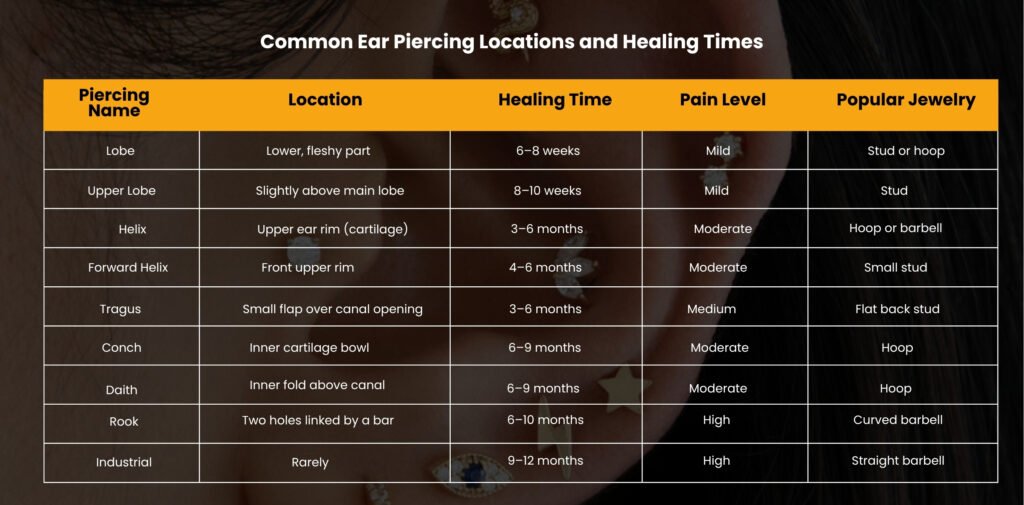
Common Ear Piercing Locations &
Healing Times
Understanding the Different Types of Ear Piercings

Getting your ears pierced isn’t just about adding a bit of sparkle.
It’s also about expressing your style.
From subtle studs to statement hoops, each piercing has its own character, placement, and healing timeline.
Here’s a quick look at the most popular types of ear piercings and what makes each one unique.
1. Lobe Piercing
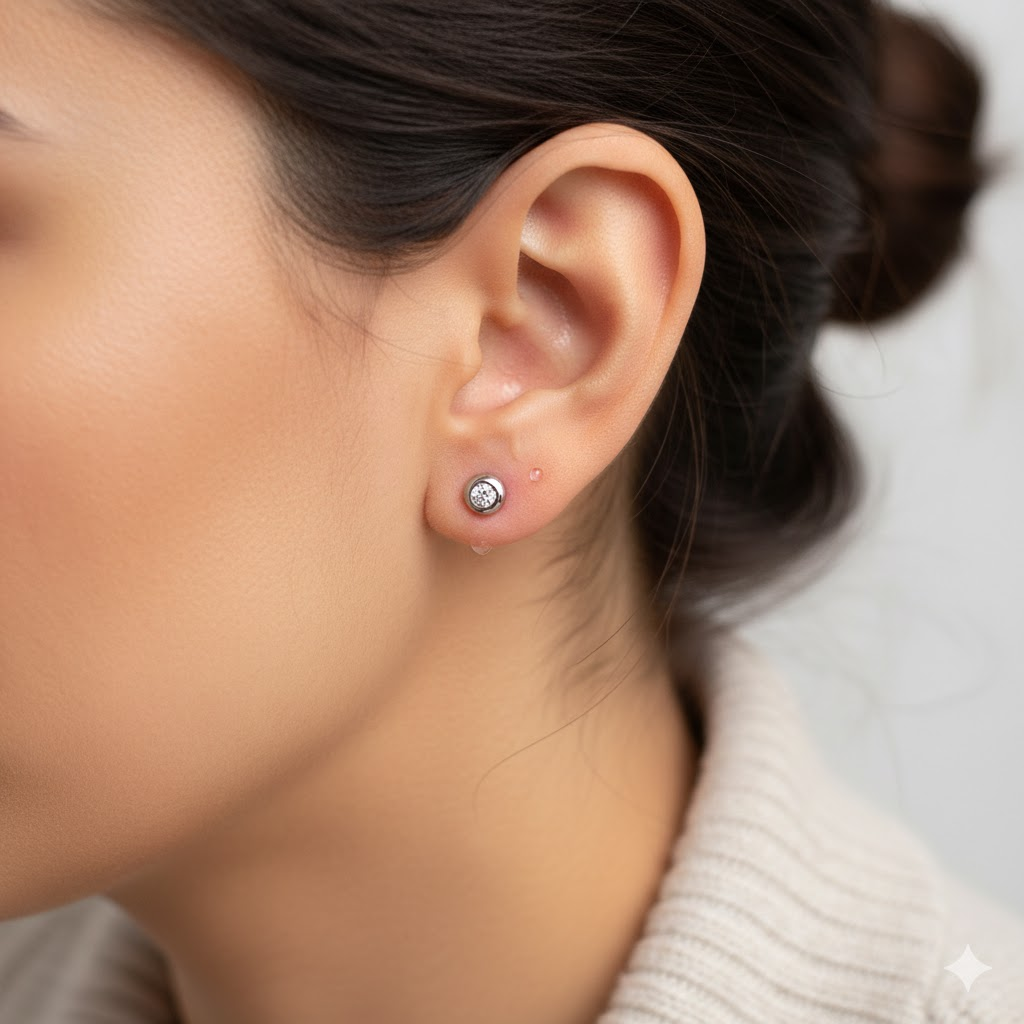
The earlobe is the softest and most common spot for an ear piercing.
It’s a great choice for first-timers because it’s quick, simple, and usually painless.
Healing is faster compared to cartilage piercings, making it easy to maintain.
With proper hygiene and sterile tools, the risk of infection is very low.
You can style it with classic studs, small hoops, or tiny gemstones for a timeless look.
Healing Time: 6–8 weeks
Aftercare: Clean twice daily with saline; avoid twisting jewelry.
Also Read >>>>
Why Are My Ears Itchy Inside? Causes, Remedies & When to See a Specialist
2. Helix Piercing
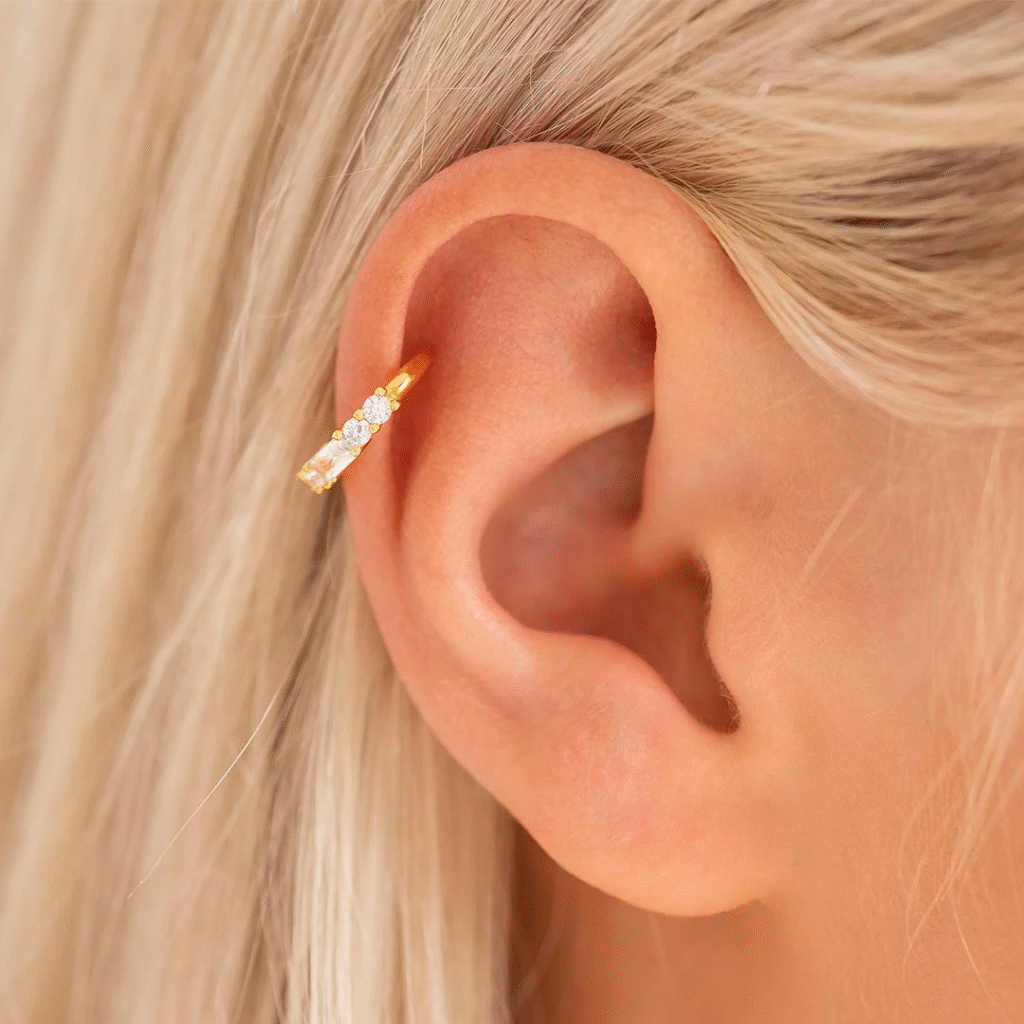
The helix piercing sits on the upper rim of your ear, where the cartilage gives it a stylish edge.
It’s popular for those who want a subtle yet trendy look.
Because it’s done through cartilage, healing takes longer than a lobe piercing.
Friction from hair, headphones, or sleeping on that side can easily irritate the area.
Keeping it clean and free from pressure helps the piercing heal smoothly.
Healing Time: 3–6 months
Tip: Avoid pressure from headphones or hats.
3. Tragus Piercing
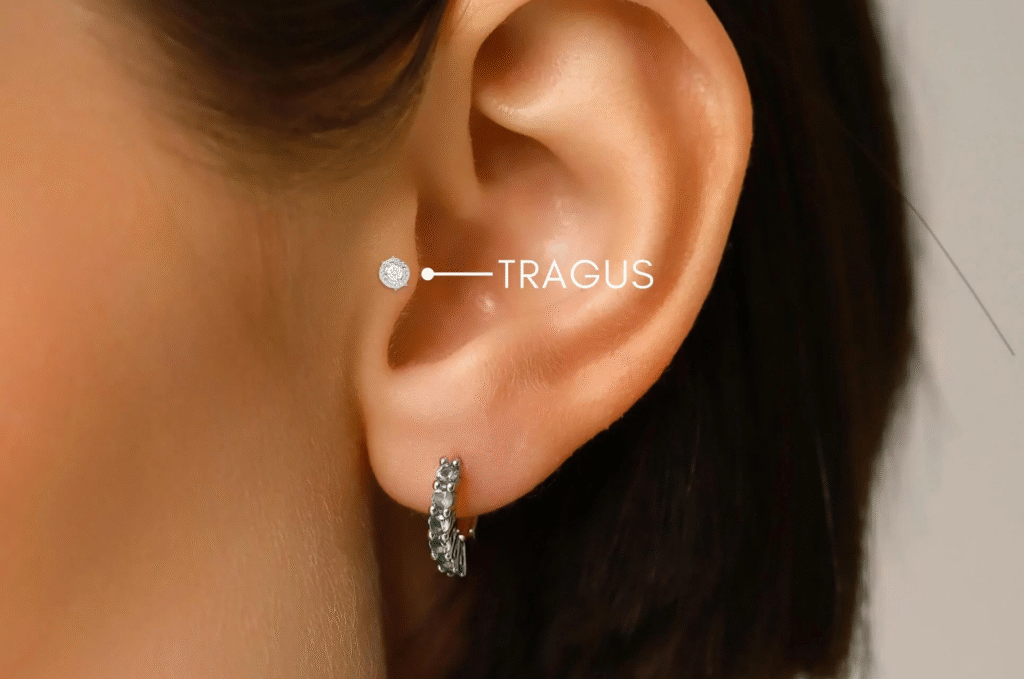
The tragus is the small, thick flap that partially covers your ear canal.
It’s a stylish choice that instantly stands out without being too flashy.
Because it’s close to the ear canal, this area can easily trap bacteria if not cleaned properly.
Healing may take longer and requires extra care to avoid irritation or infection.
Studs or small hoops usually work best here, offering comfort and a sleek look.
Healing Time: 3–6 months
Precaution: Keep earphones and phones clean to prevent infection.
4. Conch Piercing

The conch piercing sits in the inner bowl of your ear, giving a bold yet elegant look.
It’s versatile, you can wear a simple stud for minimal style or a hoop that wraps around the ear for more drama.
Since the needle passes through thick cartilage, healing usually takes longer than other ear piercings.
Consistent cleaning and gentle handling are key to preventing swelling or irritation.
Healing Time: 6–9 months
Pain: Moderate during piercing; soreness for several weeks is normal.
5. Daith Piercing
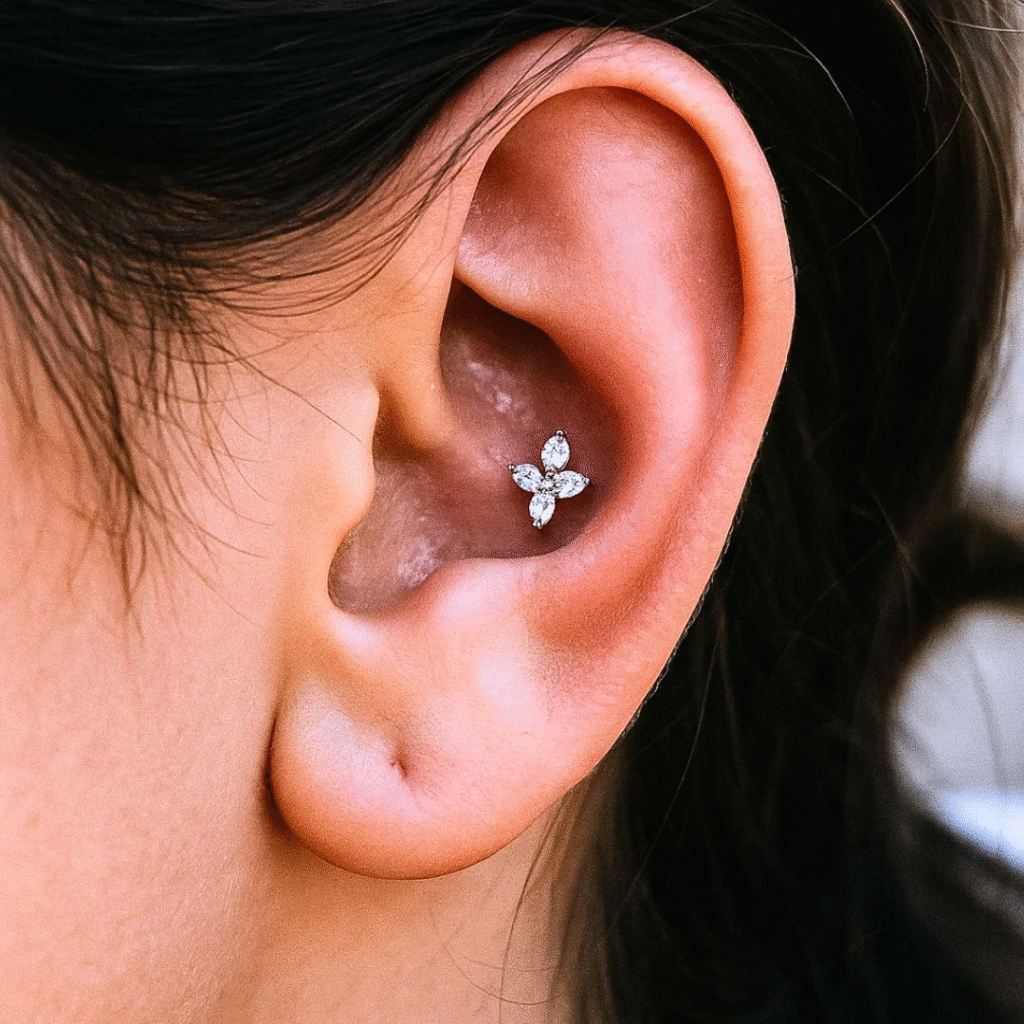
The daith piercing sits in the innermost fold of your ear’s cartilage, giving it a unique and eye-catching look.
Many people love it for its curved placement, which pairs beautifully with small hoops or rings.
It’s also known for its supposed link to migraine relief, though scientific proof is still limited.
Because it goes through thick cartilage, it may take a while to heal completely. Gentle care and patience make a big difference in recovery.
Healing Time: 6–9 months
Care Tip: Keep dry during showers and avoid unnecessary touching.
Must Read>>>>
What Noise Level Requires Hearing Protection? A Simple Decibel Guide
6. Industrial Piercing
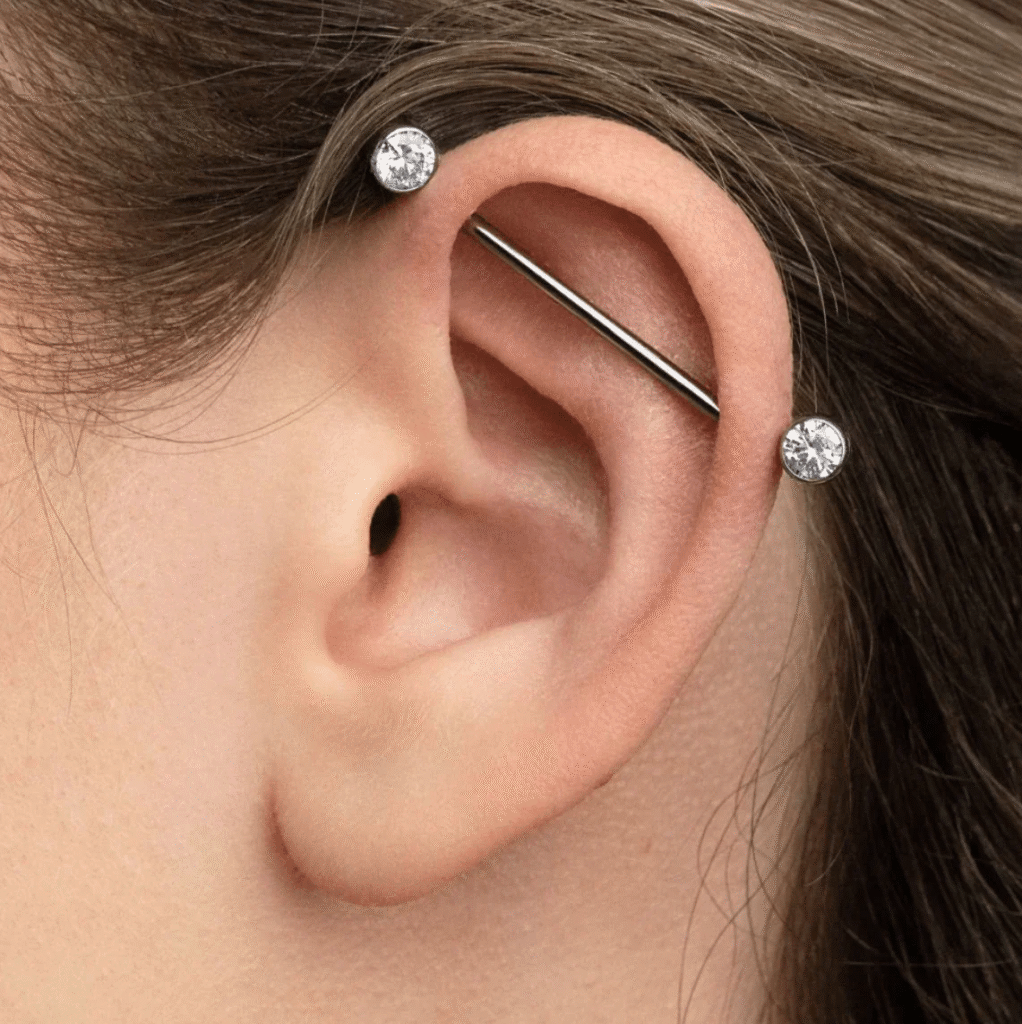
An industrial piercing features two connected holes across the upper ear cartilage, joined by a single straight barbell.
It’s a bold choice that makes an instant statement and suits those who love edgy styles.
Because it involves two piercings in one, the area needs extra attention and careful cleaning.
Healing can be slow, as both points must recover evenly.
Consistent aftercare and avoiding pressure from hair or helmets will help prevent irritation.
Healing Time: 9–12 months
Aftercare: Clean both entry points with saline twice a day and avoid changing jewellery too soon.
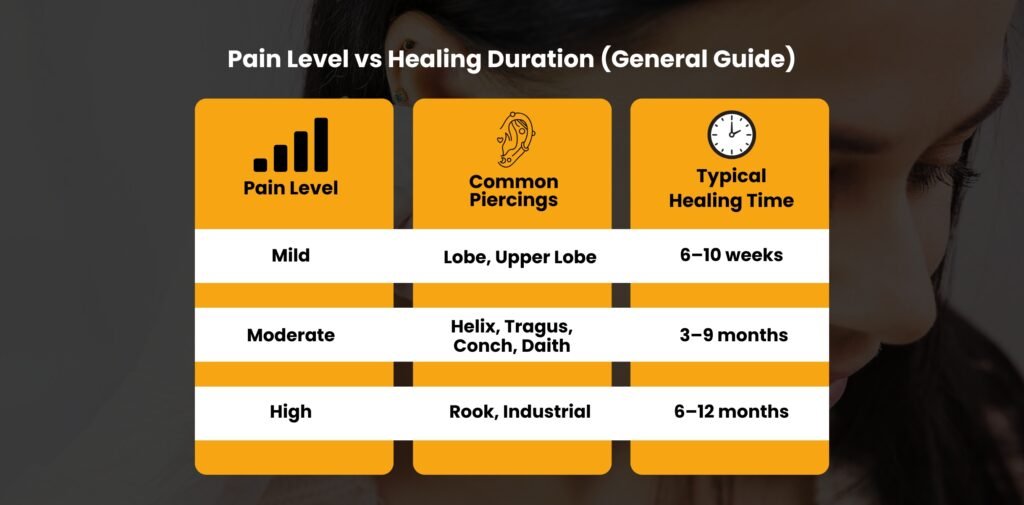
Pain Level vs Healing Duration
How to Care for Your Piercing During Healing
Proper aftercare makes the difference between smooth healing and painful complications.
A little daily care goes a long way toward keeping your new piercing clean, calm, and irritation-free.
Follow these simple steps to help your ear heal safely and beautifully.
Step-by-Step Aftercare Routine
- Wash Hands First: Always clean hands before touching or cleaning the piercing.
- Use Sterile Saline Solution: Clean the area twice daily. Avoid alcohol-based products.
- Avoid Twisting or Rotating Jewelry: Let the tissue heal naturally without friction.
- Dry Carefully After Showers: Pat gently with a clean paper towel, not cloth.
- Avoid Sleeping on the Pierced Side: This prevents irritation and swelling.
- Keep Hair and Accessories Away: Hair products and perfumes can irritate healing tissue.
- Monitor for Infection: Redness, swelling, heat, or yellow discharge require clinical attention.
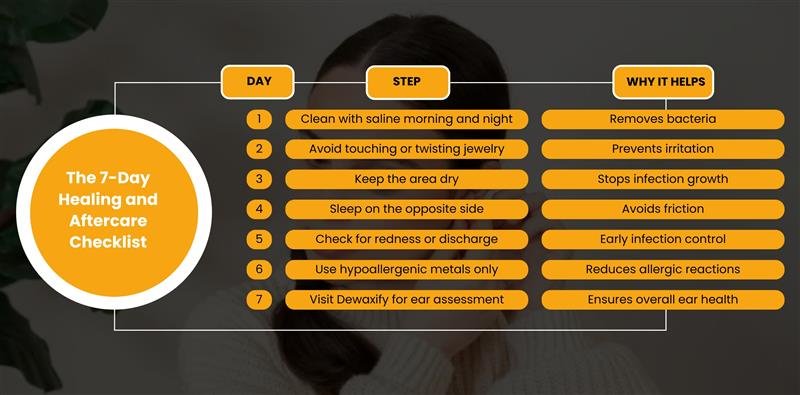
The 7-Day Healing and Aftercare Checklist
Home Remedies for Minor Irritation After Ear Piercings
Even with proper care, mild itching or redness can occur after new ear piercings.
These minor reactions are usually harmless and can be managed easily at home.
If you’ve been wondering how long do ear piercings take to heal, remember that consistent, gentle aftercare helps speed up recovery and prevents infection.
1. Apply a Warm Saline Compress
Soak a clean cotton pad in warm saline solution and place it on the piercing for 5–10 minutes twice a day.
2. Avoid Over-Cleaning
Cleaning too frequently can irritate the skin and slow the healing process. Stick to a simple twice-daily routine.
3. Choose Hypoallergenic Jewellery
Opt for metals like surgical steel, titanium, or 14k gold to reduce allergic reactions and discomfort.
4. Skip Ointments Unless Prescribed
Avoid using antibiotic creams unless a doctor recommends them. These can block airflow and delay natural healing.
5. Watch for Signs of Infection
If pain increases, swelling persists, or a bump appears, seek medical help instead of trying home treatments.
When to Seek Professional Help for Ear Piercings
Sometimes, even with the best care, piercings can develop complications that need expert attention.
Knowing when to visit a professional helps prevent serious infections and long-term damage.
Seek help immediately if you notice any of the following:
- Severe swelling, bleeding, or throbbing pain
- Discharge with an unpleasant odor or thick yellow pus
- Fever, spreading redness, or warmth around the piercing site
- Persistent pain lasting longer than a week
- Jewellery that becomes embedded or stuck in the skin
In rare cases, infections or keloid scars can form and require clinical treatment.
At Dewaxify, our ear care specialists regularly assess ears for infection, blockage, or irritation caused by improper aftercare.
Professional cleaning and guidance can make a big difference in safe, healthy healing.
While most ear piercings heal smoothly, infections near the ear canal can sometimes affect hearing or balance if not treated promptly.
It’s important to monitor any discomfort, as early care can prevent long-term issues.

Ear Piercing and Ear Health
Many patients visit Dewaxify for secondary ear concerns following different types of ear piercings, such as:
- Wax impaction after piercing, often caused by swelling near the ear canal
- Moisture-related infections from over-cleaning or improper drying
- Ear tenderness or fullness that can mimic common ear infection symptoms
A professional ear health check or gentle microsuction cleaning can safely remove wax, reduce inflammation, and support healthy healing without disturbing your piercing site.
Dewaxify: London’s Trusted Ear Care Clinic
Dewaxify is a professional ear care clinic located in Ilford, East London, founded in April 2017 by Sita Parmar, a qualified Audiological Scientist.
Our Services Include
- Microsuction Ear Wax Removal – dry, gentle, and precise.
- HD Otoscopy and Ear Examination – detailed visualization of the ear canal.
- Hearing Assessments – in-clinic or online at /hearing-test.
- Aftercare Guidance – for infection prevention, healing, and long-term ear health.
Appointment Details
Appointments start at £60 and include a full ear health consultation and hearing test.
Dewaxify’s clinic is fully accessible and treats both adults and children aged six and above.
For more details please visit our Pricing Page and BOOK APPOINTMENT NOW
FAQs
What are the different ear piercings called?
Popular options include lobe, helix, tragus, conch, daith, rook, and industrial piercings.
How long do ear piercings take to heal?
Lobe piercings heal in 6–8 weeks, while cartilage piercings can take up to 12 months.
What causes bumps after piercing?
Friction, over-cleaning, or infection. Warm compresses and professional checks help reduce swelling.
When should I change my jewelry?
Only after the piercing is fully healed, usually 8–12 weeks for lobes, 6–9 months for cartilage.
Can an ear piercing cause hearing problems?
Rarely. But if infection spreads near the canal, it can affect hearing temporarily.